
Field Notes
How we actually read and design land.
Short, plain-language pieces on the thinking behind every Stillfoot design, pulled from the same technique library every client project draws on and feeds back into. No jargon, no sales pitch, just how we look at a site.
Process
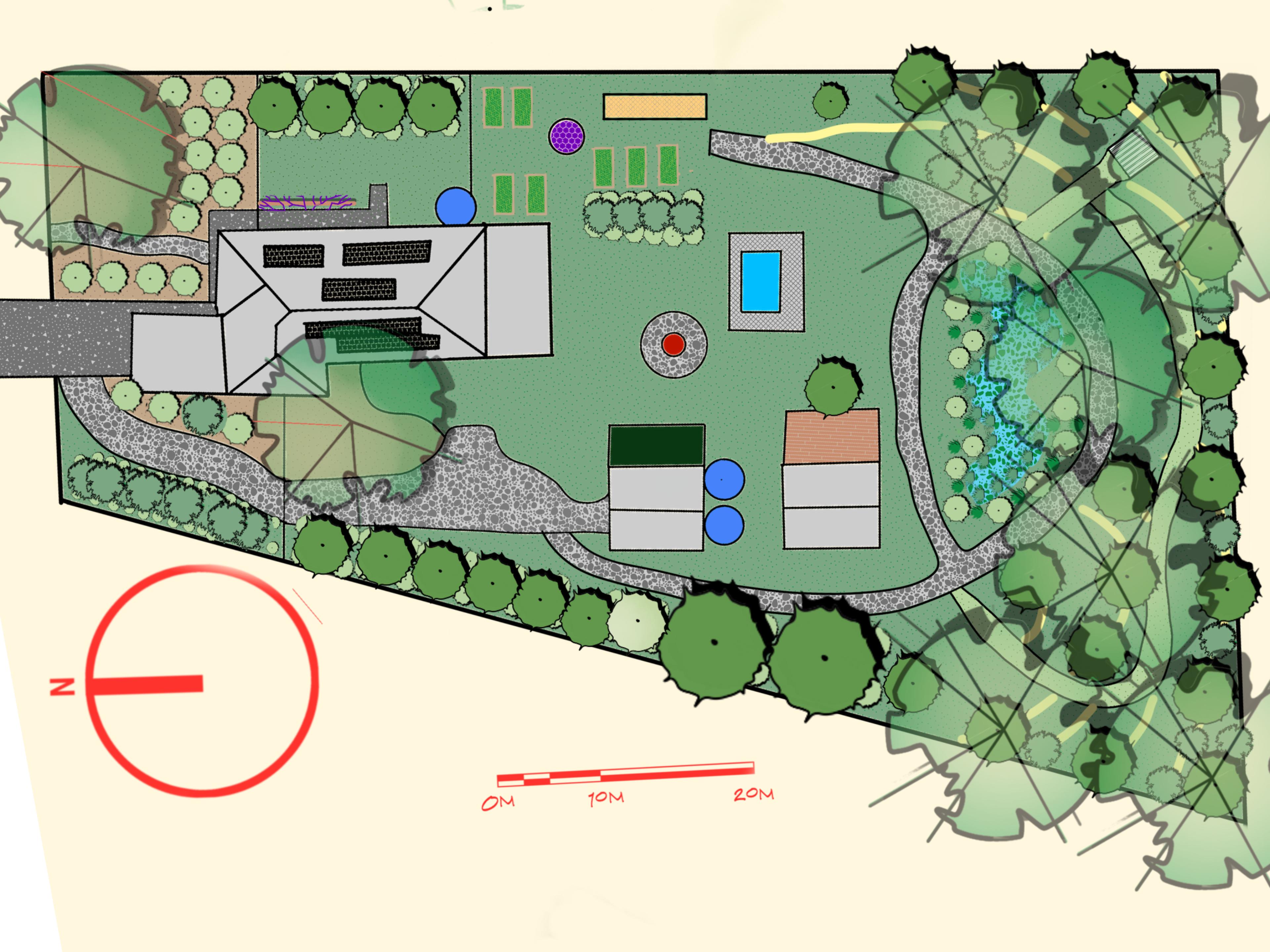
One Property, Start to Finish: How Jake's Design Came Together
A first-hand walk through one real design, from the first site visit to a mistake caught before delivery: what actually happens between reading a property and handing over a finished plan.
Read more →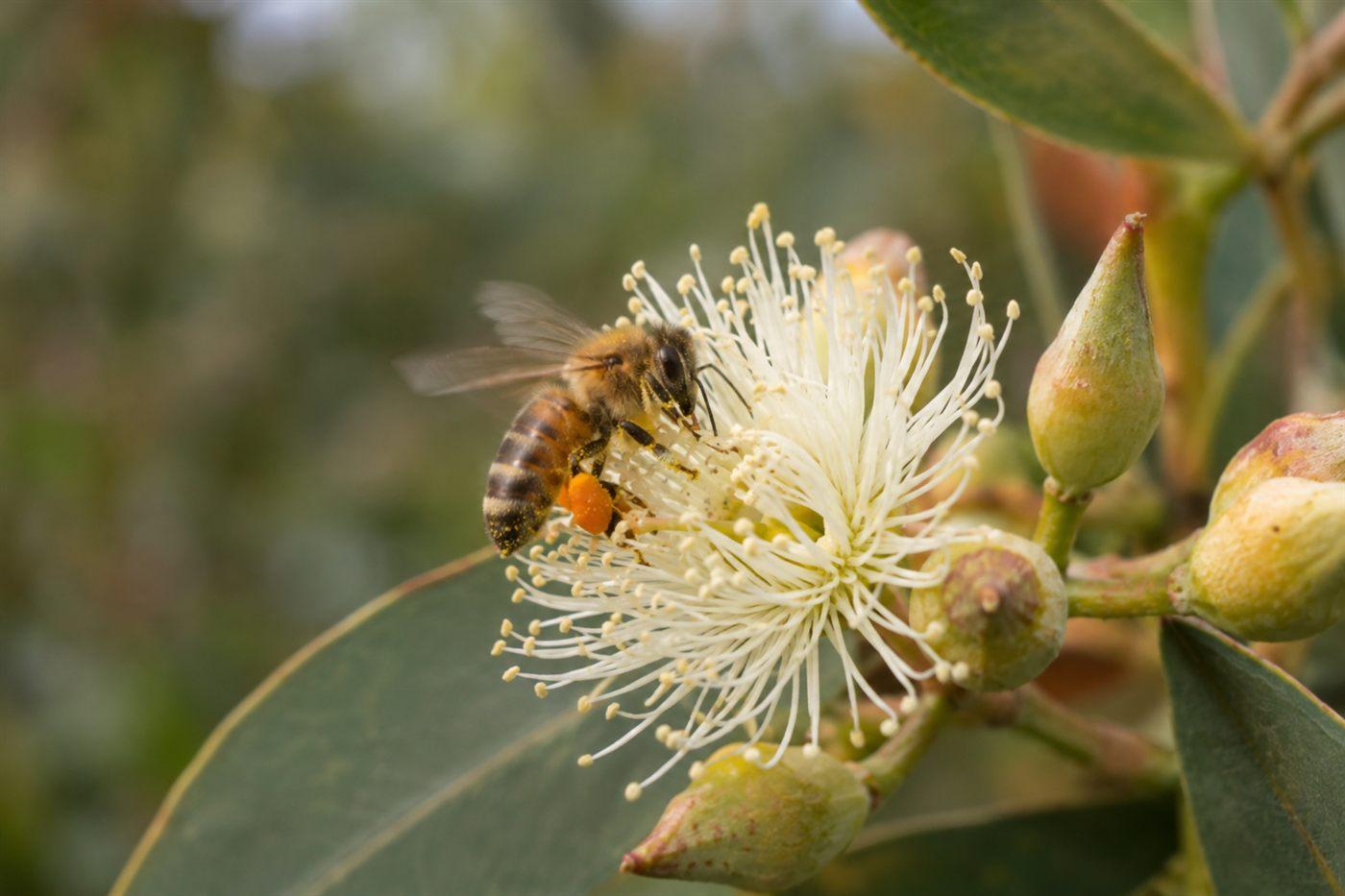
Pollination
How Far a Bee Will Fly, and Why It Changes the Plan
A honey bee works a radius of kilometres. A native stingless bee works a few hundred metres. Which one you are designing for changes almost every decision about where the flowers go.
Read more →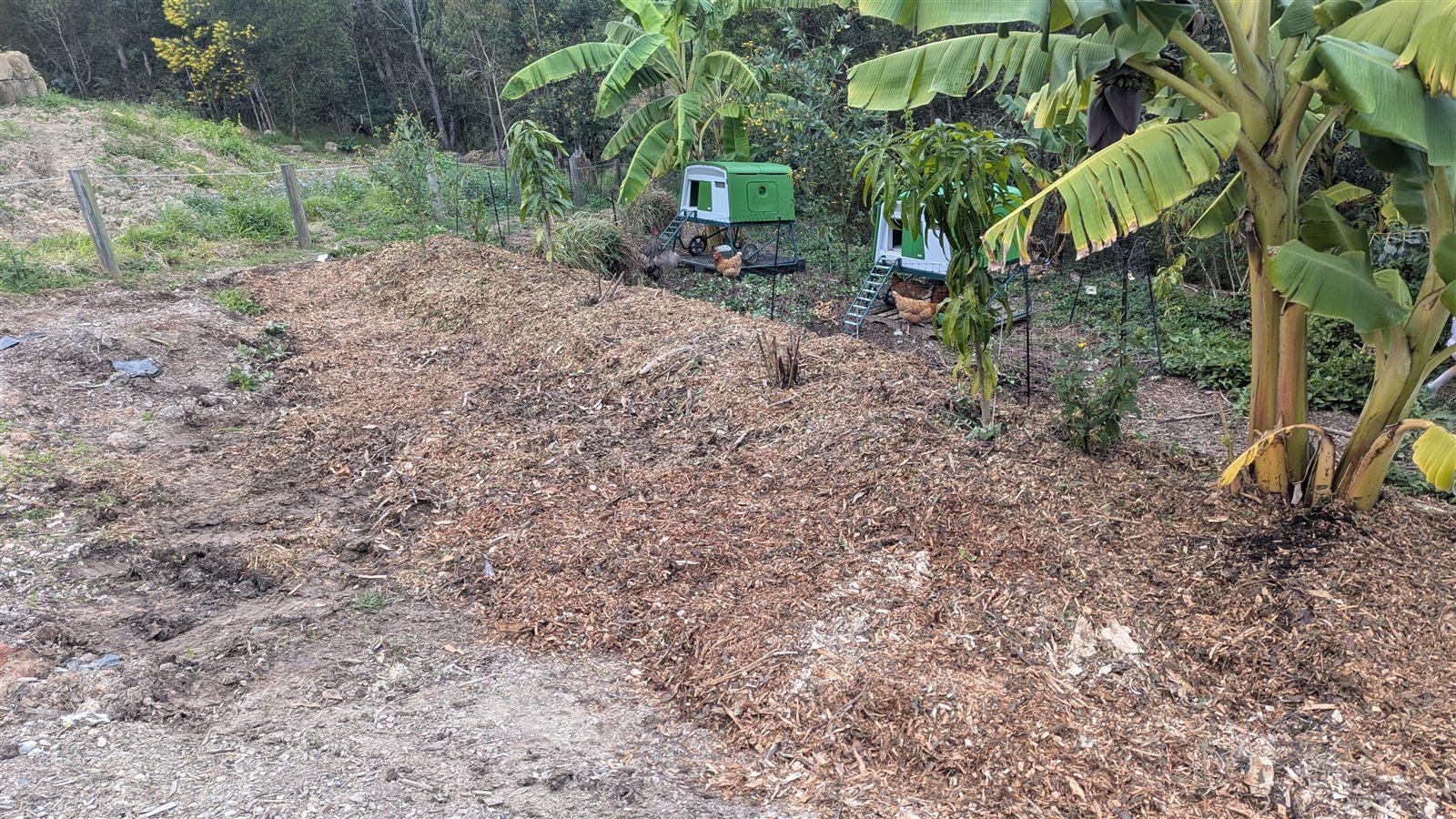
Water
Why We Don't Fight Your Land's Water Flow
Most landscaping treats water as something to get rid of fast. Here's why we treat it as the single most useful thing on your property instead.
Read more →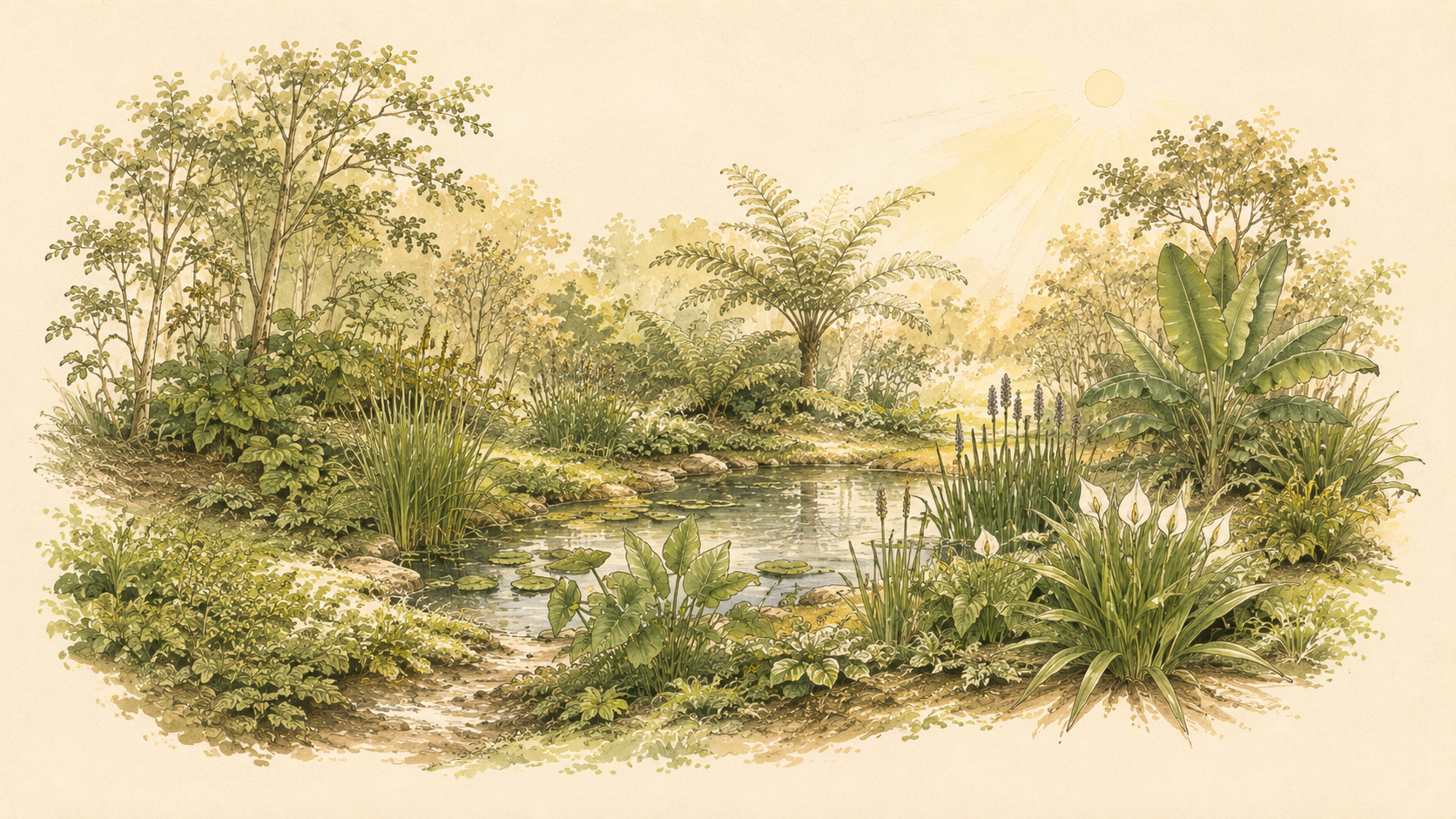
Design thinking
The Problem Is the Solution
A boggy corner. A scorching wall. A slope nobody wants to mow. The thing about your site that feels like a liability is usually just an unused resource wearing a disguise.
Read more →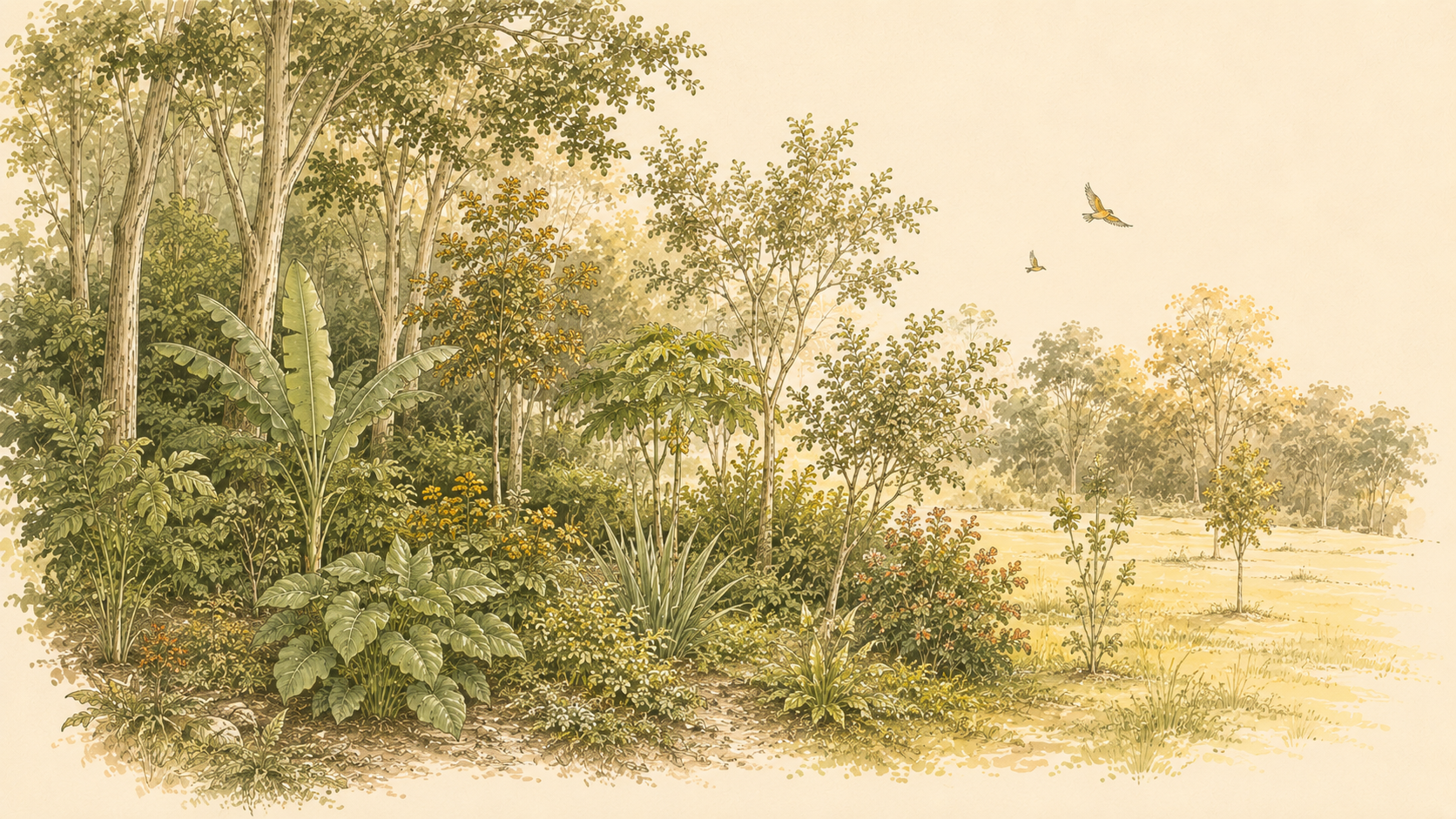
Ecology
Reading Edges: Where the Real Growth Happens
The most productive part of a landscape is almost never the middle of the lawn. It's the in-between places, and leaving them wild isn't the same thing as leaving them alone.
Read more →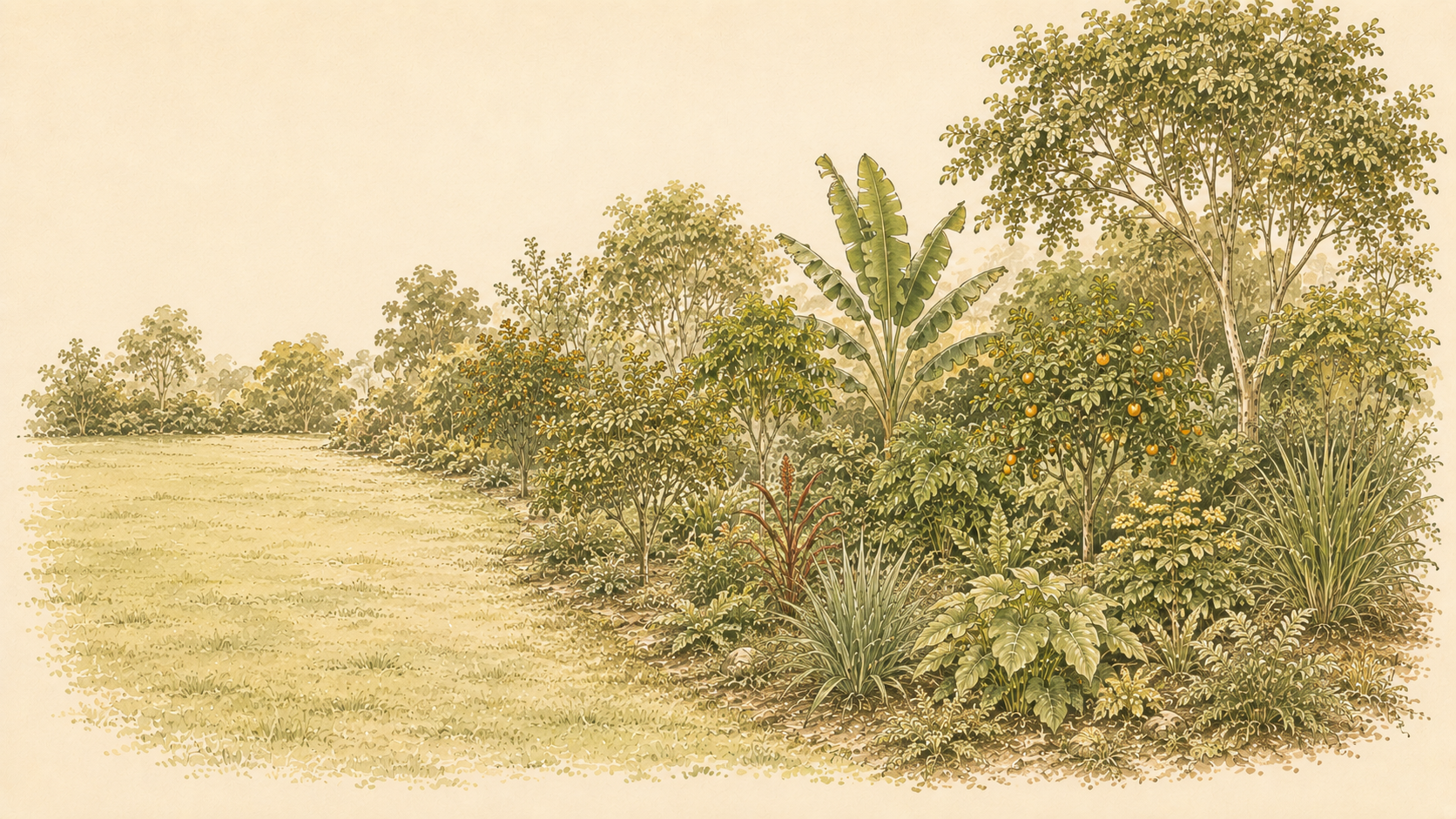
Land use
What Your Lawn Is Actually Costing You
A lawn wasn't designed. It started as a byproduct of grazing animals, and we kept the look long after we lost the reason for it. Here's what that habit actually costs.
Read more →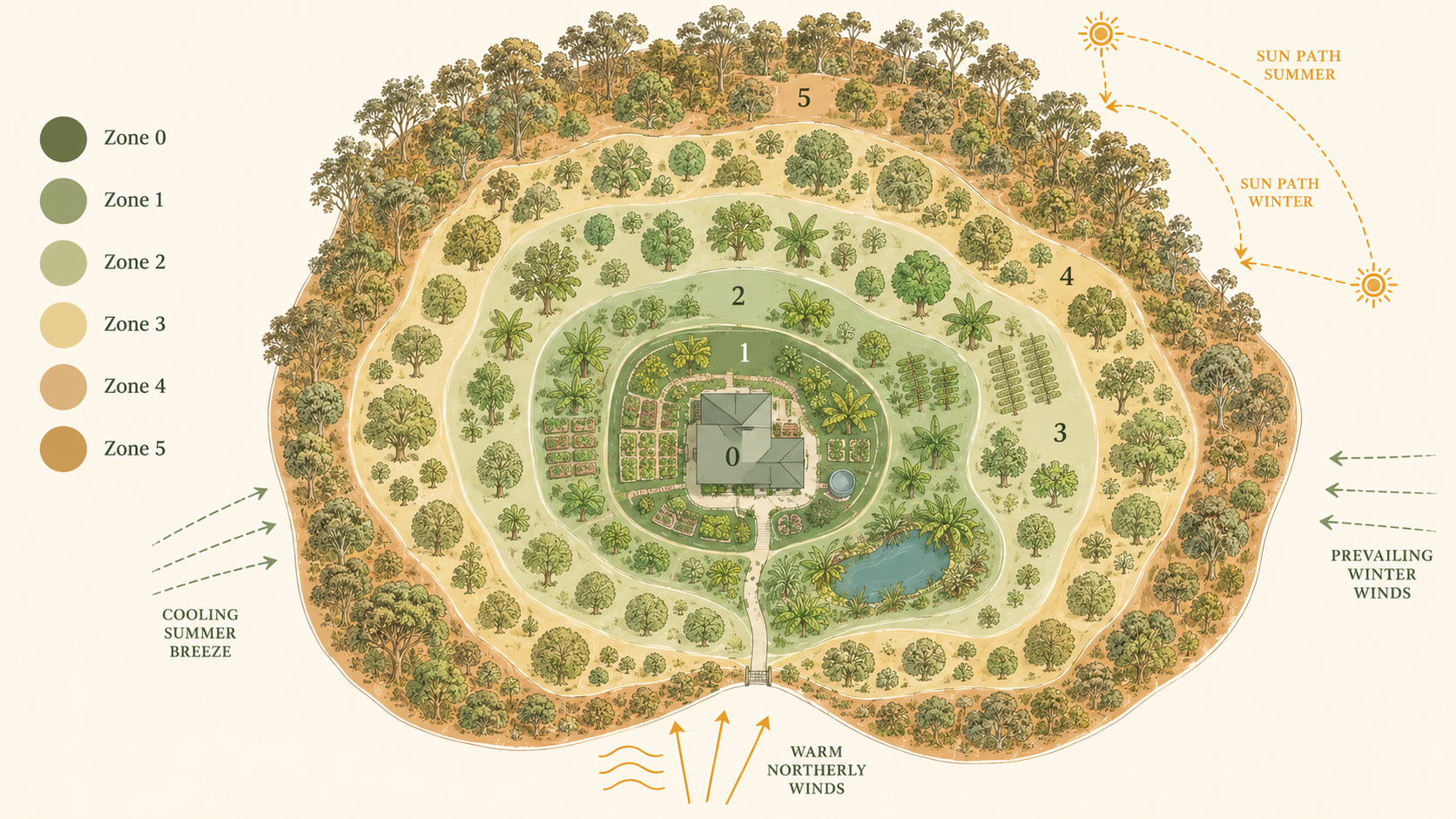
Site planning
How We Actually Plan a Site: Zones and Sectors
Before we plant anything, we draw two maps. Neither has a single plant on it, and they're the most important part of the whole design.
Read more →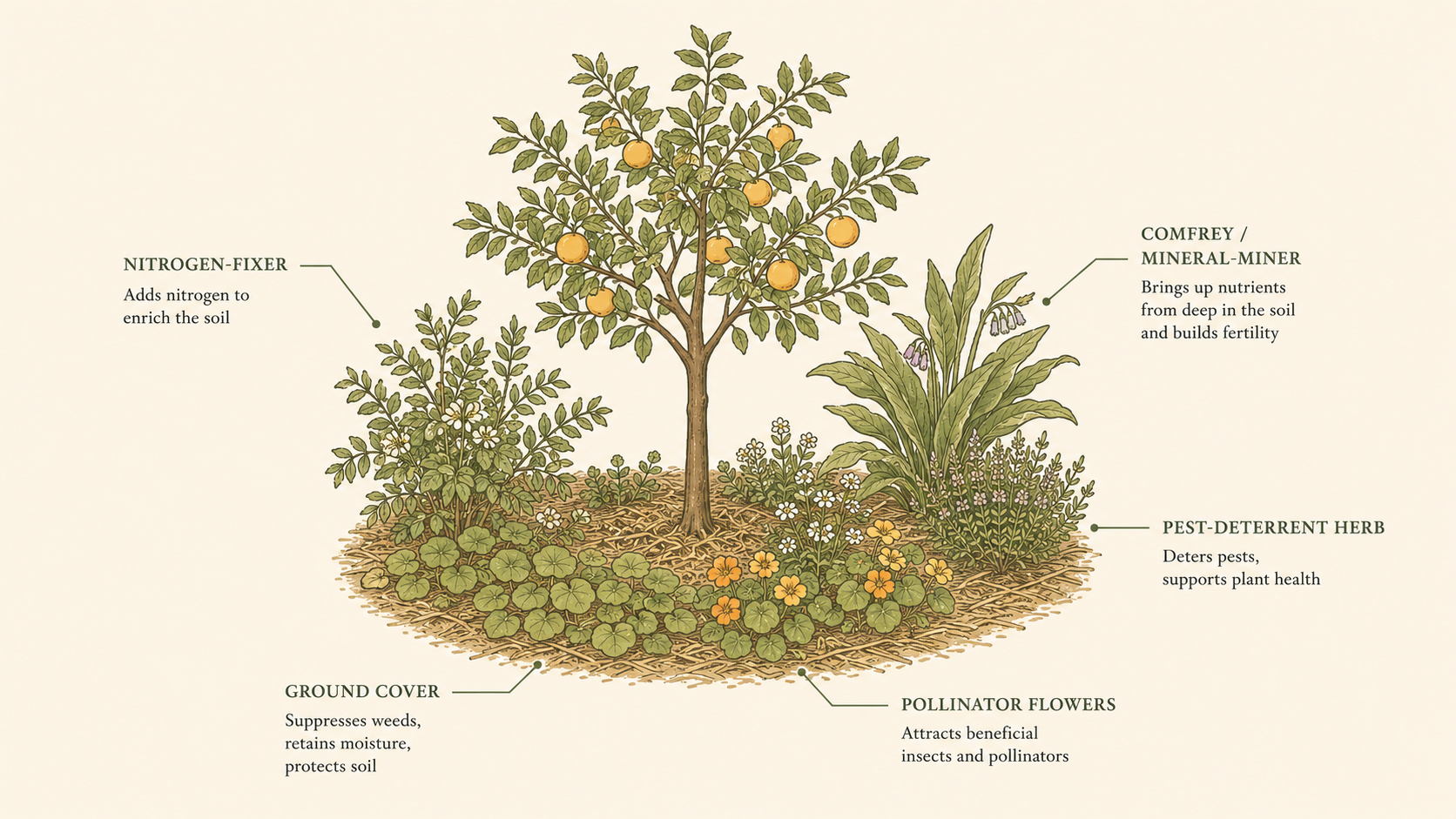
Planting
Why We Never Plant a Fruit Tree Alone
A single fruit tree on its own in a lawn is fighting an uphill battle. Here's what we plant around it instead, and why.
Read more →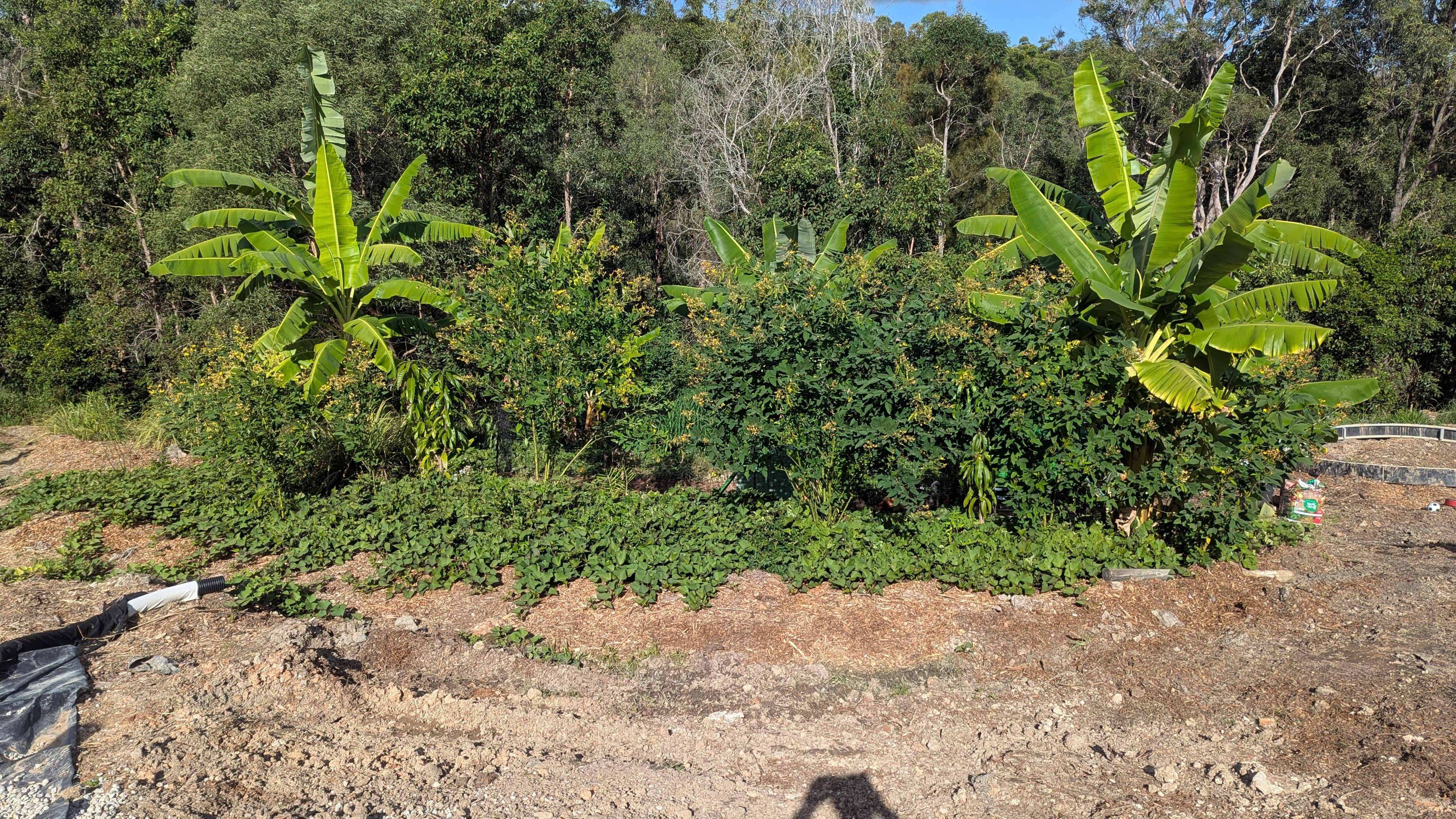
Planting
A Food Forest Isn't Just a Lot of Fruit Trees
A food forest isn't a cluster of fruit trees, it's a layered system that changes as it matures. Here's how the layers actually work, and why established trees are a head start, not an obstacle.
Read more →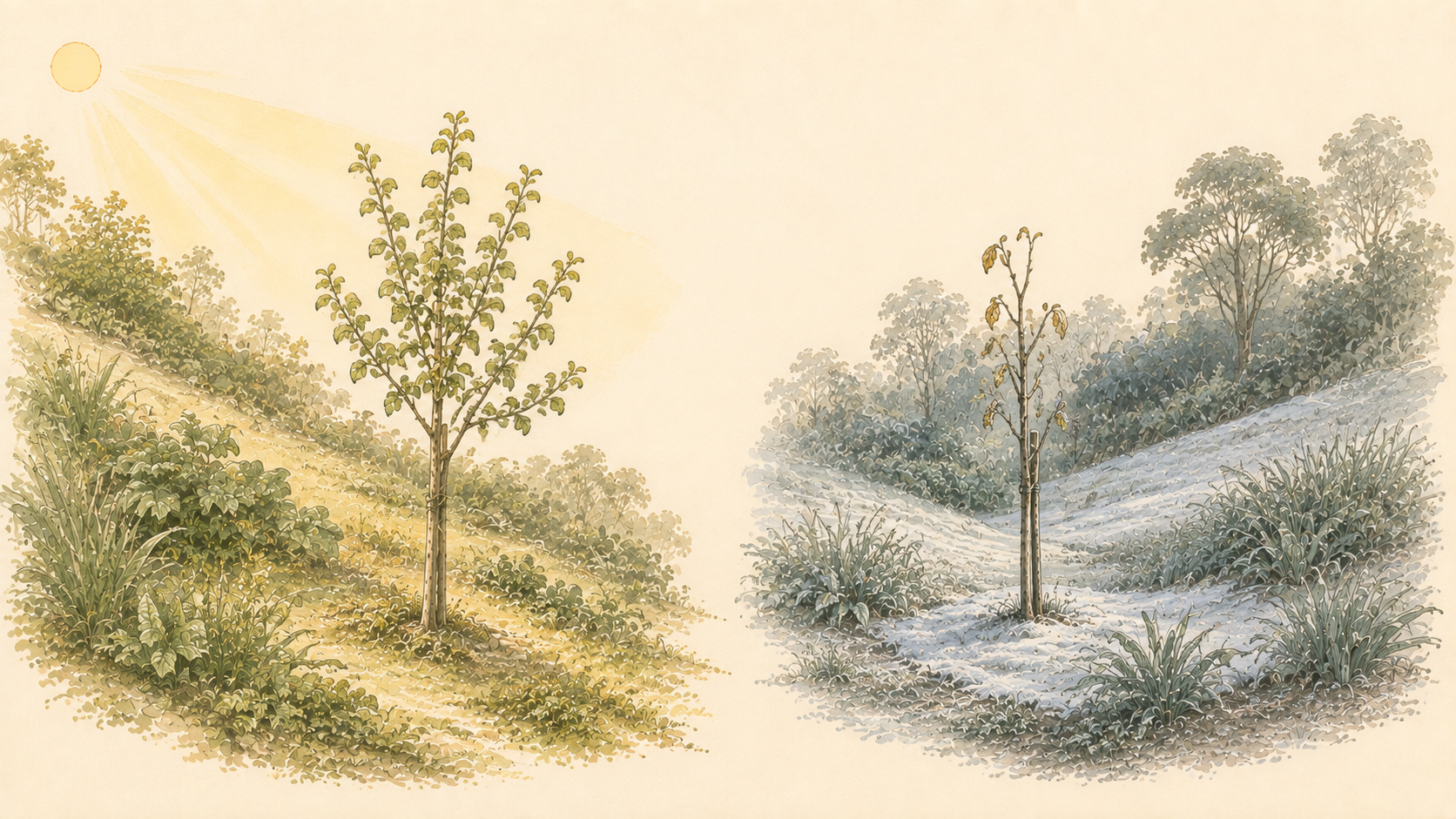
Climate
Why the Same Plant Thrives Here and Dies Ten Metres Away
Frost doesn't fall evenly across a property. Here's the physics behind why one part of a block freezes while another, a few metres away, doesn't, and how to design around it.
Read more →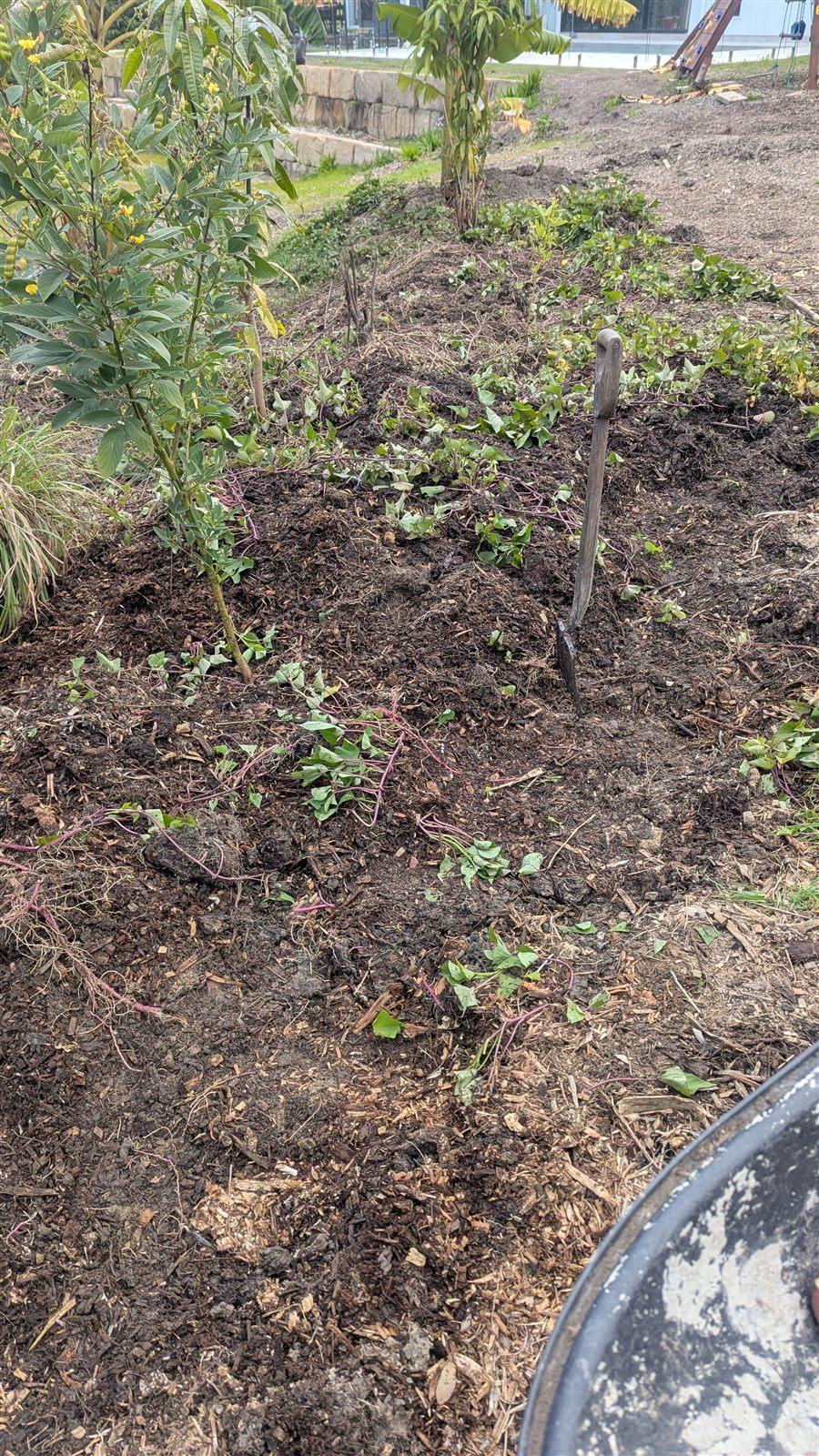
Soil
Most of What Makes Soil Healthy, You Never See
The earthworms and beetles you see when you turn over soil are the smallest part of the story. Here's why the invisible tiers matter more, and what that means for how you treat the ground.
Read more →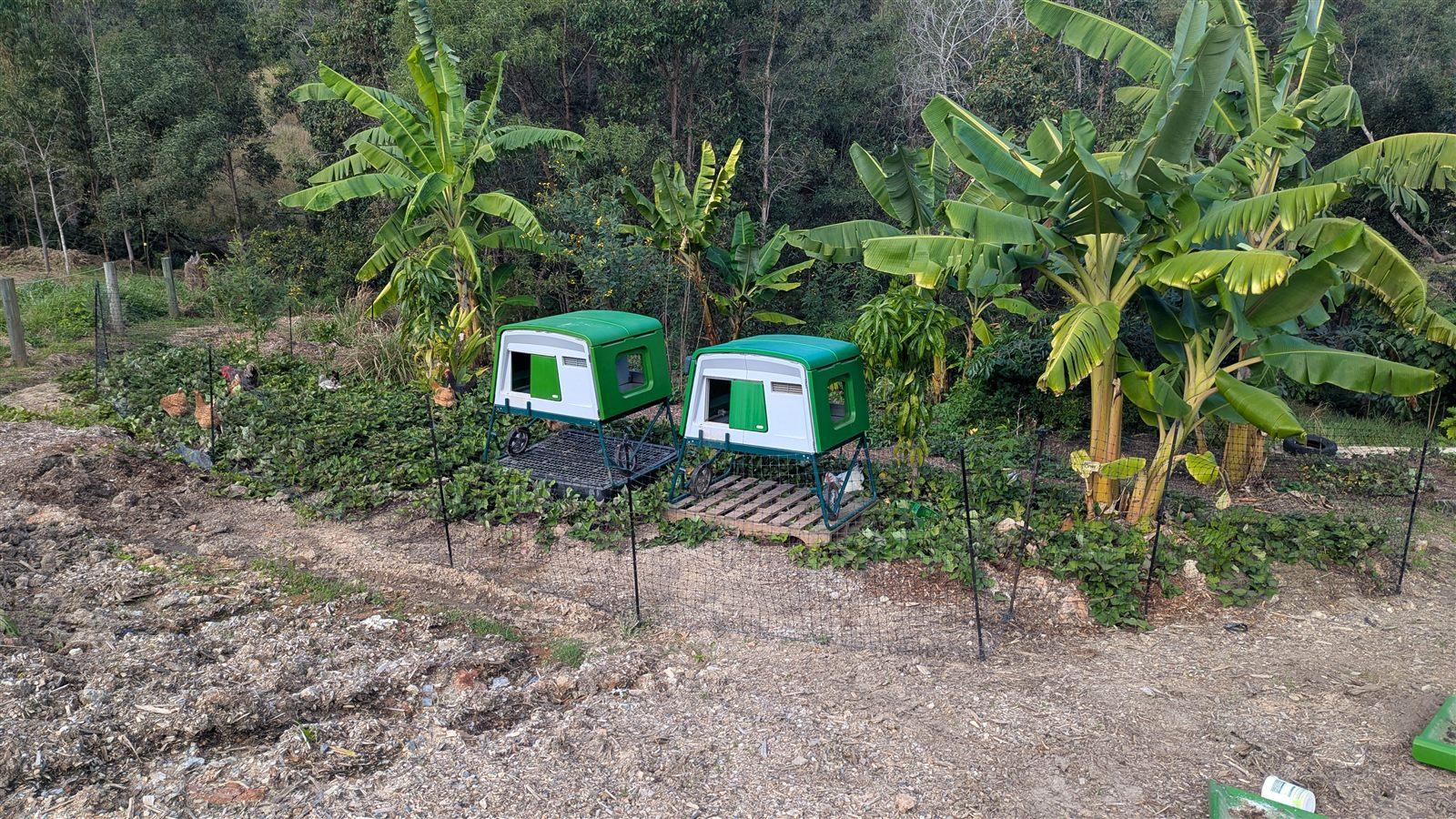
Maintenance
How We Actually Feed a Food Forest
A real maintenance afternoon on our own food forest: mobile chicken tractors, a swale, sweet potato ground cover, and what it actually looks like when a system feeds itself instead of a bag of fertiliser.
Read more →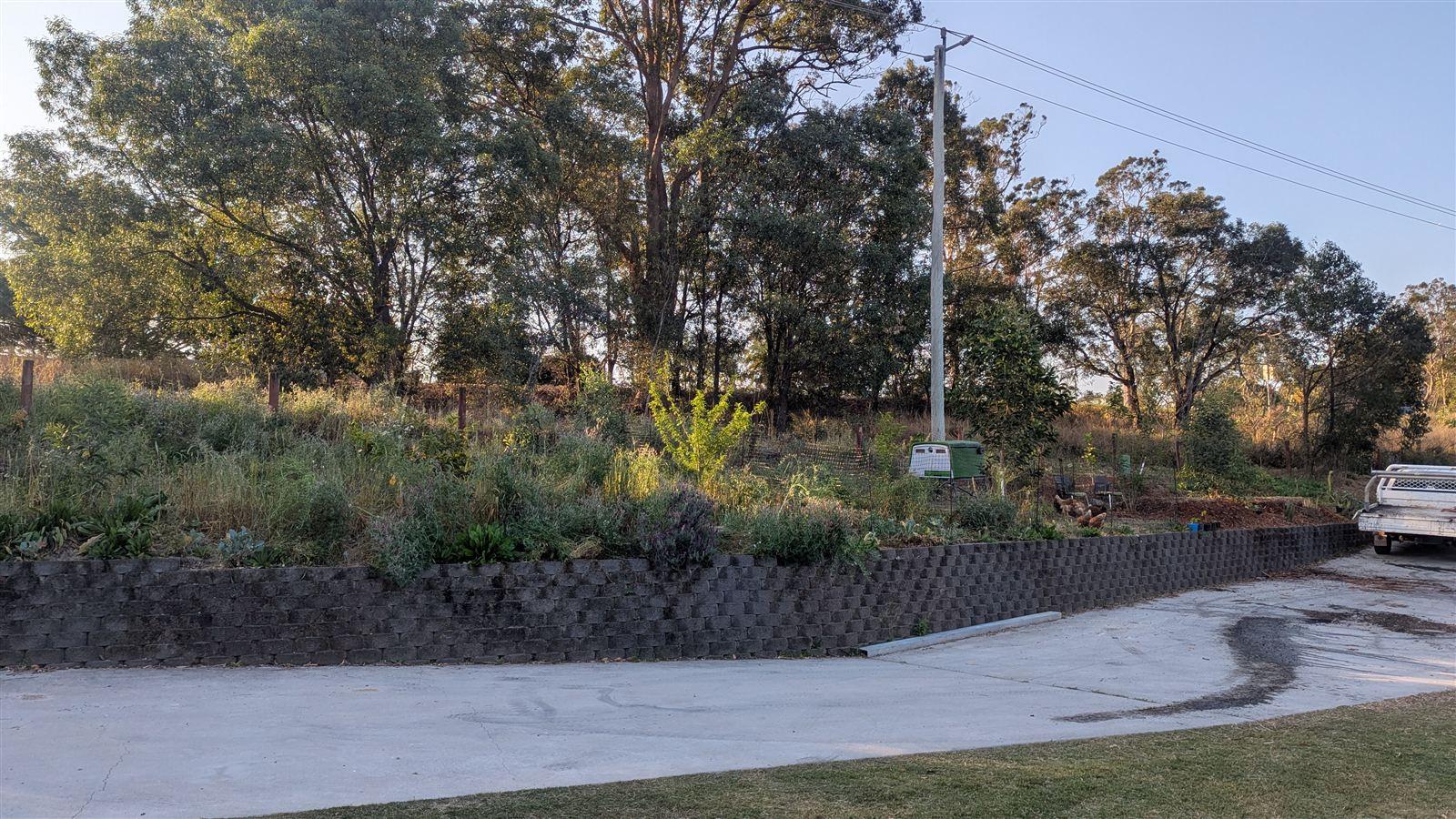
Soil
What a Jar of Dirt Will Tell You About Your Soil
A jar, some water, and a day of waiting will tell you more about why your garden struggles than most soil advice ever will. Here is how to do it and what the layers mean.
Read more →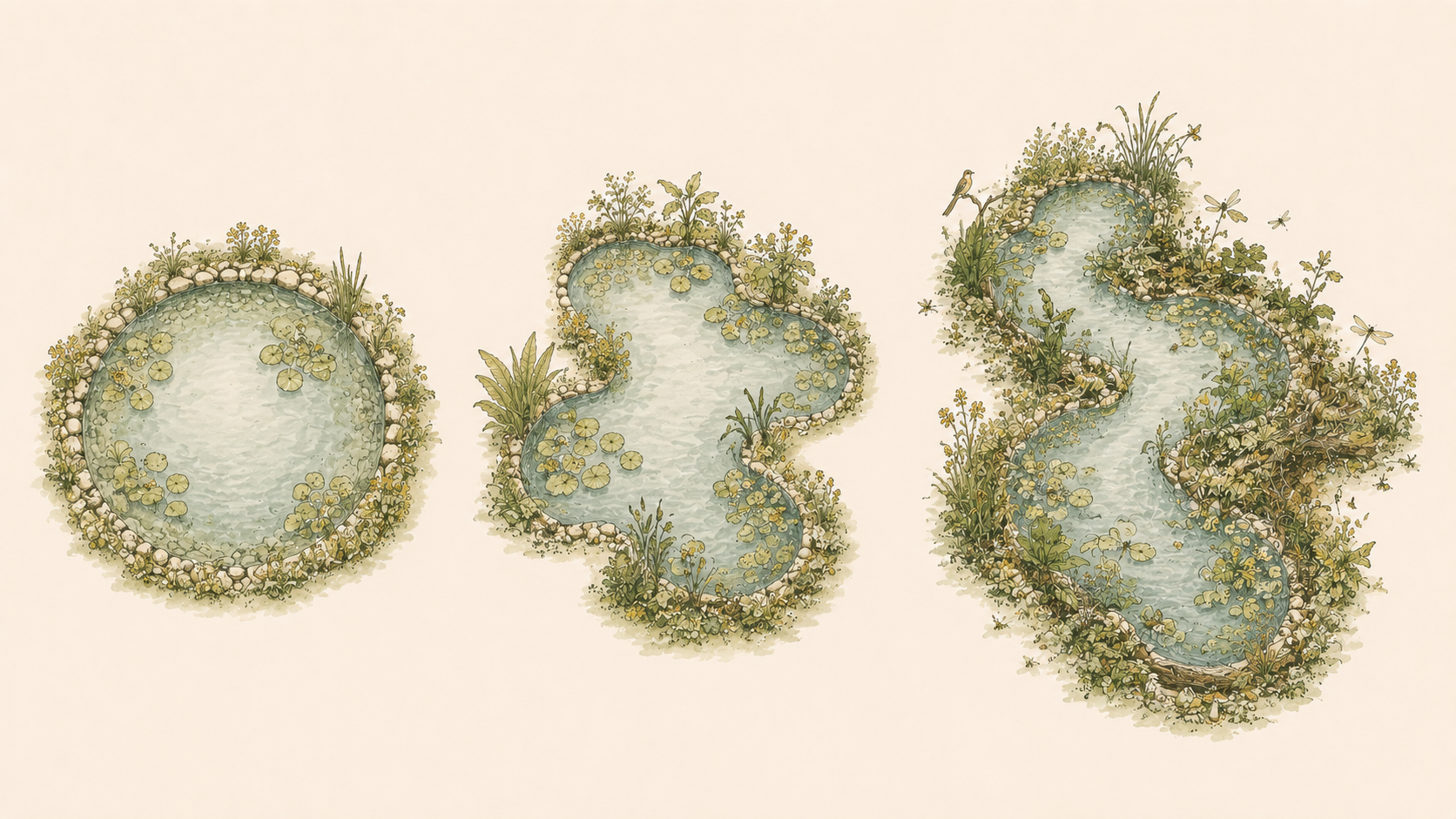
Water
The Cheapest Way to Get More From a Pond Is Its Shape
Three ponds, the same volume, the same digging cost, and up to five times the food. Shape is decided once, at excavation, and it cannot be retrofitted.
Read more →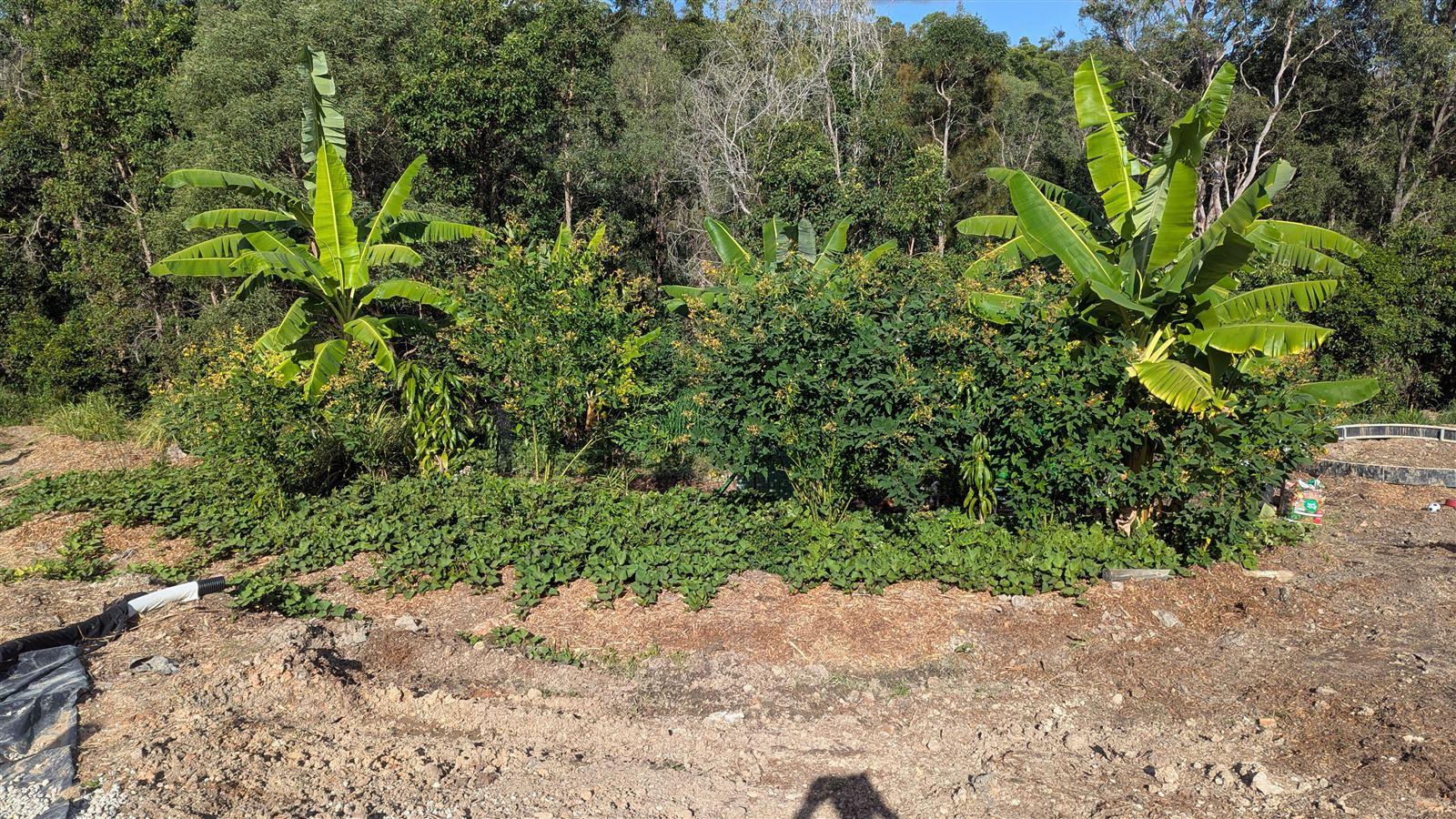
Shelter
A Windbreak Works Better When It Leaks
A solid wall of trees shelters less ground than a leaky one. Why roughly half open beats fully closed, and why the windbreak has to go in before the garden it protects.
Read more →