
Residential
Suburban garden design
For typical blocks up to around 1,000m². A full design package built around your goals: efficient food-growing beds, water-wise planting, and a layout that's genuinely easy to maintain.
Permaculture land design · Southeast Queensland
We read your land before we change it.
We design efficient, low-maintenance layouts that turn an ordinary Southeast Queensland block into a real source of food. Every design starts with a proper look at your own land: where the water goes, where the sun falls, what’s already growing well and why. That’s what actually tells us what will work here.
What we do
Stillfoot is a permaculture-based landscape design business for Southeast Queensland properties, from suburban blocks to acreage. We design efficient garden layouts that make it easy to grow real food, set up properly from the start so you spend less time fighting your yard and more time using it.
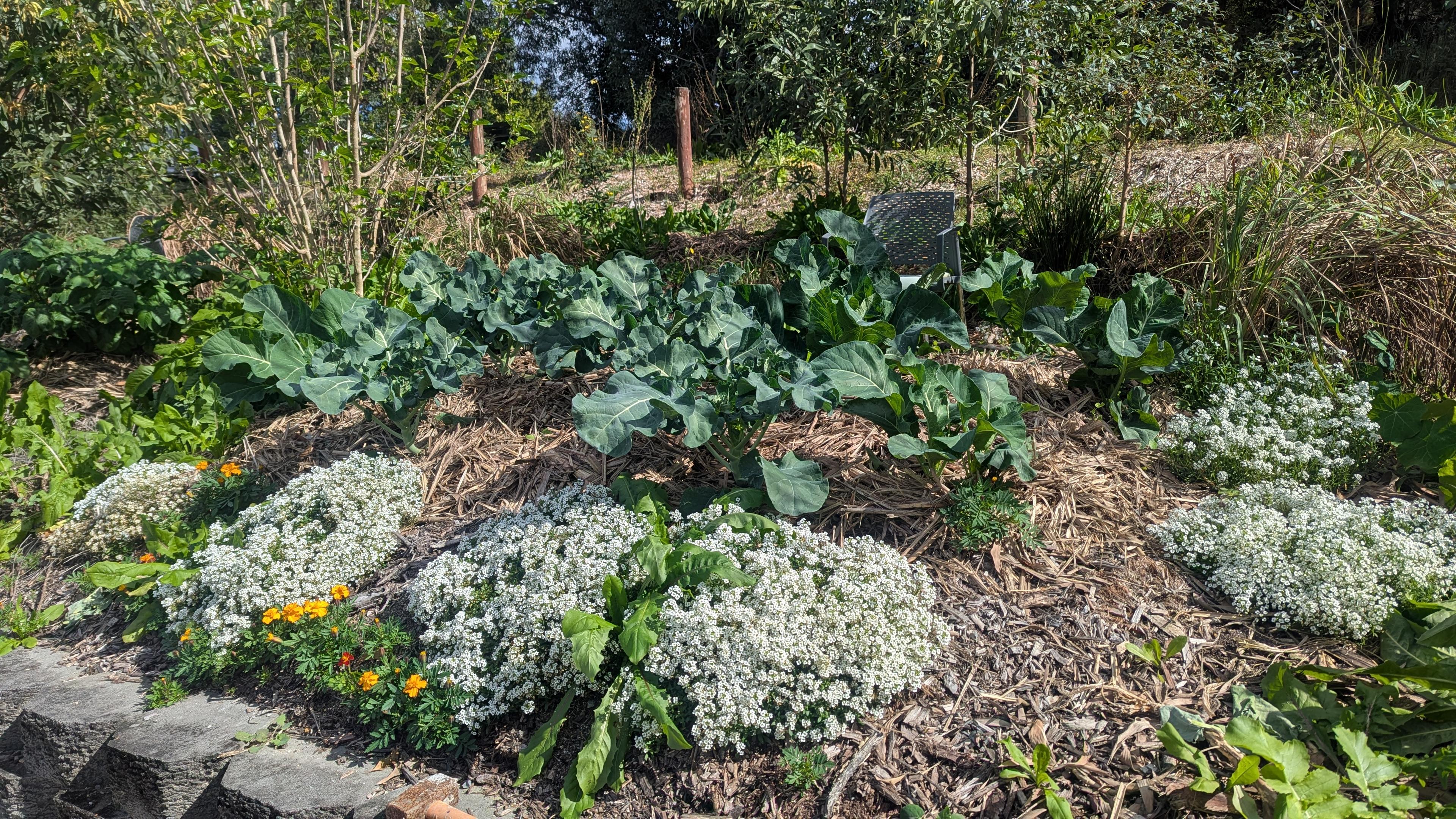
Residential
For typical blocks up to around 1,000m². A full design package built around your goals: efficient food-growing beds, water-wise planting, and a layout that's genuinely easy to maintain.
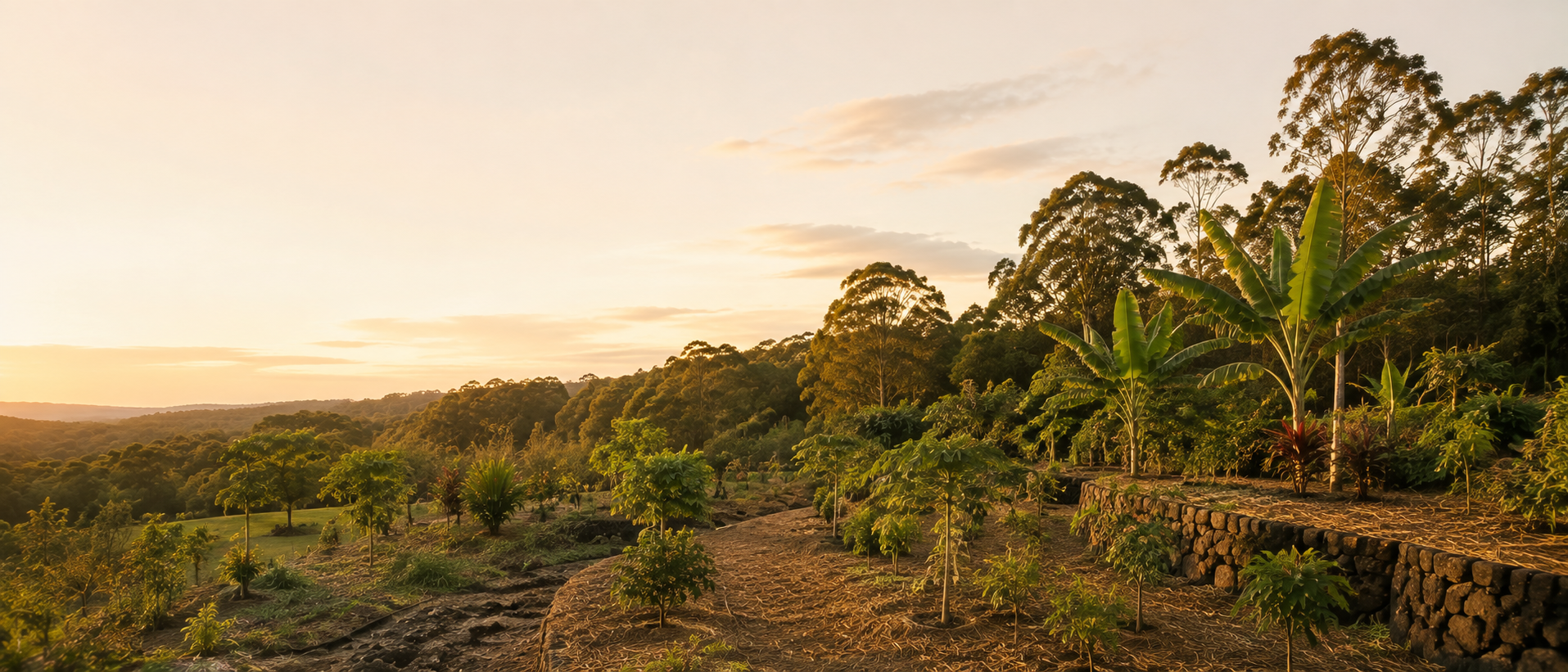
Acreage & rural
For larger properties, roughly 1,000m² to 5 hectares. Expanded water and sector mapping, plus how key elements like chickens, dams, and orchards connect as one working system.
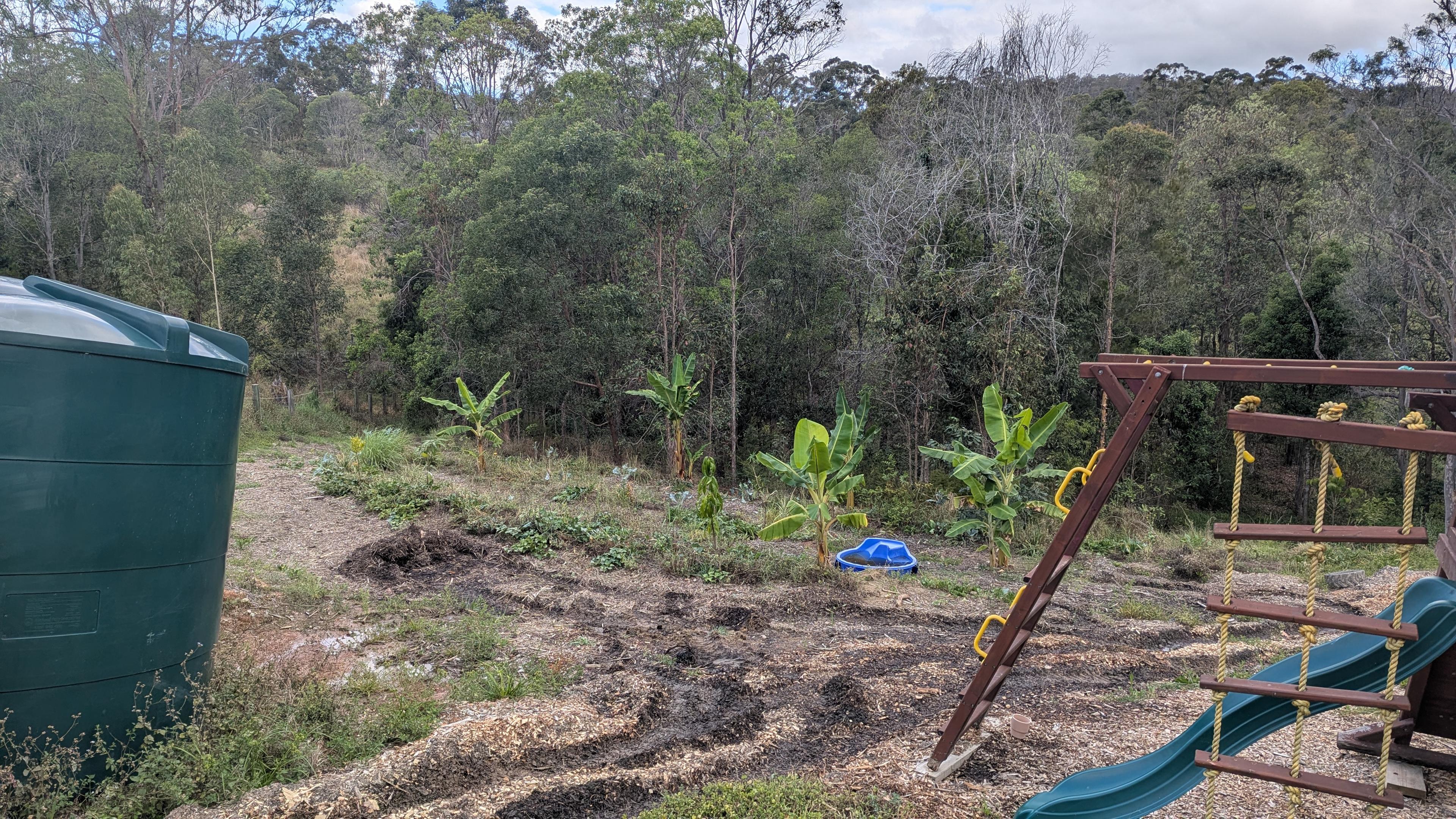
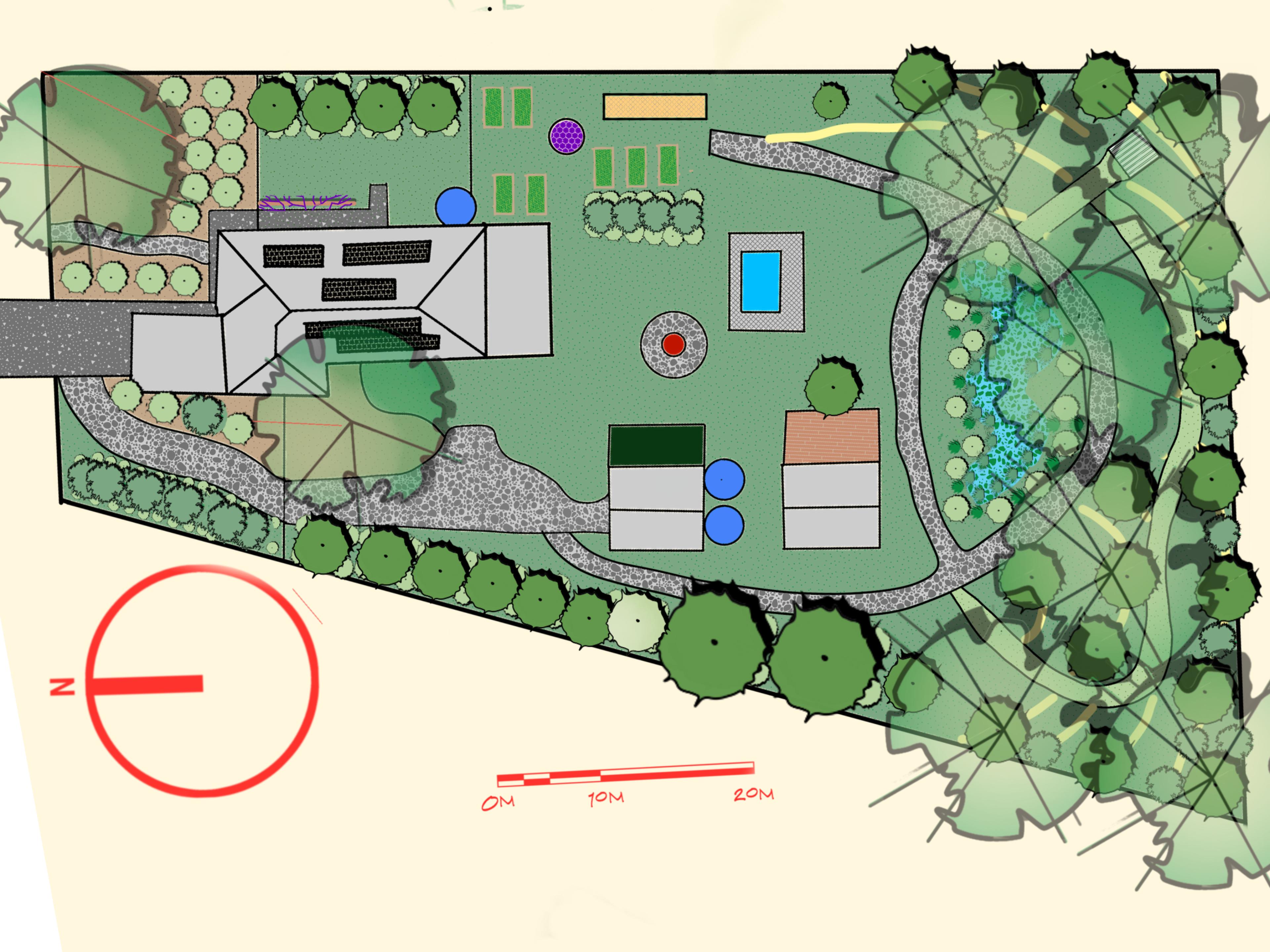
Community
Schools, cafés, community gardens, and similar group projects. Custom scope reflecting group consultation, multiple stakeholders, and site complexity.
What is permaculture
Permaculture is a way of designing land so it works more like a natural ecosystem and less like a list of chores. Instead of a lawn you mow, garden beds you fight to keep alive, and a fruit tree or two scattered wherever there happened to be space, it starts with a proper layout: what goes where, how much sun and water each part actually gets, and how everything connects, so the whole property produces more food for less ongoing effort.
It isn’t a look, and it isn’t the same thing as “an overgrown veggie patch.” It’s a design discipline, closer to architecture than gardening: read the site properly first, then place everything by how often it actually needs your attention. Done properly, a permaculture layout is easier to run than a conventional garden, not harder.
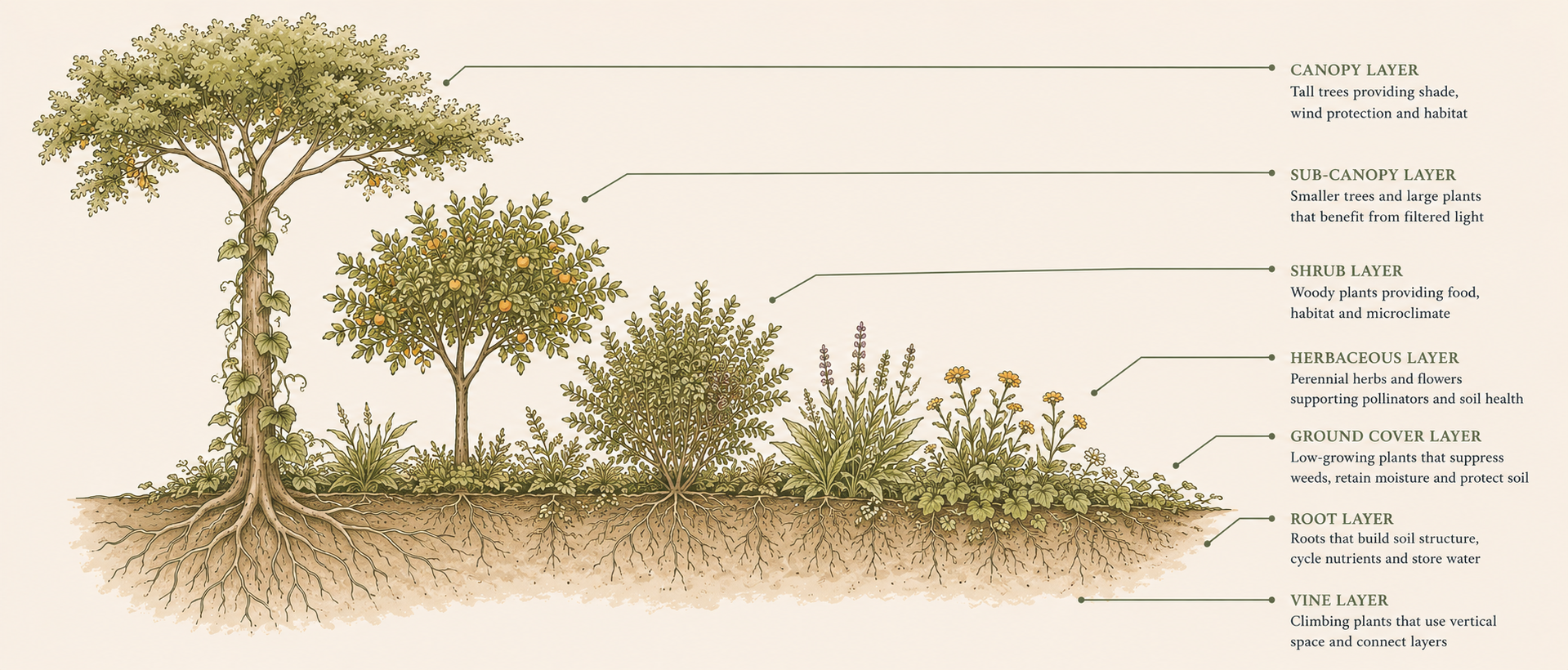
SEQ’s climate makes a badly laid-out garden expensive to run: hot, humid, storm-driven summers followed by a much drier back half of the year mean irrigation, drainage, and plant choice all have to be planned for extremes, not an average. A generic design tends to mean beds that flood in February and bake by September, and food-growing space that never gets planned properly so it quietly stays lawn instead.
A proper permaculture design solves the actual layout problem: it maps your specific site’s sun, water, and soil before anything gets placed, groups plants so they support each other, and builds in water capture and shade instead of fighting the climate season to season.
Every Stillfoot design is built without synthetic fertilisers, weed killers, or fungicides. That sounds like a restriction, but it’s closer to the opposite. Most of the work conventional gardens spend on chemicals is fixing problems that a better layout would have prevented: poor soil, wrong plants in wrong spots, bare ground baking in the sun.
If you’ve tried “going organic” before and it didn’t work, it probably wasn’t the method that failed. Swapping a bottle of Roundup for a bottle of organic spray still treats the garden as something that needs constant intervention. It misses the actual problem. In most cases, the soil is dead, the plants are in the wrong place, and there’s no system holding it together. Fix those three things and you’ll spend less time, not more.
On our own property, the soil was compacted and lifeless. Within a year of consistent mulching and composting, earthworms came back, fungal networks became visible under the mulch, and the soil changed colour and texture. Nothing was sprayed. The biology did the work once we gave it something to eat.
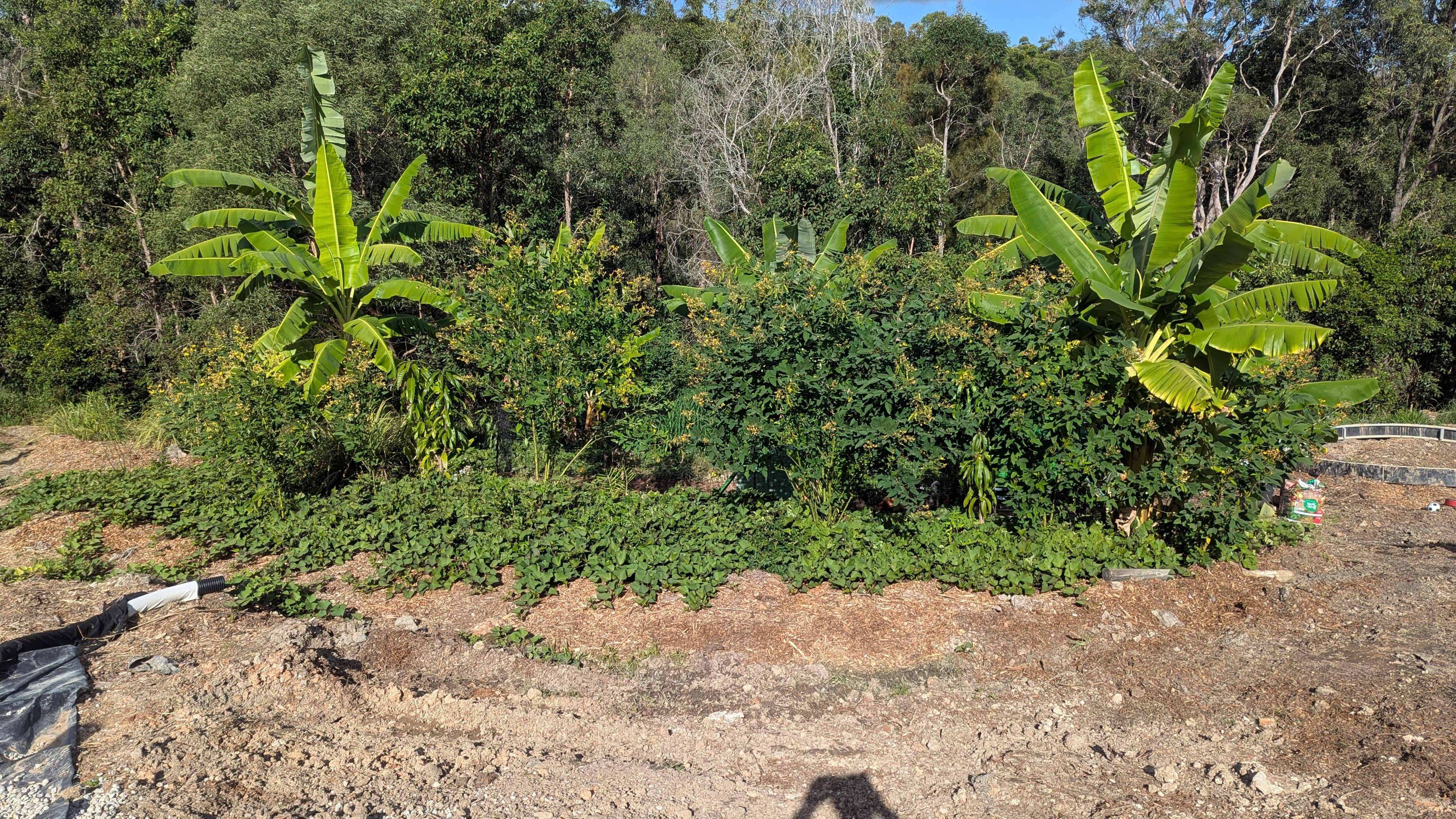
Comfrey mines nutrients from deep in the subsoil and drops them as mulch when you chop it. Sweet potato covers bare ground so weeds can't establish. Cherry tomatoes and herbs like basil and rosemary are naturally pest-resistant and productive from the start. In SEQ's climate these basically can't fail.
When aphids turned up on our property, we left them alone. Within a couple of weeks, ladybugs followed, and the aphids were gone. That only works in a garden with enough diversity to support those predators. A monoculture lawn with one veggie bed can't do it. A properly designed garden can.
You don’t have to redesign your whole yard to start. One cleared bed, good compost, a thick layer of mulch, and a few plants chosen for your actual conditions will teach you more in a season than a year of fighting the wrong setup. The design side of what we do is about making sure the whole property works this way, so every bed and every tree is in the right place from the start, and the whole thing gets easier to run each year rather than harder.
Our approach
Every design starts with a proper look at what’s already there: existing vegetation, water flow, soil, sun. We work with what’s already established, because land that’s already doing something right is worth building on.
Every design starts with a proper site read: sun and shade across the seasons, where water pools or drains, what's already thriving, what the soil actually needs. Everything after that follows from what the reading turns up.
We design for land that produces — food, shelter, water capture — and gets cheaper to run over time: less mowing, less water, fewer inputs. A garden that gives you time back rather than eating your weekend.
No synthetic fertilisers, weed killers, or fungicides. Never designed in, never recommended as the maintenance plan. If something's already working for your land and its wildlife, that's what we build around.
Every property we design sharpens what we bring to the next. You get patterns and plant combinations already proven on real Southeast Queensland sites, not a generic template.
Proof it works
Everything above this point has been philosophy and process. This is the ground it comes from: our own property, the same place every idea gets tried before it goes anywhere near a client’s.
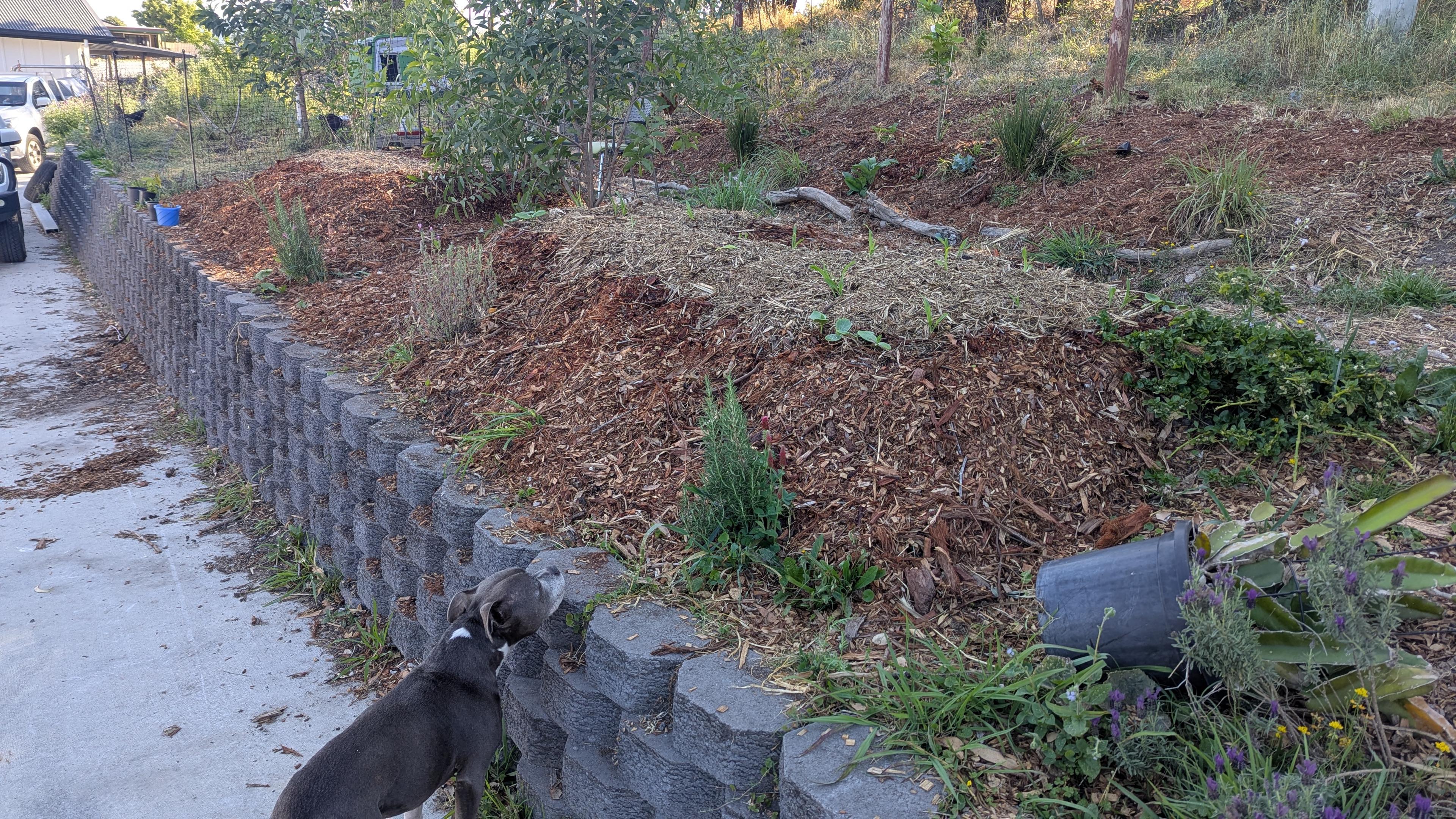
Ten months, one retaining-wall bed
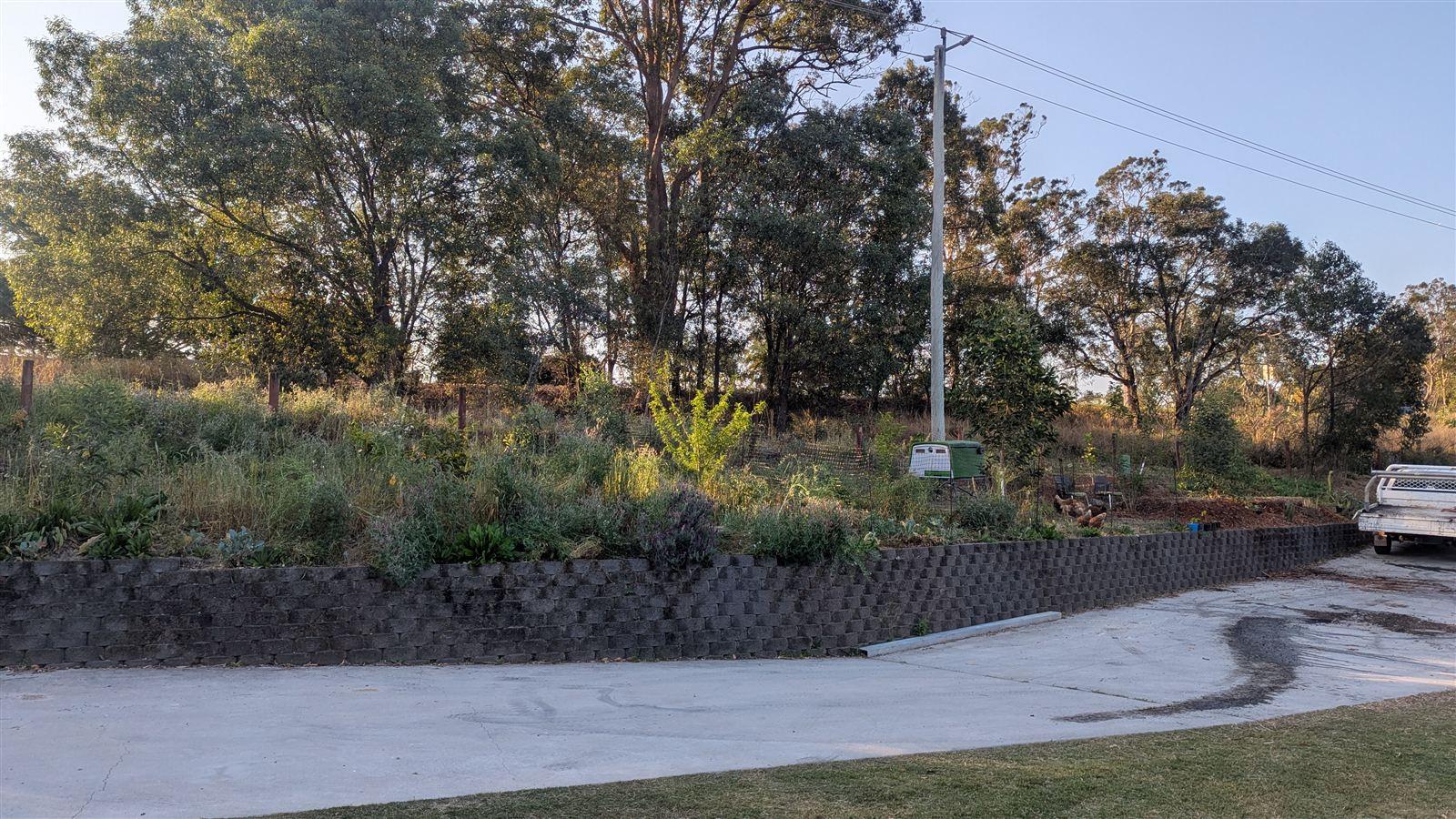 01
Where it started
Overgrown, unplanned, doing nothing for anyone.
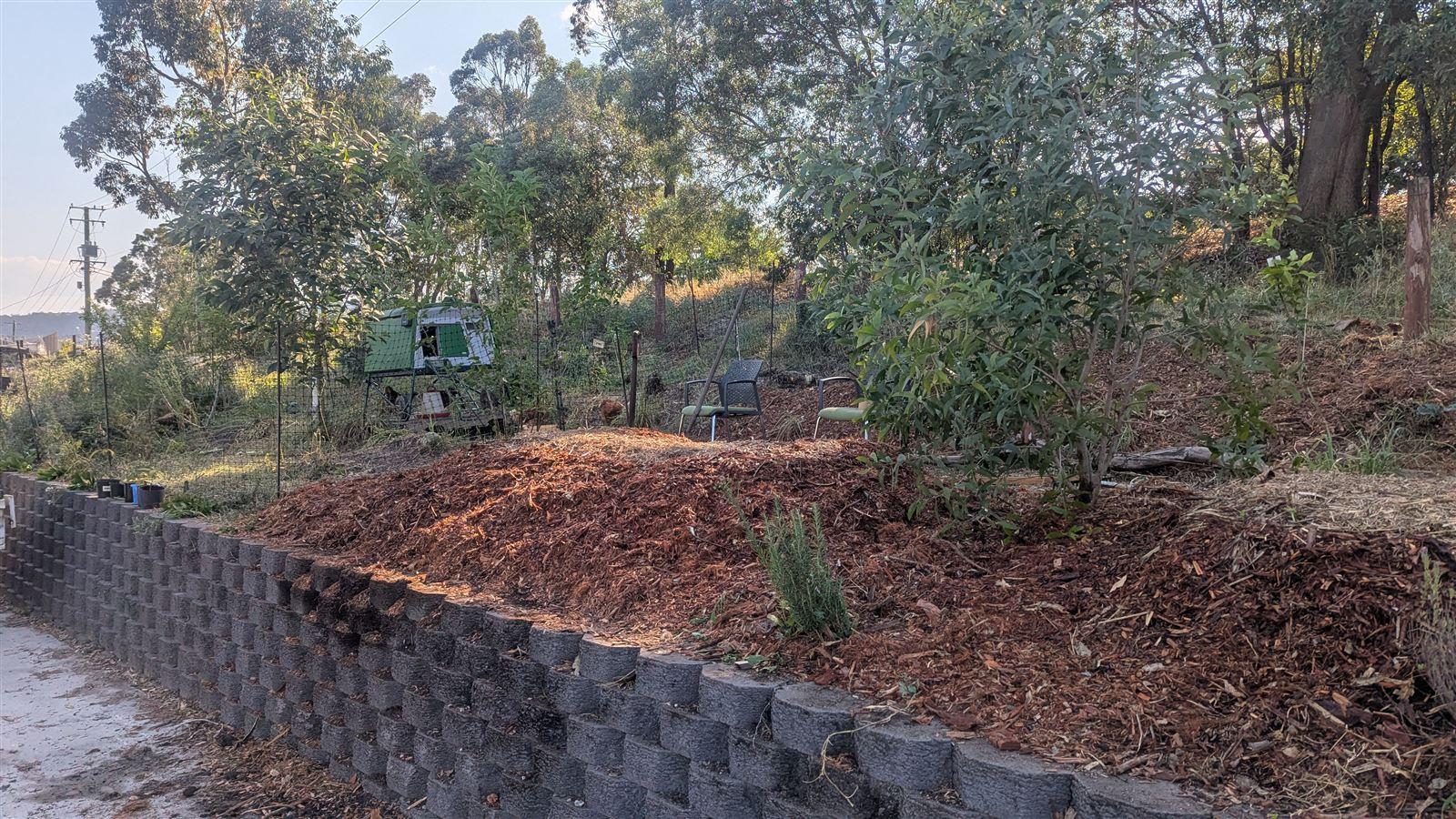 02
Freshly mulched
Ready to plant, a seat added to actually enjoy it.
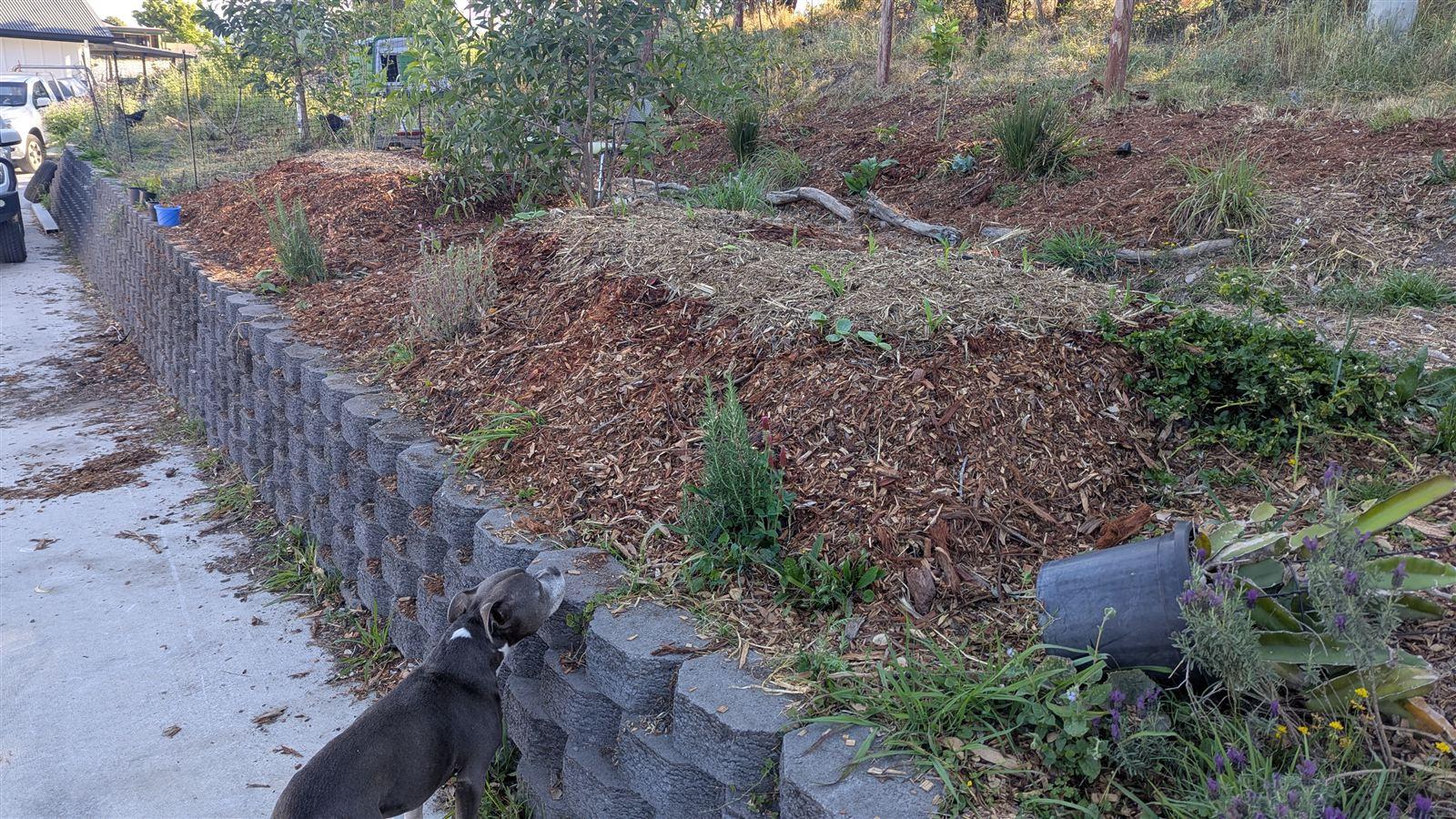 03
A few days in
Seedlings finding their feet through the mulch.
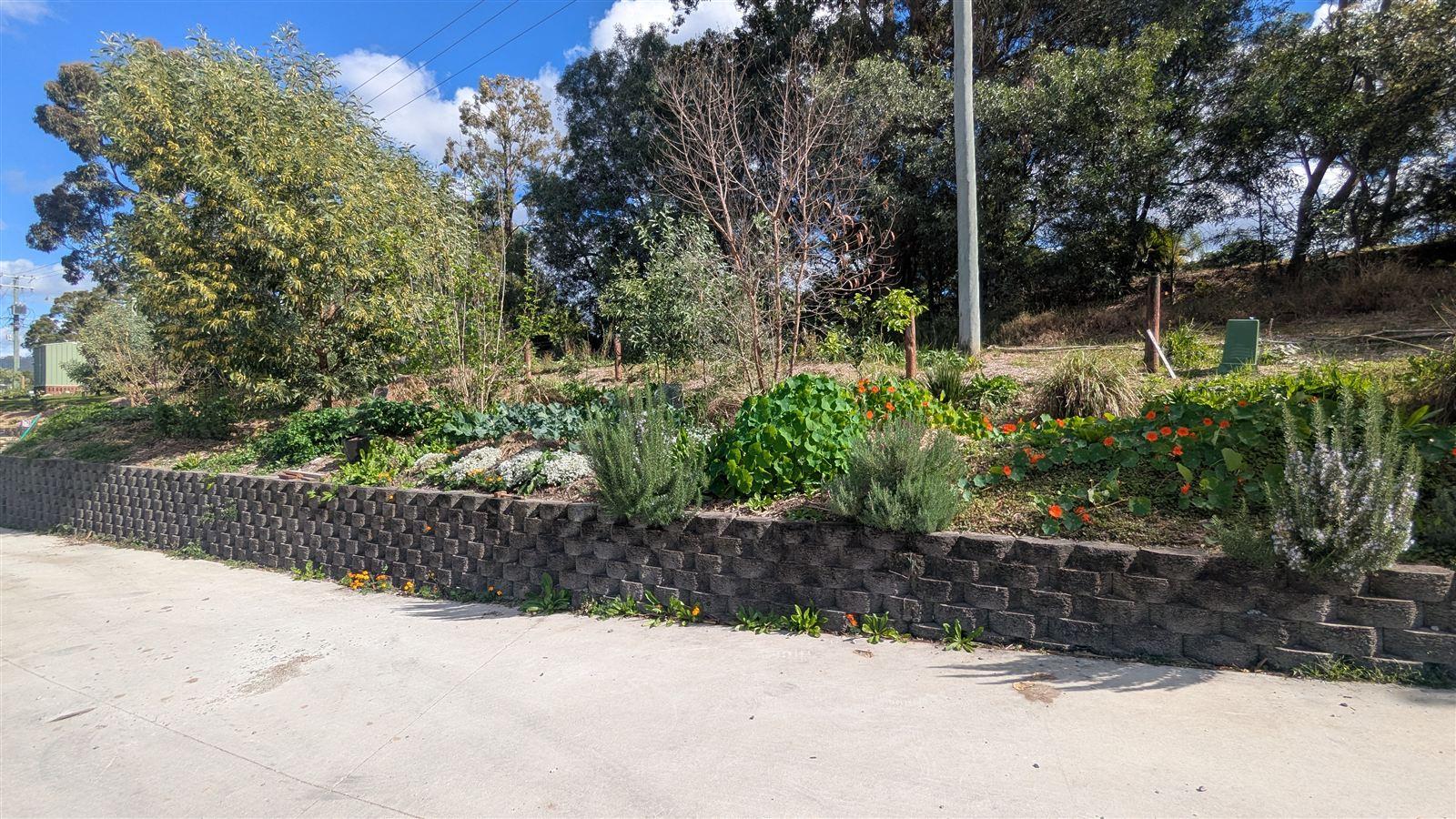 04
Ten months on
Rosemary, nasturtium, and marigolds doing exactly what companion planting is meant to.
More from the same ground
Case study
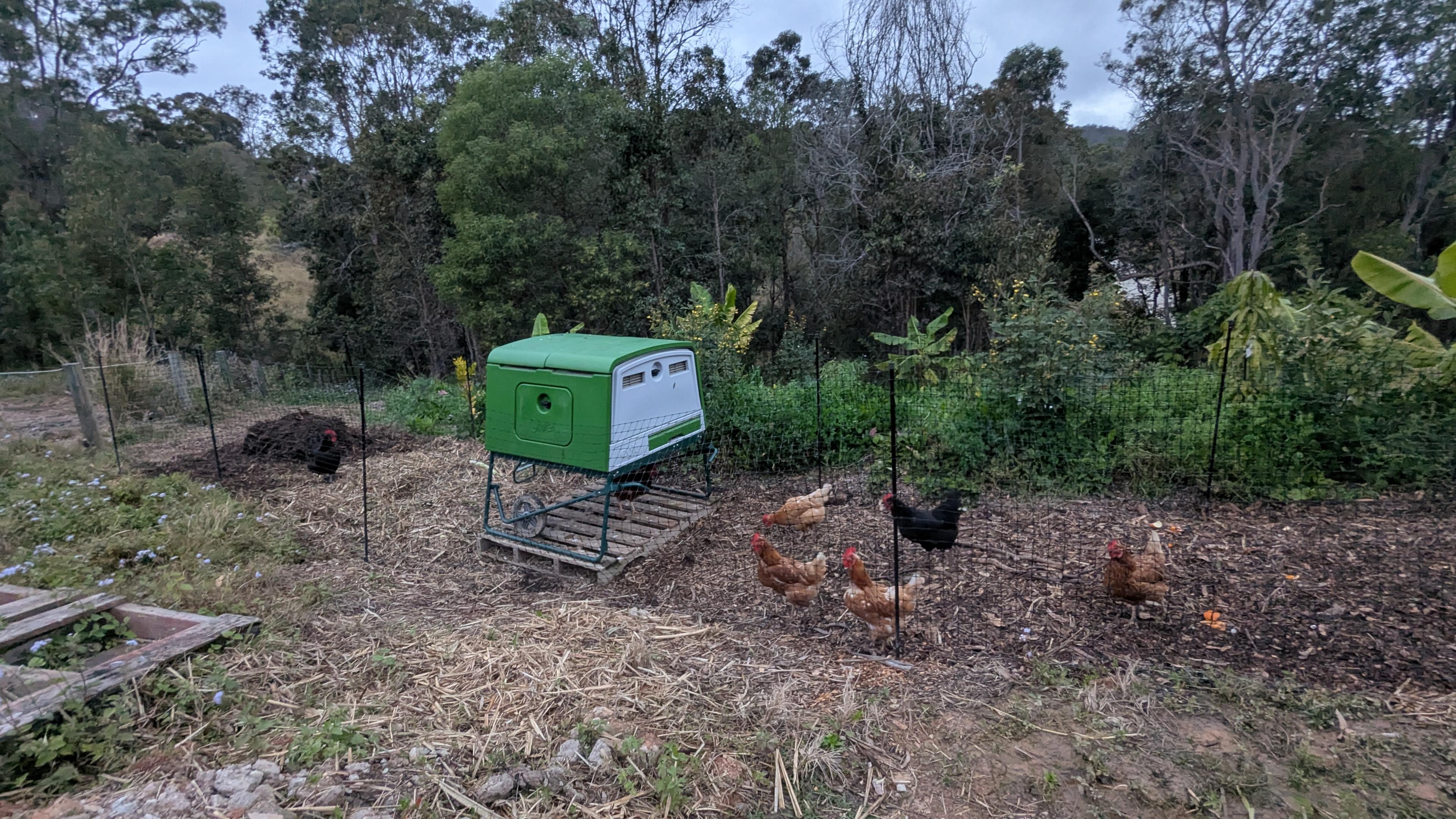
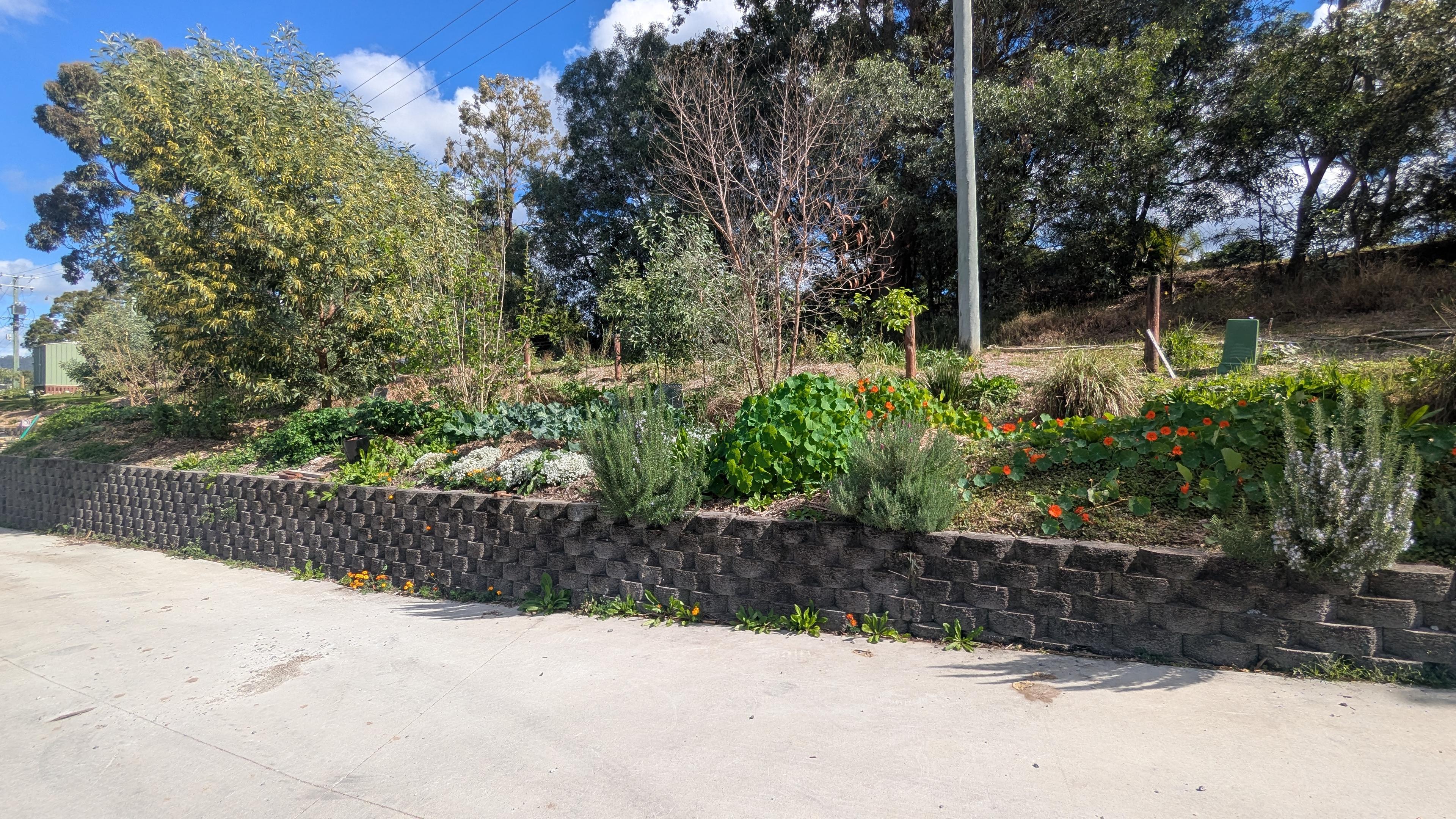
An established acreage property in the Lockyer Valley, already home to a working kitchen garden, fruit trees, and a fire pit Jake didn’t want to lose. Three separate soil tests came back almost pure sand with no earthworms anywhere, so the design had to solve for soil before anything else went in the ground.
A productive green wall and four fruit-tree guilds turn the daily walk into a harvest, fed by chickens and compost working as one system. Along the boundary, one band of planting does four jobs at once: slowing wind, breaking fire, sheltering a koala refuge, and holding the property’s structure for decades.See the full project →
Field notes
Short, plain-language pieces on the design thinking behind every Stillfoot project.
Water
Every site already has an opinion about where water wants to go. We read it before we design anything.
Read more →Design thinking
A boggy corner or a scorching wall usually isn't a defect. It's an unused resource in disguise.
Read more →Ecology
“Leave it wild” and “leave it alone” aren't the same thing, especially at a forest boundary.
Read more →
Free guide
Twenty plants that reliably thrive in Southeast Queensland, a full page each, plus the gardening basics that get them growing. Pop your email in and it’s yours.
About
Before Stillfoot, I spent years as a combat engineer in the Australian Army. When that ended, I had to find something new to build a life around, and I started with the plainest version of that: a vegetable patch in my own backyard. That turned into a proper rabbit hole. Permaculture became the thing that pulled it all together — growing real food, regenerating land instead of just using it, and building a life that runs on something other than the usual grind.
I hold a Permaculture Design Certificate from Northey Street Farm, and Stillfoot is where that training gets put to work: reading a property properly, understanding what it’s already doing, and designing with that instead of against it. Every design I hand over is built the same way I’d build my own.
Permaculture Design Certificate · Northey Street Farm
Start here
Tell us a bit about your property and what you’re hoping for. It takes about ten minutes, and we read every submission ourselves. It’s the first step toward a design built around your actual site, not a template.