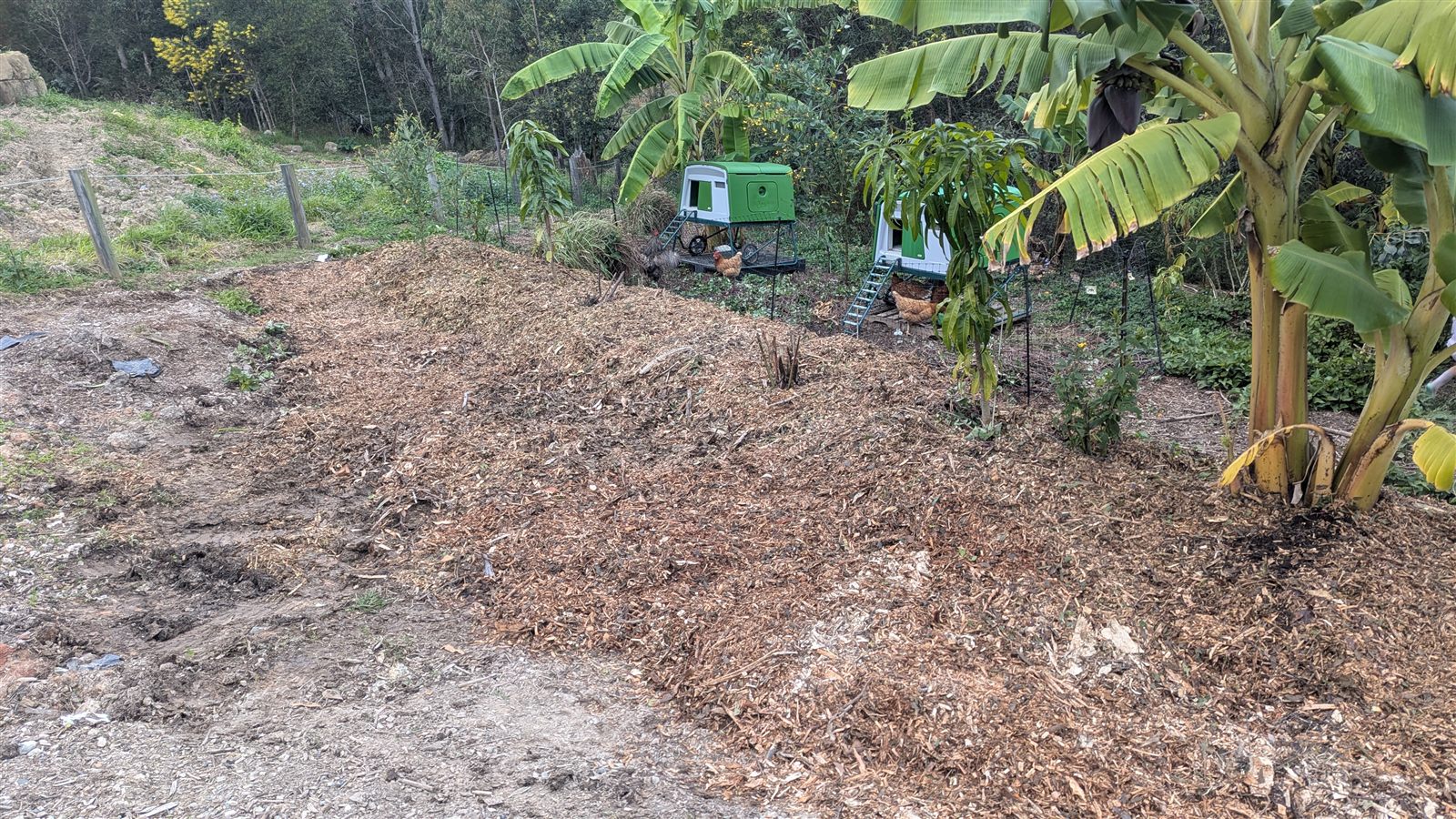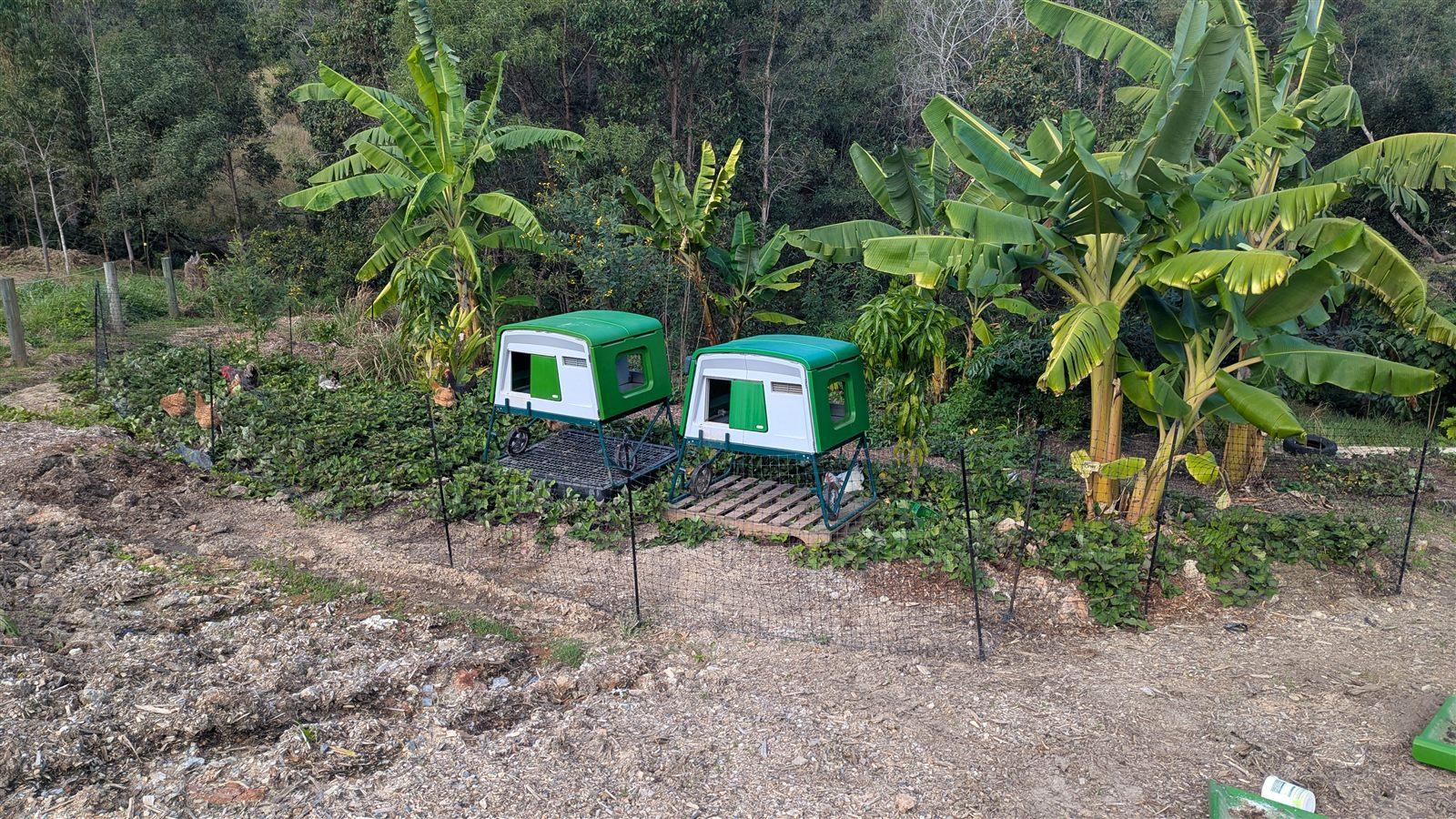
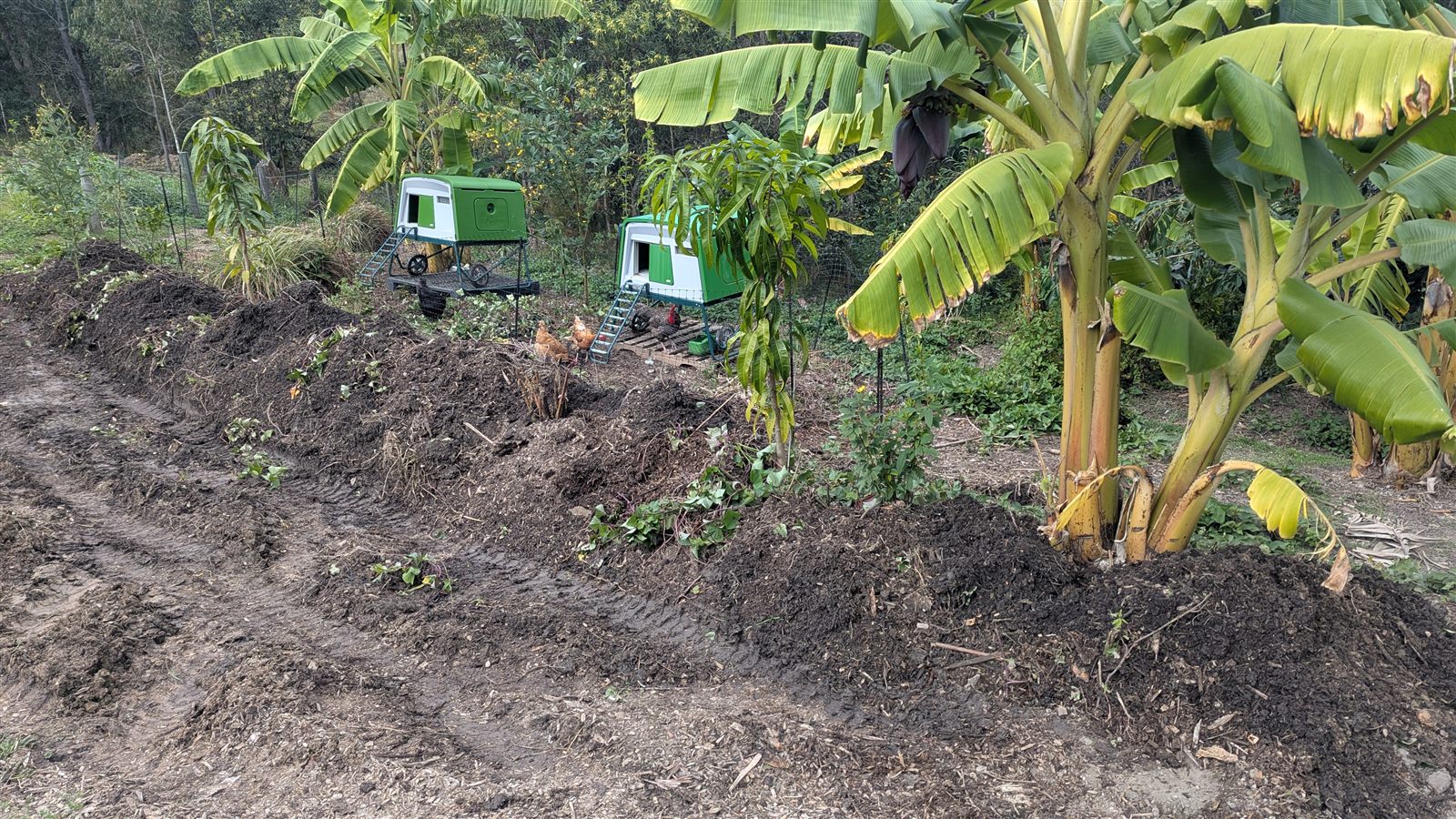
Twice a week or so, two mobile chicken tractors get wheeled onto the same patch of ground: the flat top of a swale planted a few years back with banana, mango, mandarin, and pigeon pea. This isn't a client site. It's our own patch, the same ground we test everything we design for clients on first. The chickens scratch, they peck, they leave manure behind, and by the time they're wheeled off again, the ground underneath has been weeded, fertilised, and turned, without a single tool touching it.
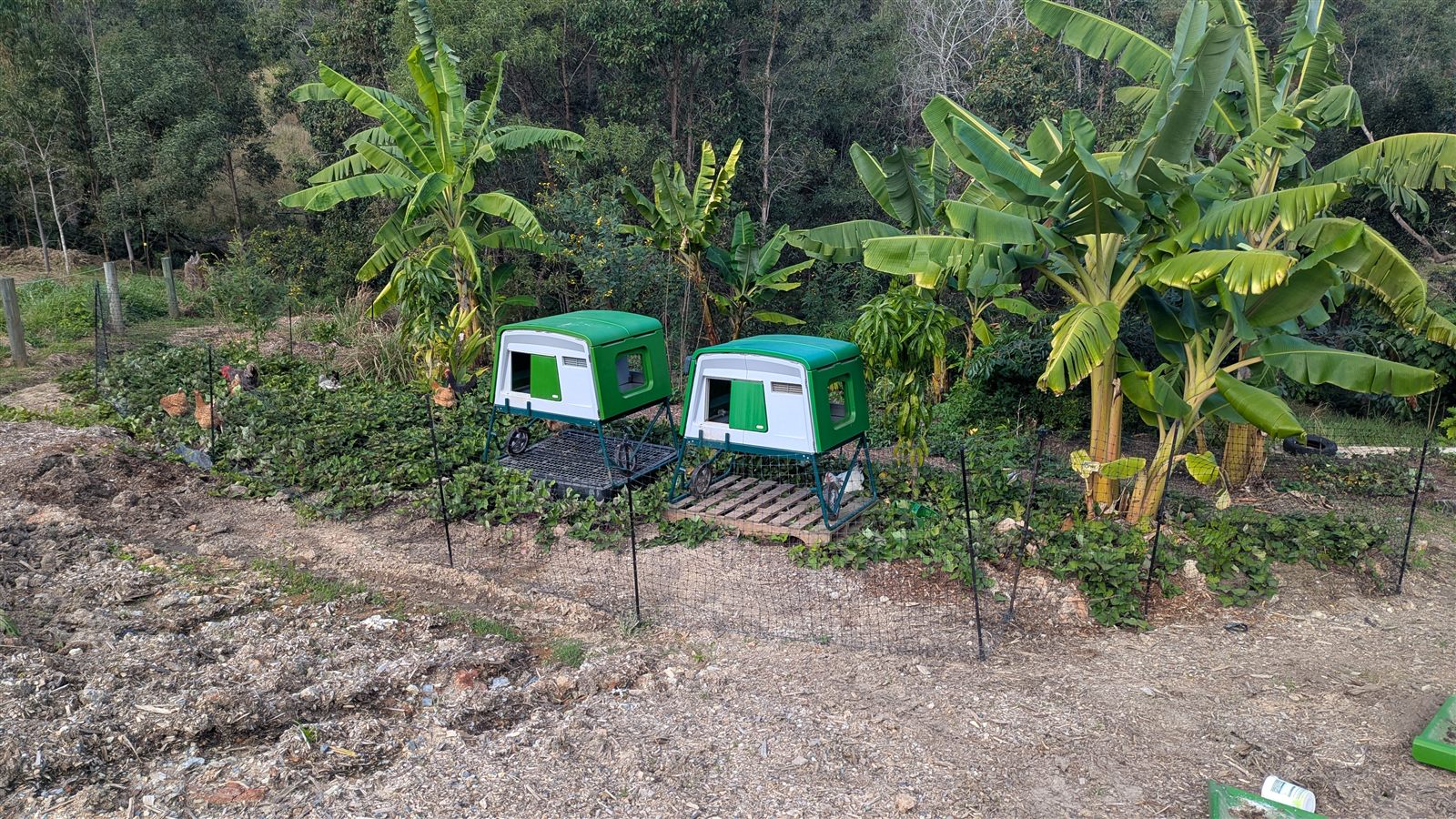
That's not a shortcut. It's one of permaculture's core design ideas, put into practice on an ordinary afternoon: every element in a system should do more than one job. A chicken isn't just an egg producer sitting in a coop. Run properly over ground that needs attention, the same bird is a weeder, a pest controller, a fertiliser applicator, and a compost turner, all at once, on top of laying eggs the whole time. One element, several jobs, instead of a separate tool or input for each.
The harvest is a bonus, not the point
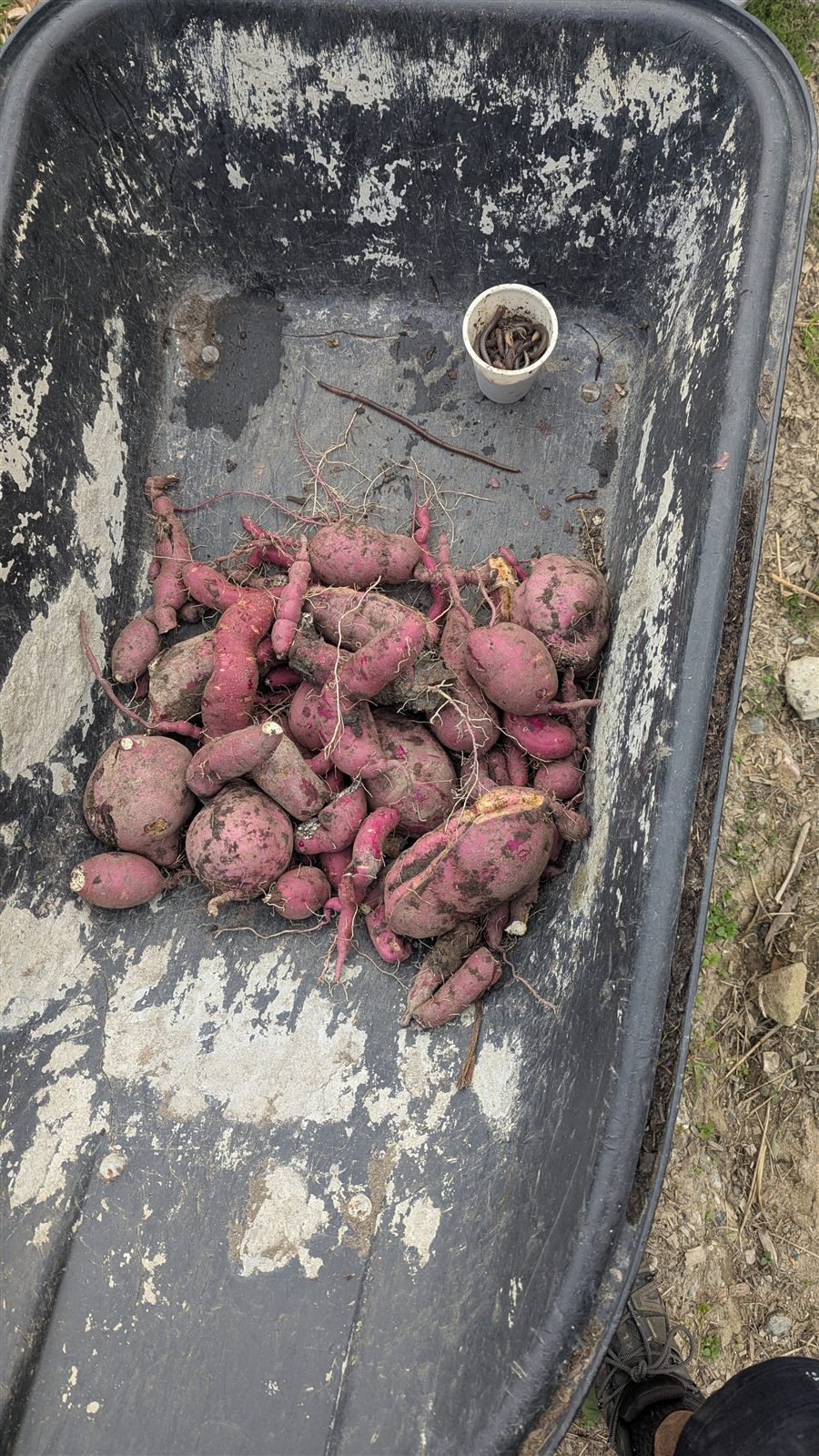
Underneath the bananas and citrus, the ground is covered in sweet potato vine, planted as a living mulch rather than as the main event. Pulling a pitchfork through that soil recently (carefully, working around the tree roots) turned up a cup of worms and a small wheelbarrow load of sweet potato, a modest result by vegetable-garden standards. But the sweet potato was never really the point. Its job is to hold the ground, crowd out weeds, and keep the soil covered while the trees above it get established. Every actual sweet potato that comes out of the ground afterward is a bonus on top of a job already done.
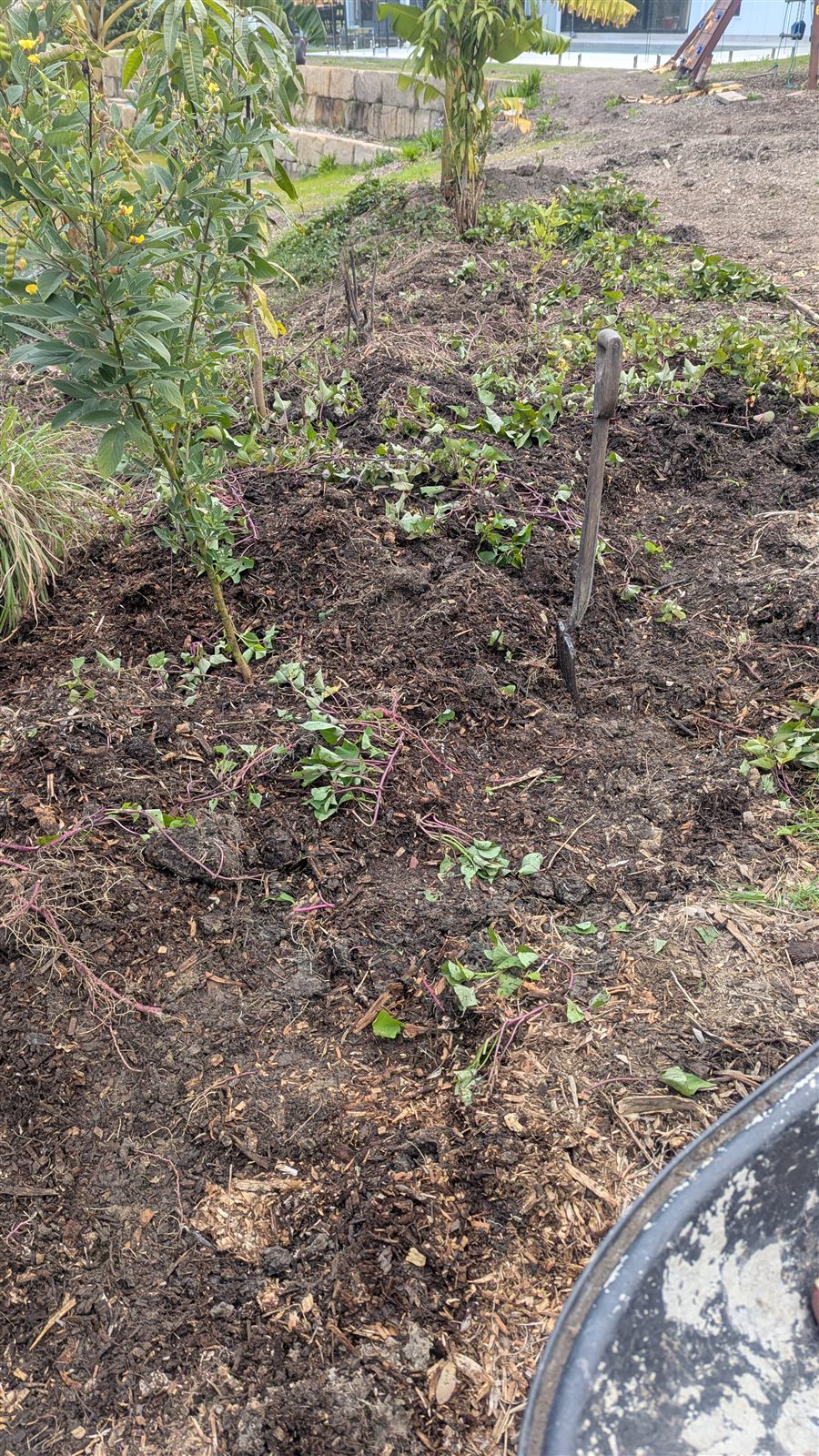
That's the same thinking behind Stillfoot's own line about restraint being the product: a plant, an animal, or a piece of earthworks in a well-designed system almost always has a structural job to do first, and a yield second. Judge sweet potato ground cover only by the size of the harvest and it looks unimpressive. Judge it by whether the soil under three mature fruit trees stayed alive, covered, and weed-free for years, and it's doing exactly what it was planted for.
Design decisions made once, paying off for years
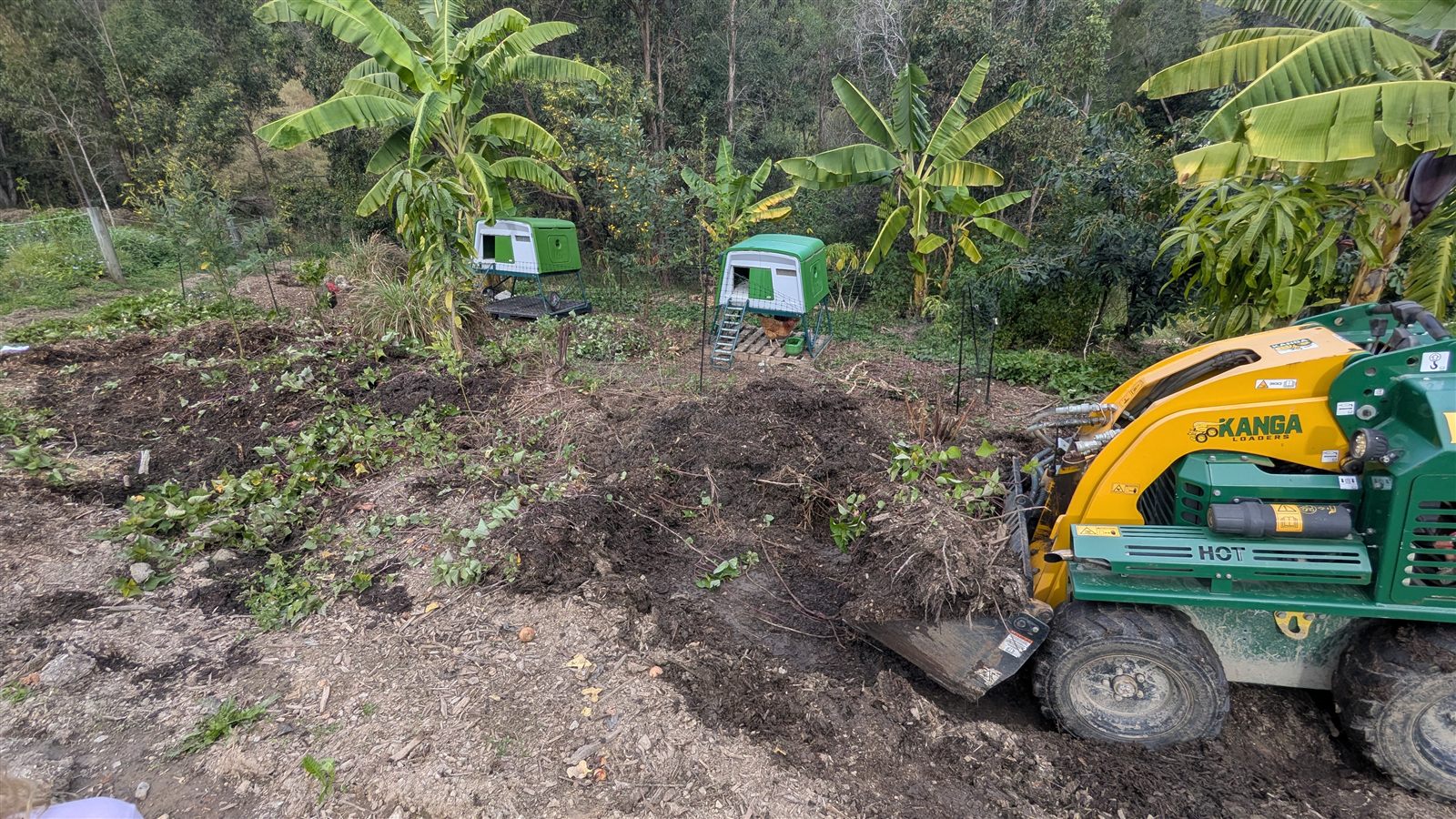
The swale itself is a good example of the same thinking applied at the design stage rather than the maintenance stage. It was built with a specific piece of machinery in mind: wide enough at the flat top for the ground-prep and material-moving equipment that would need to service it for years afterward, not just wide enough to hold water on the day it was dug. That one decision, made once at construction, is the reason ten buckets of compost could be moved onto the berm and levelled out in a single afternoon years later, instead of it being a wheelbarrow job every single time.
Every Stillfoot design works through the same question before any earthworks go in: not just what does this need to do today, but what will need to reach it, by hand or by machine, every season after that.
Nothing here comes out of a bag
The maintenance routine closes the loop the same way the design intends it to. Compost gets dumped straight onto the berm and raked back into the system that's feeding it. A heavy layer of mulch goes over the top to protect the soil and hold moisture in before the next round of rain and heat. The fertility is generated on site, by the same system it's feeding, with the chickens doing a good part of the labour for free.
This is what permaculture actually looks like day to day. Not something dramatic, but an ordinary maintenance afternoon where a flock of chickens, a swale, a sweet potato vine, and a pile of compost are all quietly doing more than one job each, so the same small piece of ground keeps getting more productive with less outside input every year, instead of needing more.