
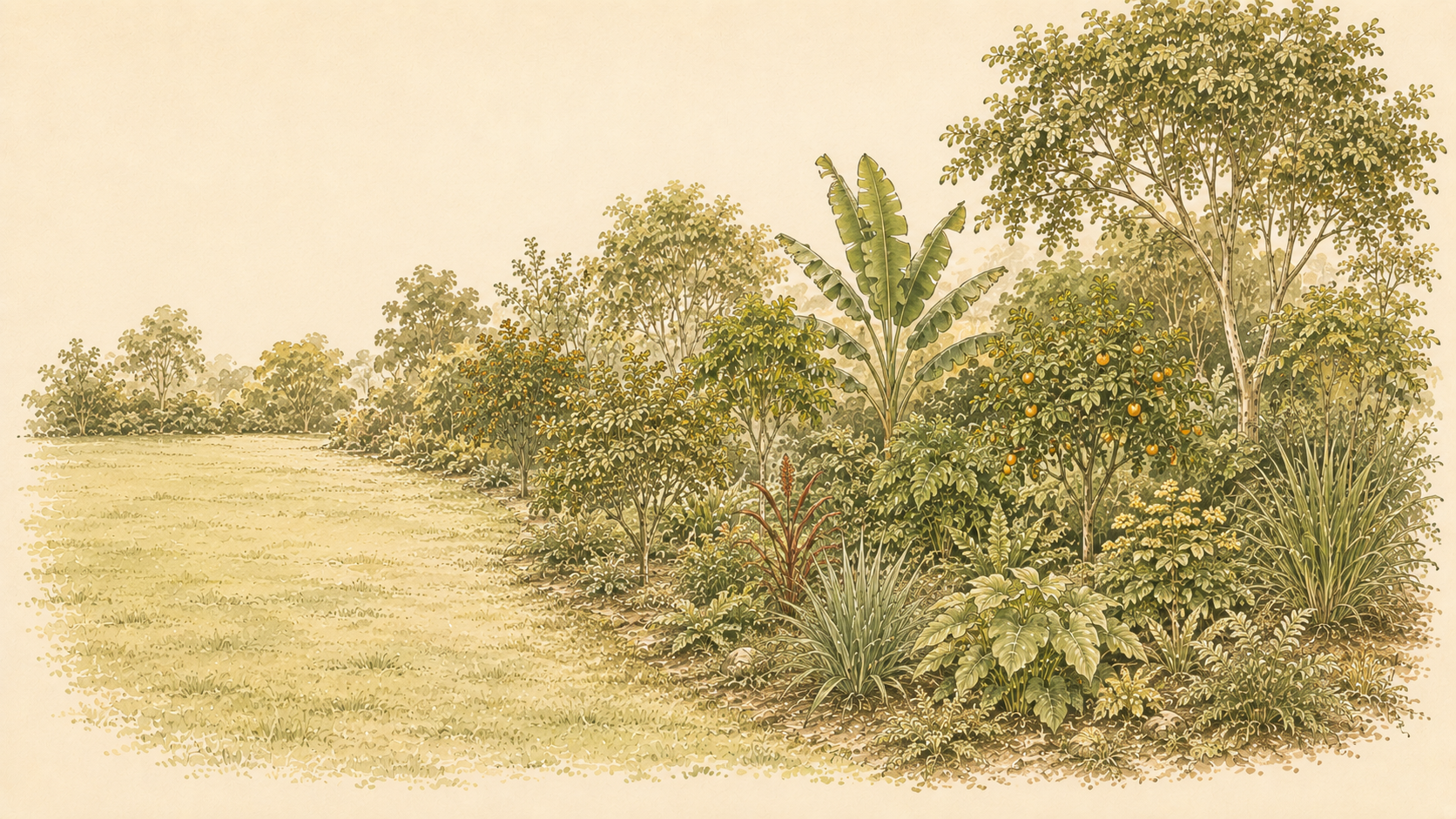
Most of us inherited the idea that a house needs a lawn without ever really asking why. It's worth asking, because the actual answer is stranger, and more useful, than you'd think.
Where the lawn actually came from
The manicured lawn wasn't designed. It started as a byproduct. Sheep and geese grazing the grounds of grand cool-climate estates kept the grass short, and when mowers replaced the animals, the look stuck around long after the reason for it disappeared. An old US Department of Agriculture photograph from 1897 even captions a flock of sheep as "the lawn mowers of the park." We kept the aesthetic. We dropped the animals that made it free.
The numbers are bigger than they look
Older US figures on lawn's actual resource footprint are dated now, but the shape of the argument hasn't changed. Lawn maintenance was found to be one of the most energy-intensive land uses per square metre in the country: millions of litres of fuel burned mowing it, close to a fifth of the country's total fertiliser output going onto it (more than an entire nation the size of India was using on its actual food crops at the time), and in dry states, up to 44% of household water. All of that, for a crop nobody eats.
Every society that grows extensive lawns could produce all its own food on that same land, using the same resources.
What we ask instead
We're not precious about lawn as a category. A path, a play space, somewhere for kids and dogs to run: that's a genuinely good use of open turf, and we'll design for it when it earns its place. The question we actually ask is simpler. Is this particular patch of lawn doing a job, or just costing you time, water, and fuel to maintain a look nobody's really enjoying? Once you start asking that question bed by bed, most properties turn out to have a lot more "just costing you" than "doing a job."