
When people plant for wind, the instinct is to build a wall. Get the trees close together, pick something dense, close every gap, and stop the wind dead. It is a reasonable instinct and it produces a worse result than leaving the planting deliberately half open.
What a solid barrier actually does
Wind hitting a solid barrier does not stop. It goes up and over, and then it comes back down on the other side, hard and messy. You get a small pocket of genuine calm right behind the barrier and then a zone of turbulence where the air crashes back to ground level. On a exposed site that turbulence can be rougher on plants than the steady wind was.
A barrier that lets some air through behaves completely differently. Instead of forcing the wind over the top, it lets a portion pass and slows it as it goes. The wind is filtered rather than blocked, and the sheltered zone behind it is longer, calmer, and much more even.
Aim for roughly half open in the front row. Not a wall, a filter.
The figure most often used is 40 to 50 percent penetrability through the front line of planting. It looks unfinished to the eye and it is doing more work than the dense version standing next to it.
It goes in first, not last
This is the part that surprises people on acreage. On a genuinely exposed site, the windbreak is infrastructure, and it has to be planted and partly grown before the productive system behind it can be established with any confidence. Fruit and nut trees on a wind blasted block will sit and sulk for years, and no amount of feeding fixes it, because the problem is not the soil.
Which means the least visible part of the plan is often the first thing in the ground. A row of tough pioneer species along a boundary is not what anyone pictures when they imagine the finished garden, and it is what makes the finished garden possible.
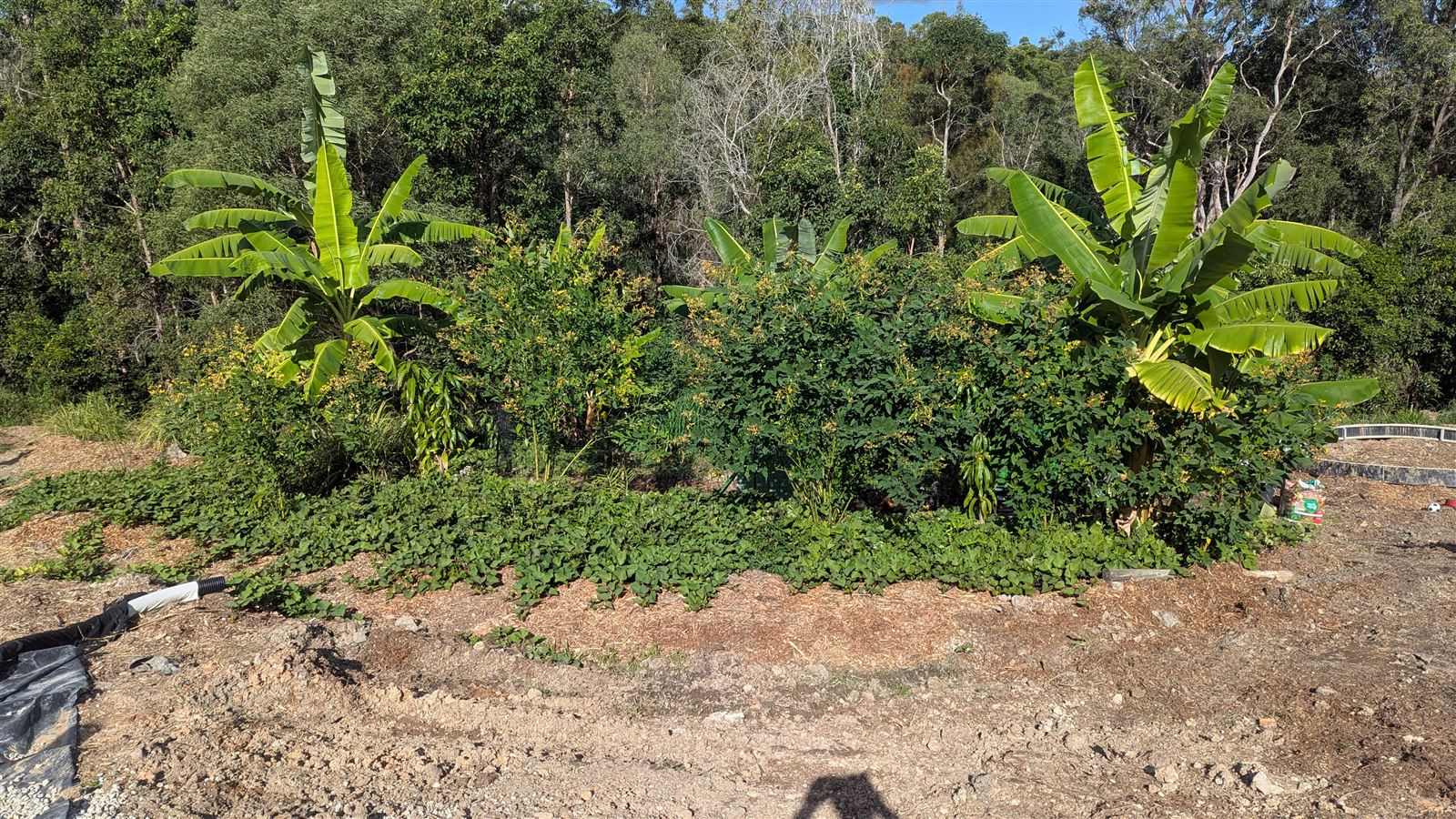
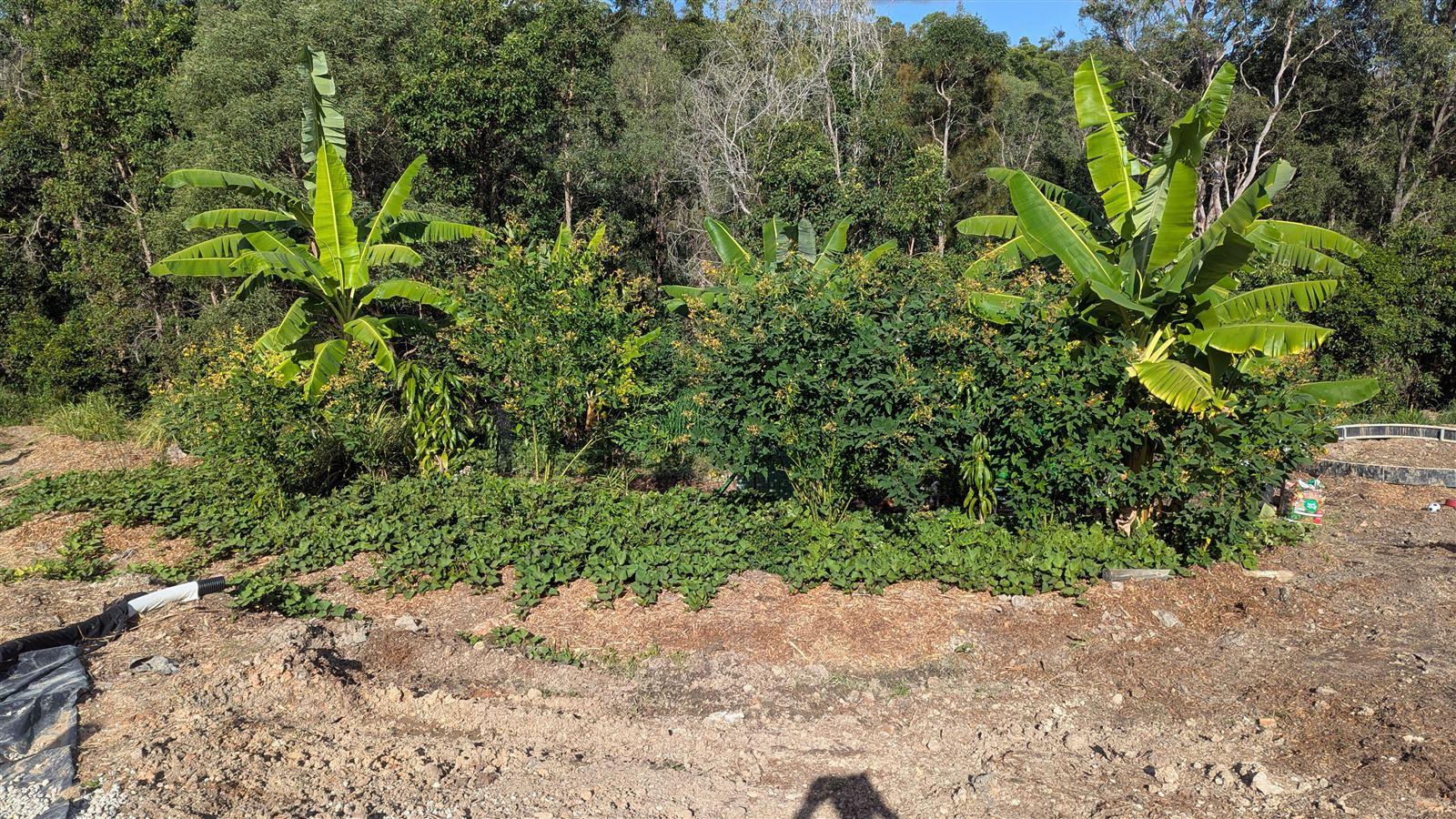
This row on our own place is growing in the shelter of the established trees behind it. The bananas in particular would be a shredded mess in an open paddock. Broad leaves and wind do not get along.
What actually kills a young windbreak
Not cold, and usually not wind either. It is drying out. Young plants in an exposed position lose moisture from their leaves faster than a small root system can replace it, and that is what takes them out in the first season, even for species that will be genuinely drought hardy once established.
So a new windbreak needs three things it rarely gets: water through establishment, a good depth of mulch or stone around the base to hold moisture and stop root disturbance, and some shelter of its own while it is small. That last one sounds circular and it is. Individual tree guards, a temporary permeable fence, or simply leaving the rough tussocky grass standing on the windward side rather than mowing it all off will each do the job.
Make it earn its space
A windbreak occupies a strip of your property for the next few decades. There is no reason for it to only block wind. Depending on what suits your site and climate, the same row can be giving you:
- Mulch, from species that drop a steady volume of usable litter
- Nitrogen, from wattles and other legumes feeding the soil around them
- Bee forage, if you choose for flowering season rather than just toughness
- Stock fodder, on a property carrying animals
- Habitat, which on most blocks is doing more pest control than anything you could buy
One honest caution though. In genuinely severe exposure, do not over engineer the front line for multiple uses. Plant whatever will actually survive out there, and put the more useful and less hardy species one row back, in the shelter the first row is creating.
One thing worth checking before you plant
Many of the traits that make a plant wind hardy also make it fire prone, and some of the toughest windbreak species are among the worst things to have on the boundary that carries your fire risk. If your exposed direction and your bushfire direction are the same one, that is worth resolving on paper before anything goes in the ground, not afterwards.