Stillfoot Land Design

Services

Landscape design built around your land, not a template.

Every Stillfoot project starts the same way, with a real look at your site, before anything gets designed. Below is how we scope that work depending on the size and kind of property you've got. Pricing is quoted after we've seen your site and heard your goals, so it always matches what's actually there.

Every project includes

What doesn't change between tiers.

  • A free initial conversation to discuss your goals and confirm we're a good fit, before anything is booked.
  • A questionnaire reviewed before the visit, so we arrive already understanding your goals and site background.
  • An onsite inspection, walking the land, reading water flow, aspect, soil, and what's already growing.
  • A design built around your own stated goals, not a generic template pulled off the shelf.
  • One revision round included, so the first draft isn't the only word.
  • Three months of follow-up questions by email after delivery, at no extra charge.
1

Client intake

A short questionnaire and a free 20 to 30 minute call, so we understand what you're after before we ever turn up. No obligation either way.

2

Onsite observation

Walking the land, reading water, sun, soil, and what's already there.

3

Design delivered

A full package built around your goals, plus one revision round.

4

Ongoing support

Three months of follow-up questions by email, included.

Residential, up to ~1,000m²

Suburban Garden Design

Built for a typical Southeast Queensland residential block: lawn taking up more of the yard than it's earning, a bit of established planting, and an interest in growing real food without losing the whole block to it. This is where “I want to grow food but don't know where to start” becomes an actual, buildable layout, mapped to your site's real sun, water, and soil.

What's included

  • Questionnaire review, plus one onsite inspection (up to 2 hours).
  • Full design package: base map, sector map, zone map, concept design, planting plan, staged implementation plan, and maintenance overview.
  • One revision round.
  • Delivered as a digital PDF (a printed physical package is available as an add-on).

Good fit if you've got a standard block and want an efficient layout that actually produces food, without turning every weekend into yard work.
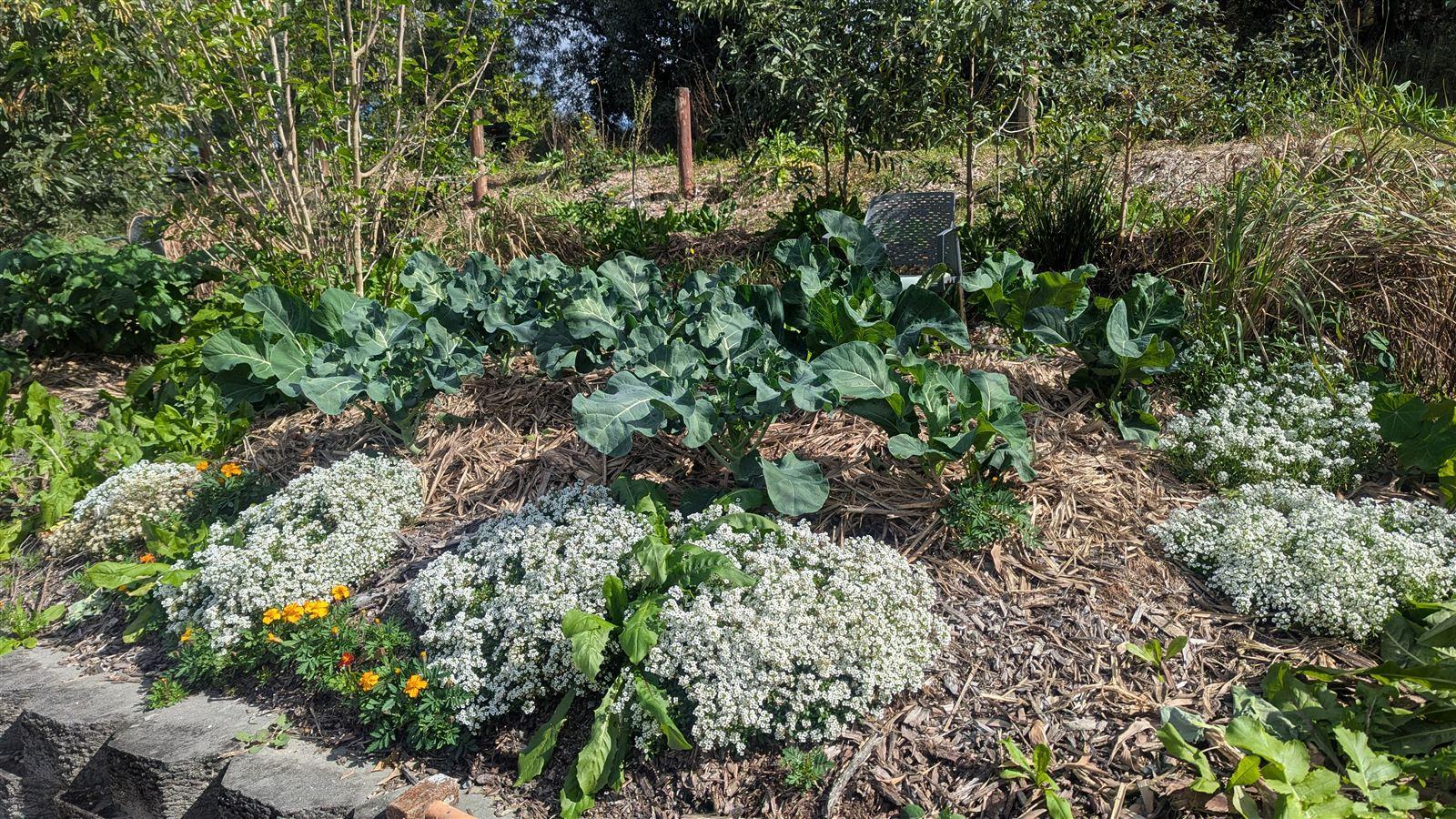
A thriving kitchen garden bed of brassicas edged with alyssum and marigolds
Acreage & rural, ~1,000m² to 5 hectares

Acreage & Rural Design

For larger properties where water, orchards, animals, and access all need to work as one connected system rather than a set of separate projects bolted together. Everything in Suburban Garden Design, scaled up and joined up.

Everything in Suburban Garden Design, plus

  • Expanded site analysis, with detailed water flow and sector mapping across the larger site.
  • Element analysis: an input and output breakdown for key features like chickens, dams, and orchards, and exactly how they connect.
  • One revision round.

Good fit for acreage owners motivated by food production, water management, or animals, who want the whole property working together. Final scope and quote depend on size and complexity, confirmed after the questionnaire and inspection.

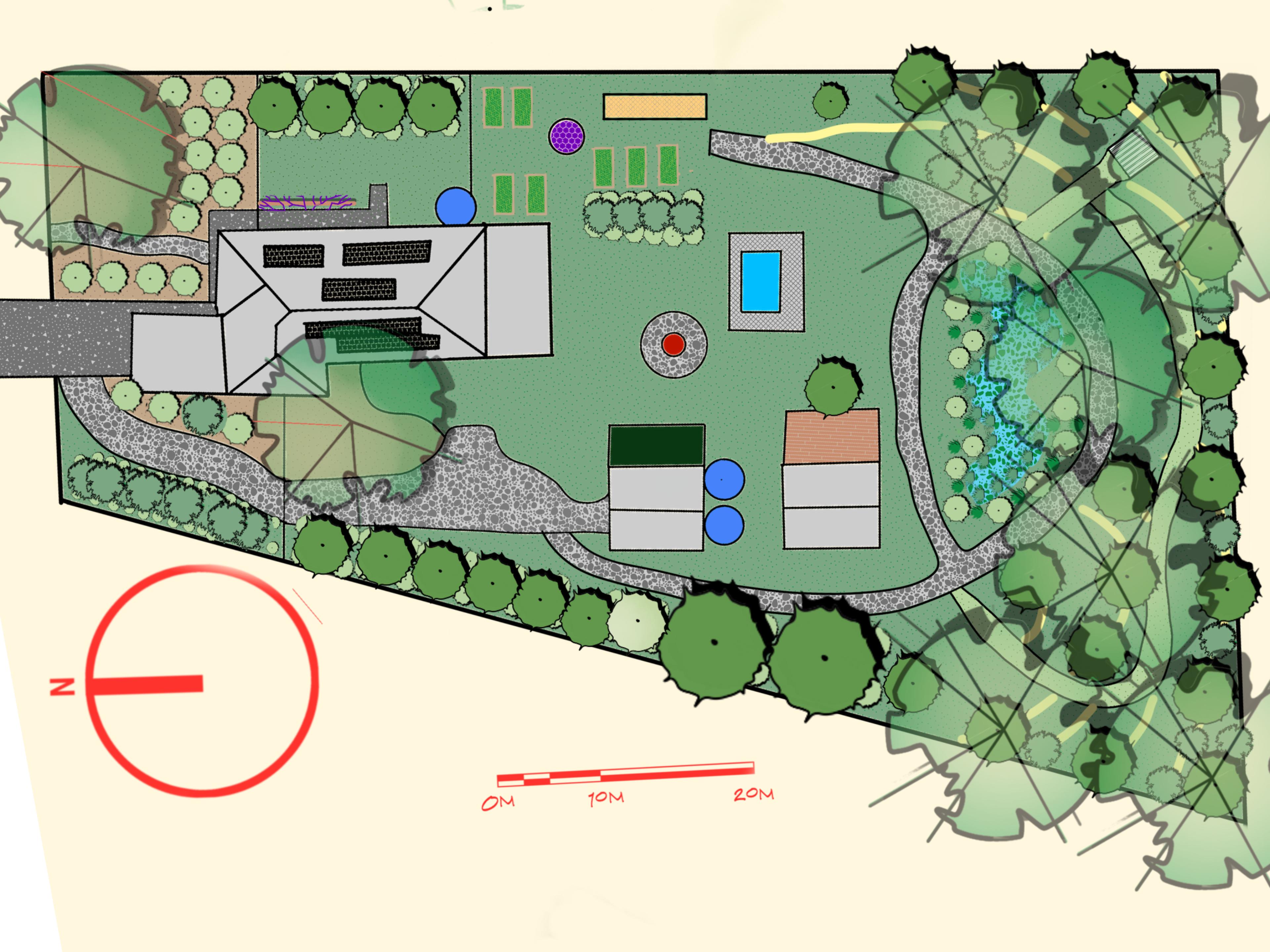
A finished Stillfoot acreage permaculture design showing food forest guilds, boundary planting, and pathways
Schools, cafés, community gardens

Institutional & Community Design

For schools, cafés, community gardens, and similar group projects, where the design has to work for multiple stakeholders and often a more complex site, not just one household's goals.

Custom scope and quote, reflecting group consultation, the number of stakeholders involved, and site complexity. Get in touch to discuss your project.

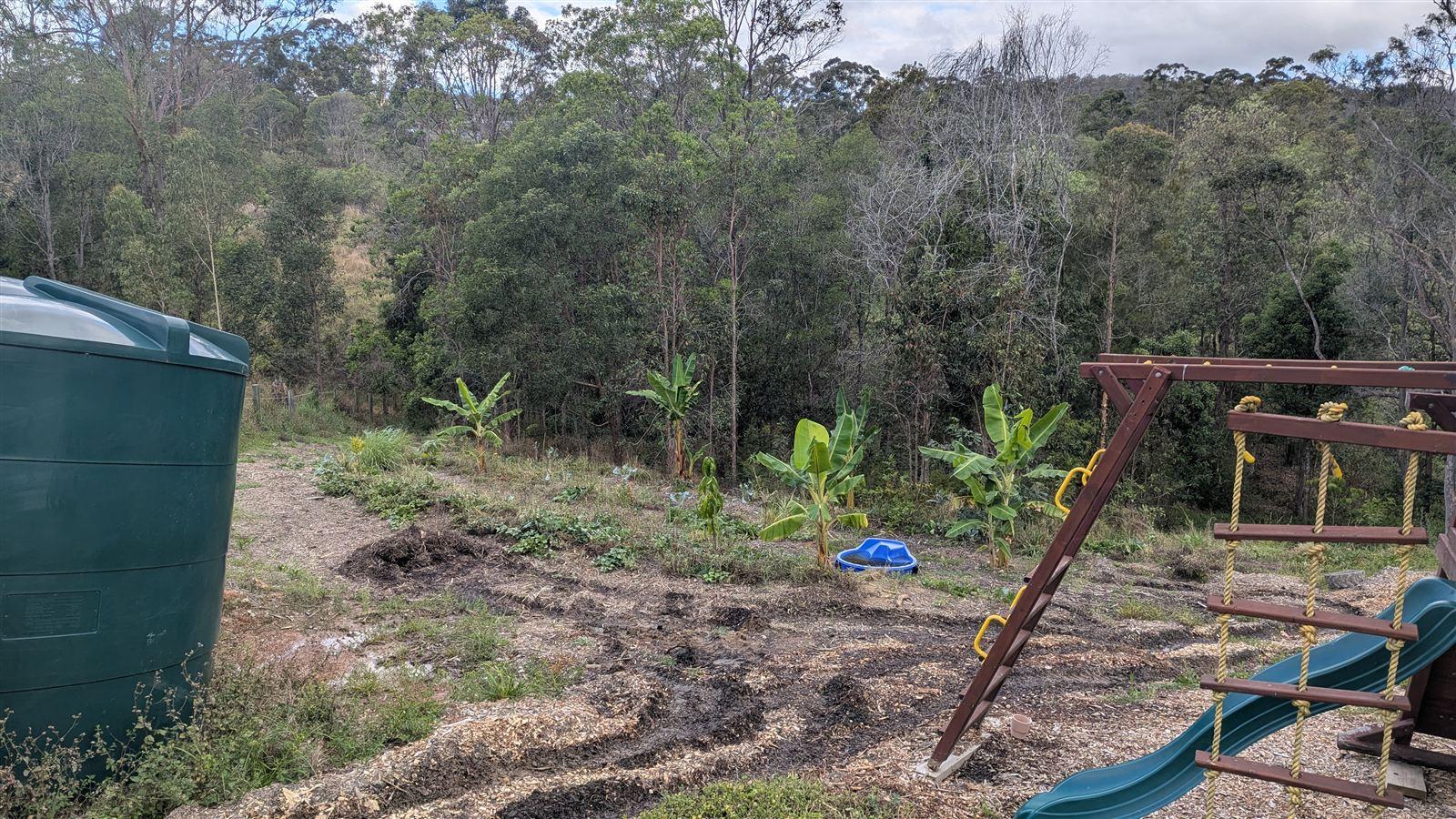
A rainwater tank with young banana plants and a play area worked in around it

Worth knowing

What’s not included, and what’s non-negotiable.

Design only: Stillfoot doesn’t do physical construction, planting, or ongoing garden maintenance, though we can refer trusted installers and nurseries where useful. Council, body corporate, or landlord approvals also remain your responsibility to obtain before acting on any structural element of the design.

No synthetic fertilisers, weed killers, or fungicides are ever designed in or recommended as the maintenance plan, regardless of budget. If something’s already working for your land and its wildlife, that’s the default we build around, and removing it takes a real reason.

Why this works

Chemical-free isn’t a compromise. It’s the whole point.

Most gardens that rely on synthetic inputs are treating symptoms. The weeds come back because the soil is bare. The pests come back because there’s nothing in the garden to eat them. The plants need constant feeding because the soil has no biology left to cycle nutrients on its own. A properly designed garden fixes the system, and the symptoms go away.

The two things most SEQ gardens get wrong

Bare soil and scattered planting. Walk through most suburban yards in Southeast Queensland and you’ll find exposed dirt baking in the sun, and a random collection of plants with no connection between them. The soil compacts, the biology dies, the weeds move in, and the owner reaches for a bottle. A Stillfoot design solves both: ground cover and mulch protect the soil, and every plant is placed in a guild where it supports the ones around it.

What “organic” usually gets wrong

Swapping synthetic sprays for organic ones still treats the garden as something that needs constant intervention. You’re buying different bottles, but the approach hasn’t changed. The real shift is building a garden that handles most of its own problems: soil biology that feeds the plants, companion planting that confuses pests, enough diversity that predator insects show up on their own. That takes design up front, but it saves time every week after.

What we’ve seen on real ground

On our own property, the soil started dead: compacted, no worms, no visible fungal activity. Within a year of consistent mulching and composting, earthworms returned, mycelium became visible under the mulch layer, and the soil changed colour and texture. When aphids turned up, we left them. Ladybugs followed within a couple of weeks and cleared them out. None of that required a single product. It required a garden designed with enough biology and diversity to look after itself.

That’s what a Stillfoot design sets up for your property. Every plant, every guild, every ground cover layer is placed so the system does the maintenance work that chemicals would otherwise do. The result is a garden that gets cheaper and easier to run each year, because the soil, the insects, and the plants are all doing their jobs.

Where to start if you want to try it yourself

You don’t need a full design to start seeing results. Pick one bed, add good compost, lay a thick mulch, and plant a few things that thrive in SEQ without babying: comfrey (mines nutrients from deep in the subsoil and drops them as free mulch), sweet potato (covers the ground so weeds can’t establish), cherry tomatoes, and herbs like basil and rosemary. One season with that setup will teach you more than a year of fighting the wrong one. When you’re ready to do the whole property properly, that’s what we’re here for.

Start here

Ready to see what your land could do?

Tell us a bit about your property and what you're hoping for. It takes about ten minutes, no obligation, and every submission gets read by us directly.