
There is a test you can start tonight, with a jar from the recycling and a tap, that will explain more about why one part of your garden thrives and another sulks than almost anything else you could do for free. It has been used by farmers for generations and it still gets used on every property we design.
How to do it
- Dig a small sample from about a spade's depth, not off the surface. Pick out the sticks, roots and stones.
- Fill a straight sided jar about a third with soil, then top it up with water, leaving a gap at the top.
- Shake it hard for a couple of minutes, until there are no lumps left at all.
- Put it somewhere it will not get bumped, and leave it alone.
Then watch it settle. Sand is heaviest and drops out first, usually within a minute. Silt settles over the next few hours. Clay is so fine it can take a day or more to fall, and it settles last, on top. What you end up with is a striped column with the three layers stacked in order, and you can measure each one with a ruler and turn it into a rough percentage of the total.
What the layers actually tell you
Sand has large particles with big gaps between them, so water and anything dissolved in it moves straight through. Clay particles are tiny and carry a slight electrical charge, which is what lets them hold onto both water and plant nutrients instead of letting them wash past. Silt sits in between.
That is why the ratio matters so much. A soil that is mostly sand will drain beautifully and then dry out and go hungry just as fast. A soil that is mostly clay will hold water and nutrients well and can hold onto them so tightly that roots struggle and the ground stays waterlogged after rain.
Why we do more than one
On a recent acreage design we ran three jar tests, one in each main working area of the property. They came back between 78 and 89 percent sand, with clay never rising above 9 percent anywhere on the block. That mattered more than any single test would have, because it told us the low water holding capacity was not a bad corner to work around. It was the whole property, and every decision after that had to account for it.
One test tells you about one spot. Three tests tell you whether you have a problem or a pattern.
The part most people get backwards
When a sandy soil underperforms, the instinct is to feed it. On that kind of profile most of what gets applied moves down past the root zone with the next decent rain, which is expensive and does very little. The soil is not short of fertiliser. It is short of anything capable of holding fertiliser in place.
What actually changes it is organic matter, added in quantity and kept coming. Compost, mulch, and plants whose job is to be cut and dropped back onto the ground they grew in. Organic matter binds with what little clay is present into crumbs that hold both water and nutrients, and it feeds the soil life that does most of the real work. It is slower than a bag of fertiliser and it is the only version that compounds.
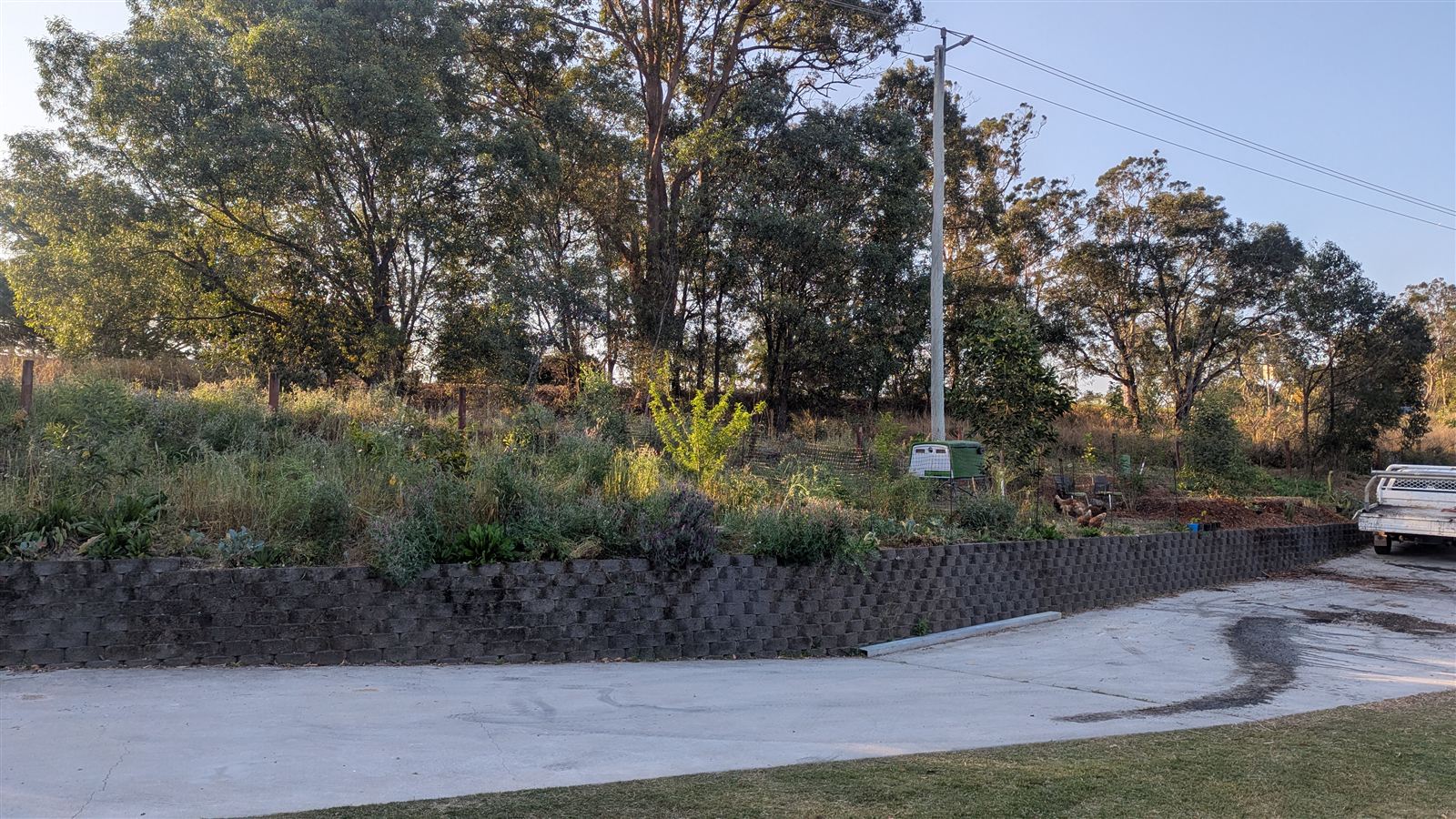
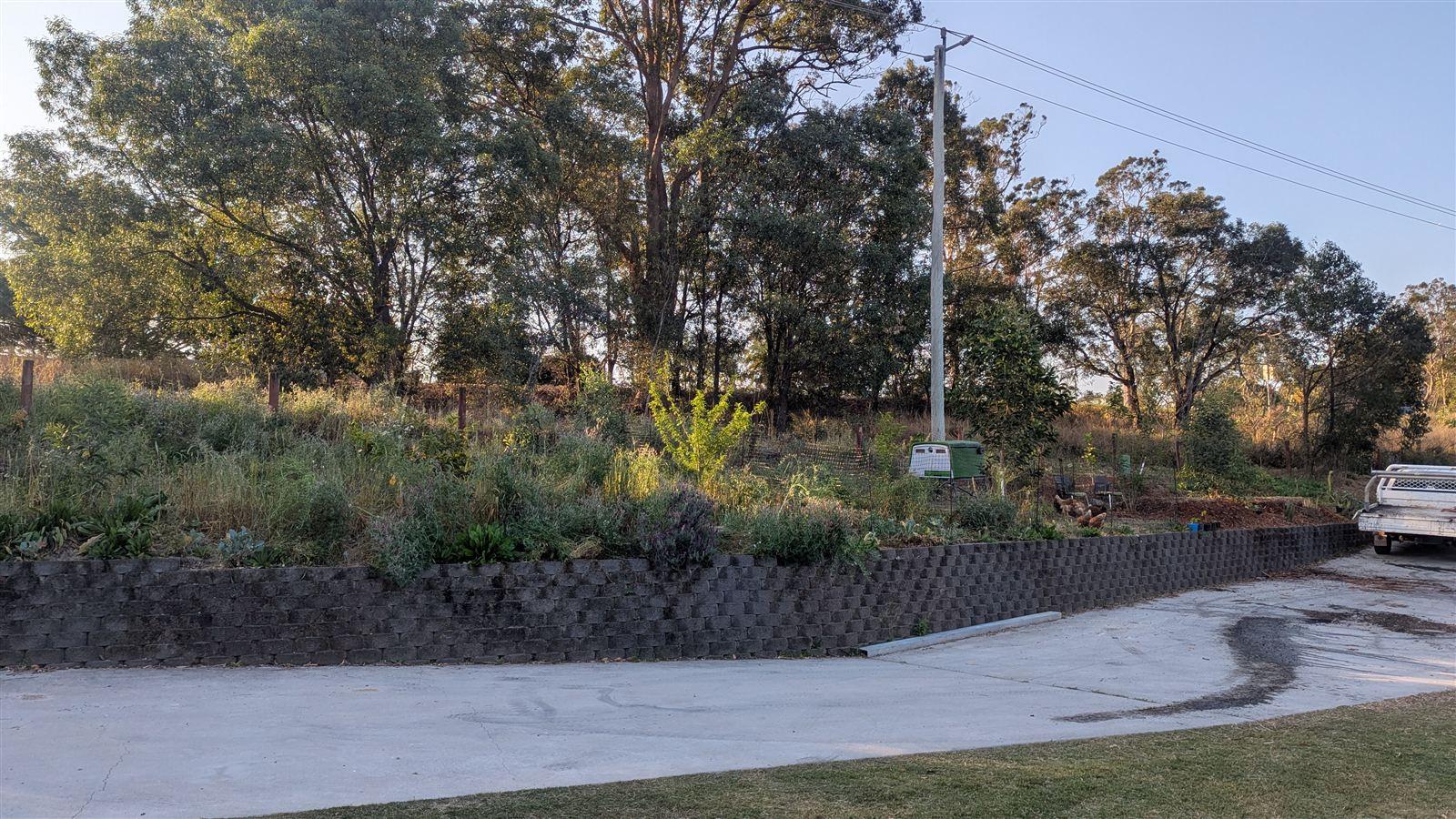
This is a bed on our own place, before we started on it. Tired ground, patchy growth, nothing obviously wrong and nothing thriving either.
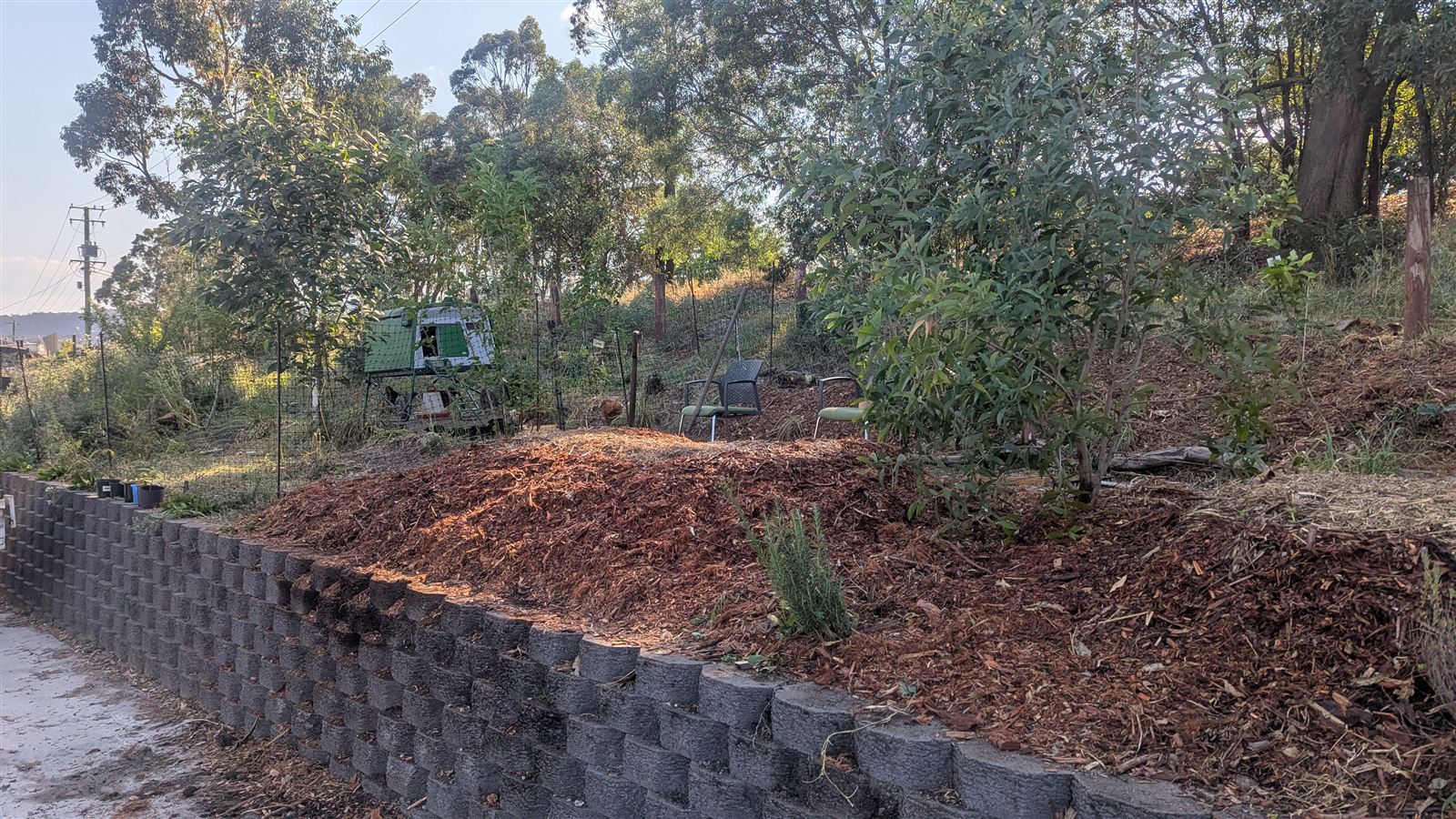
Then a heavy layer of mulch over the whole bed. Not a decorative scattering, a proper depth of it, laid down to feed the ground rather than to tidy it up.
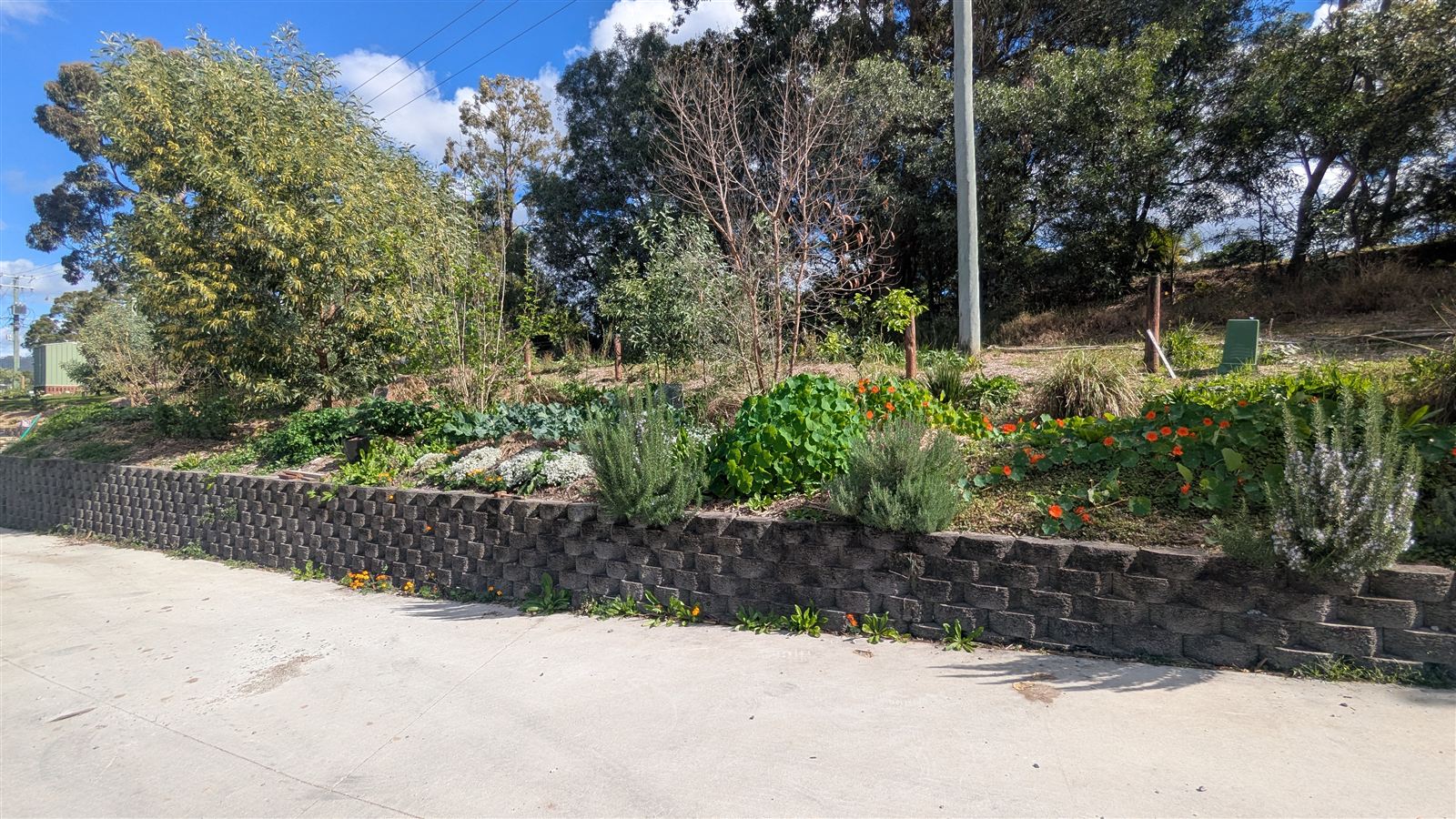
And the same bed later on, planted out and holding its own. Nothing was tilled, and nothing came out of a bag. The soil was fed until it could feed the plants.
What the jar test will not tell you
It is worth being clear about the limits. A jar test tells you texture and nothing else. It will not tell you your pH, it will not tell you which nutrients are short, and it will not tell you whether there is anything in the soil you would rather not grow food in, which is a genuine question on older properties with a history you do not know. Those need different tests. What the jar gives you is the foundation the rest sits on, for the cost of a jar and a day of patience.
If you do one this week, dig from a few different spots rather than one, and take a photo of each. It is the single most useful thing you can hand a designer before they walk your block.