
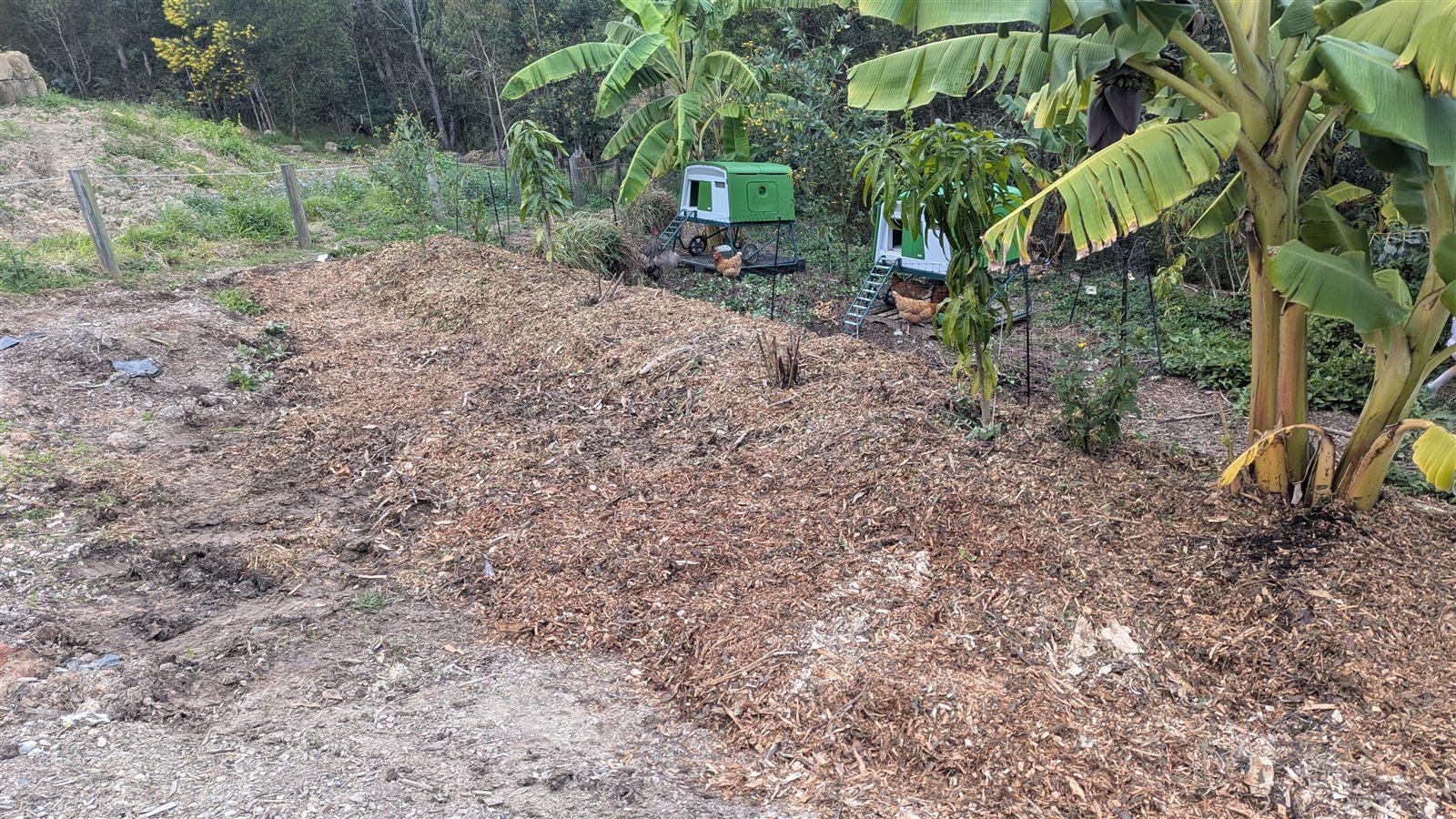
Walk most new developments after heavy rain and you'll see the same story everywhere: water sheeting off a driveway, pooling against a fence line, or vanishing down a stormwater drain within minutes of falling. The instinct in conventional landscaping is to get water off the property as fast as possible: more drainage, more fall, more pipe. It treats water as a problem to be evacuated.
We think that's backwards. Water is the single most valuable thing that falls on your property for free, and every site already has an opinion about where it wants to go, shaped by slope, soil, and whatever's growing there already. Our job isn't to override that pattern. It's to read it, then work with it.
The land already has a plan
Before we design anything, we walk the site and watch where water actually moves: where it pools, where it races past, where the soil stays damp longest after rain. That reading tells us more about a property than almost anything else, because water flow touches every other decision: where a food forest will actually thrive without irrigation, where a dry, sun-baked corner needs different planting altogether, where a low spot that floods twice a year might become the most productive part of the whole block instead of the part everyone avoids.
Sometimes the fix is as unglamorous as it sounds: the direction a garden bed's edge runs, or which way a path slopes, can be the difference between rain soaking in where your trees actually need it and the same rain sheeting straight past them into the street. No pipes, no pumps. Just paying attention to a pattern that was already there.
What patient water design actually does
This isn't a new idea. One of the most documented examples in Australian land management is a pair of farms north-west of Sydney that, in the 1950s, turned bare, eroded ground (soil so poor it barely deserved the name) into deep, dark, fertile pasture within about eight years. The transformation didn't come from pouring on fertiliser. It came almost entirely from how water was read, directed, and allowed to soak in, paddock by paddock, season by season.
"The basic idea is to make nature assist you instead of engaging in conflict with it, to your own economic loss."
That's the whole philosophy in one line, and it applies just as much to a suburban block as a working farm. You don't need dams and drains on that scale to benefit from the same thinking. You need someone to actually look at where your water goes before deciding what to plant and where.