
A single fruit tree, on its own in a square of lawn, is fighting an uphill battle. The grass competes with it for water and nutrients, nothing is building the soil around it, and pests find it easily because there's nothing else nearby to confuse them.
A tree needs a support crew
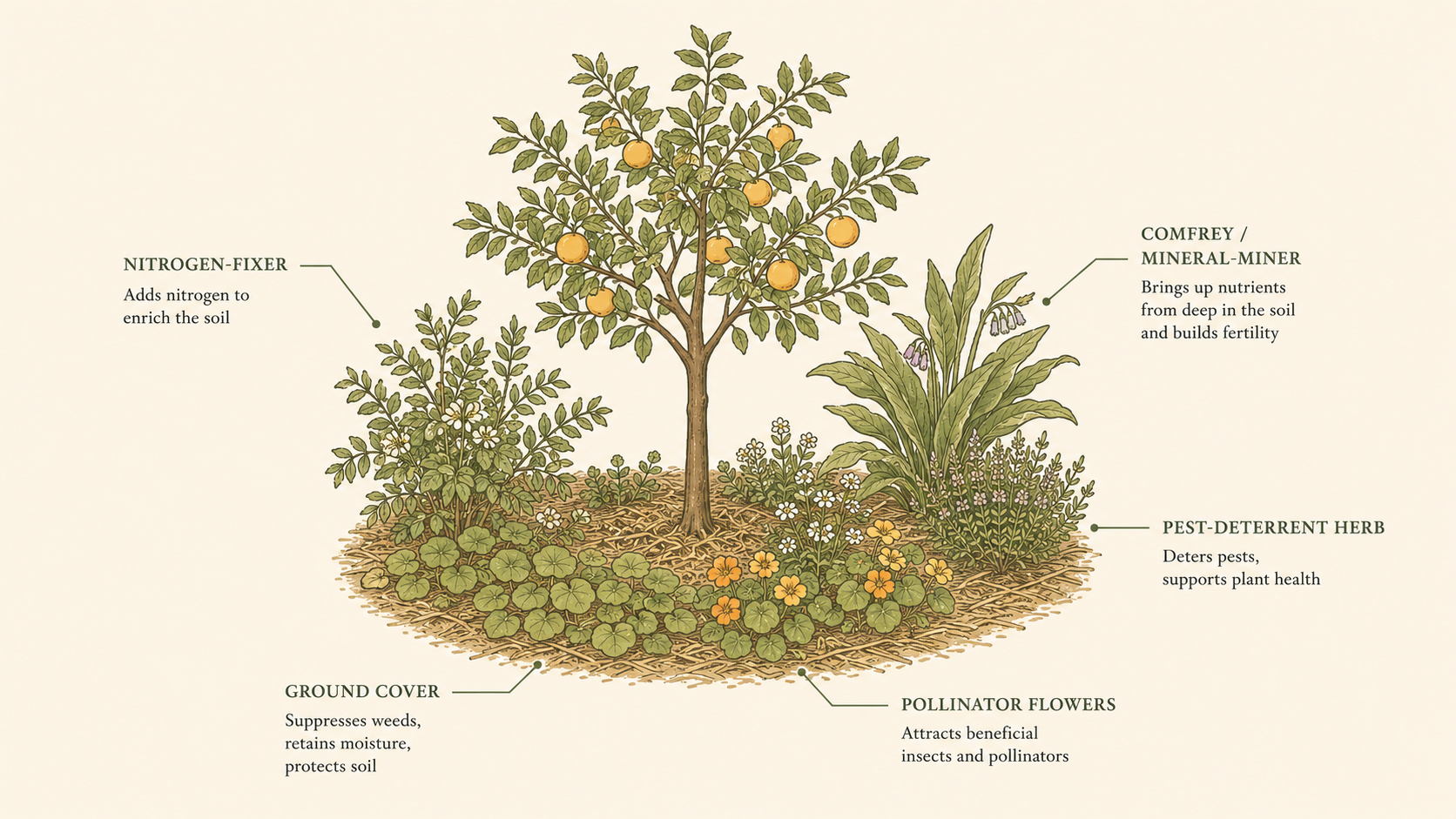
We plant every fruit tree with a small community around it, not just the tree on its own. Something to build fertility in the soil, usually a nitrogen-fixing shrub. Something to confuse pests and pull in pollinators, often a small-flowered herb like alyssum or dill. Something that can be cut back again and again to make instant mulch (comfrey is the classic choice, since it grows a deep taproot that mines nutrients other plants can't reach, then hands them over every time you slash it onto the bed). And a low groundcover to fill whatever gaps are left, so weeds never get bare soil to start in.
Once it's established, that small community does jobs the tree can't do for itself. It builds soil, breaks pest cycles, and keeps the ground cool and covered without you having to intervene constantly.
The guild does the work a single tree standing alone in bare soil never could.
The one rule that actually matters
Keep a clear ring of bare mulch, about twenty to thirty centimetres wide, right around the trunk. Every companion plant sits out at the tree's drip line, never hard against the bark. It's a small thing, but it's the difference between a healthy trunk and one that sits in constant damp and rots at the collar, especially in a wet Southeast Queensland summer.
Especially useful where the soil is working against you
This matters even more on poor or sandy soil, the kind you often find on canal estates or reclaimed land, where there's no shortcut to good fertility except building it yourself. A guild does that building work for you, instead of you trying to fix an entire garden's soil before a single tree can even get started.