
Case study · Scenic Rim hinterland
George & Anastasia, Tamborine Mountain
Designed & delivered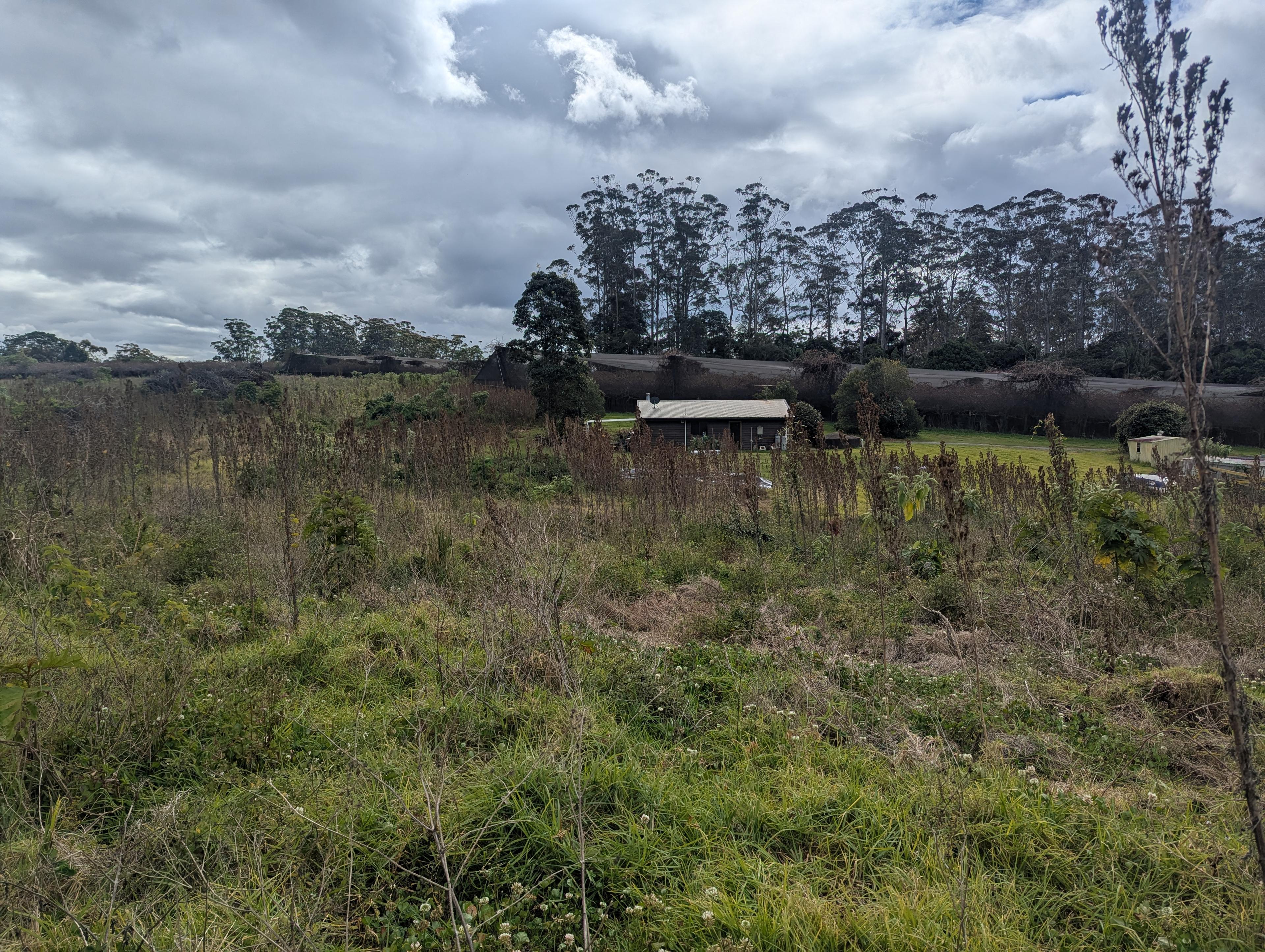
George and Anastasia sit at 525 metres on Tamborine Mountain, on a twenty-acre block with a cooler climate and roughly double the rainfall of the lowlands nearby. They asked for what they called "lazy farming", which is Stillfoot's own philosophy handed back in their words.
They also had a real deadline, one that wasn't on the intake form: by mid-2027, supply at least one vegetable to a local shop for an Eat Local event. That single goal became the spine of the whole design.
What the site was telling us
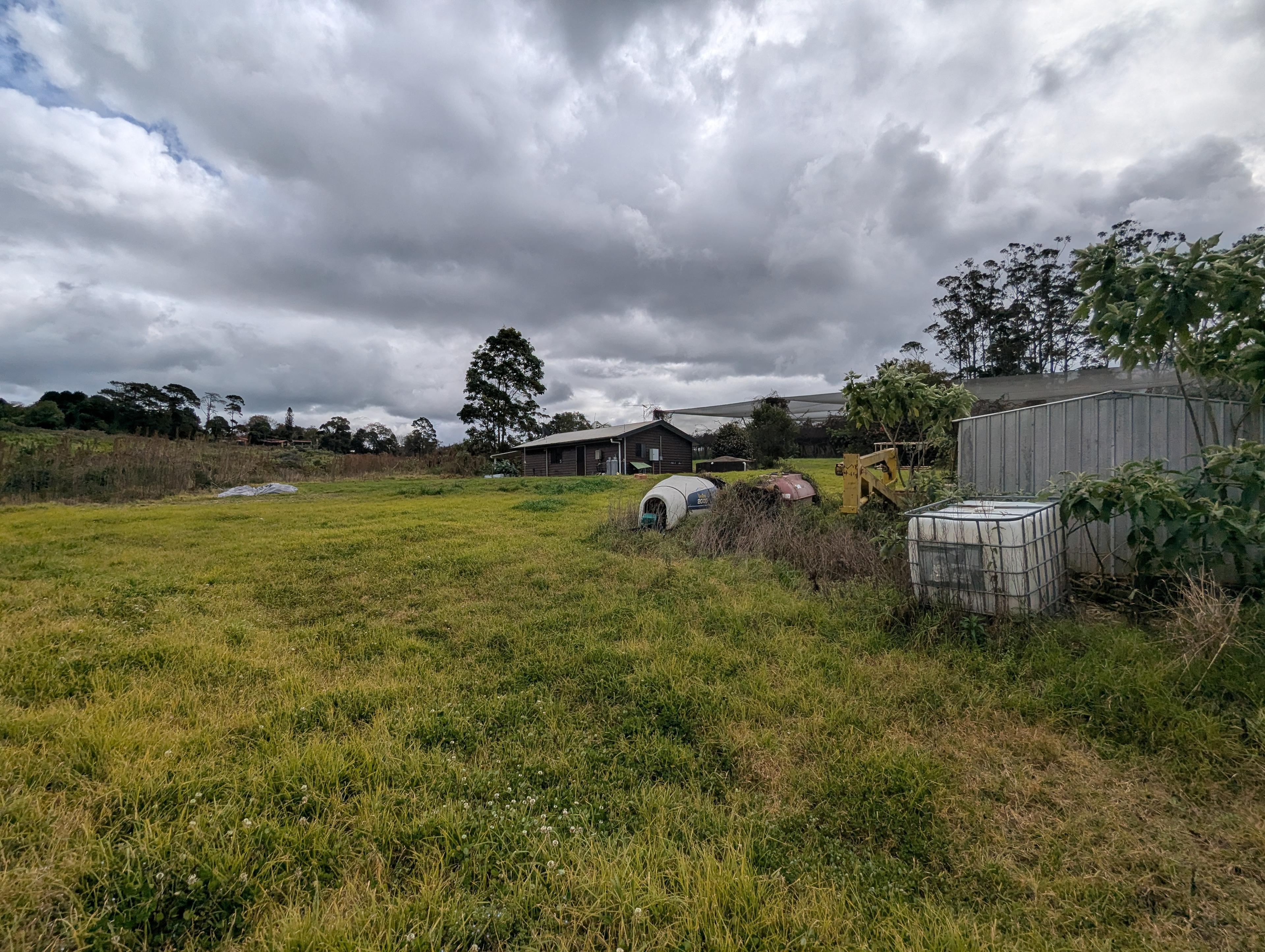
- Water is the main problem, and there is plenty of it. The house sits in a shallow bowl and gets surrounded by run-off in heavy rain, so real earthworks came before any soft landscaping.
- The ground was open and sunny, close to a blank canvas, but carried a heavy weed load including three stock-toxic species that had to be cleared before any animals went on.
- Exposed to strong wind on a mountain plateau, so shelter had to be planted before the things it protects.
- A six-hours-a-week labour budget kept the whole plan honest and staged.
I want to feel like our little hut is a part of a micro ecosystem, where we can gather food from it if we need, but there is plenty left over for friends, family and native critters.
What we did
- A Zone 1 market garden built as the mid-2027 engine: potatoes on in-ground sheet-mulched beds laid along the contour, on a simple drip-and-timer watering plan.
- Fruit-tree guilds along the sunny north-facing driveway, on ground the household already crosses every day.
- A food forest of fourteen swales through Zone 2, sized from a real survey of the slope so each stays small, safe, and hand-repairable.
- A movable chicken coop that clears ground ahead of the planting front first, then switches to a maintenance rotation once the trees are established.
- A shelterbelt of clumping bamboo and natives on the windward boundaries, planted ahead of the food it protects.
- A graded diversion trench above the house to shed water safely, with the ground only ever cleared when something is ready to go straight into it.
The outcome
A staged, five-year plan that starts small and honest at six hours a week, with a clear first crop tied to a real date, on a property that mostly needed reading before it needed changing.