
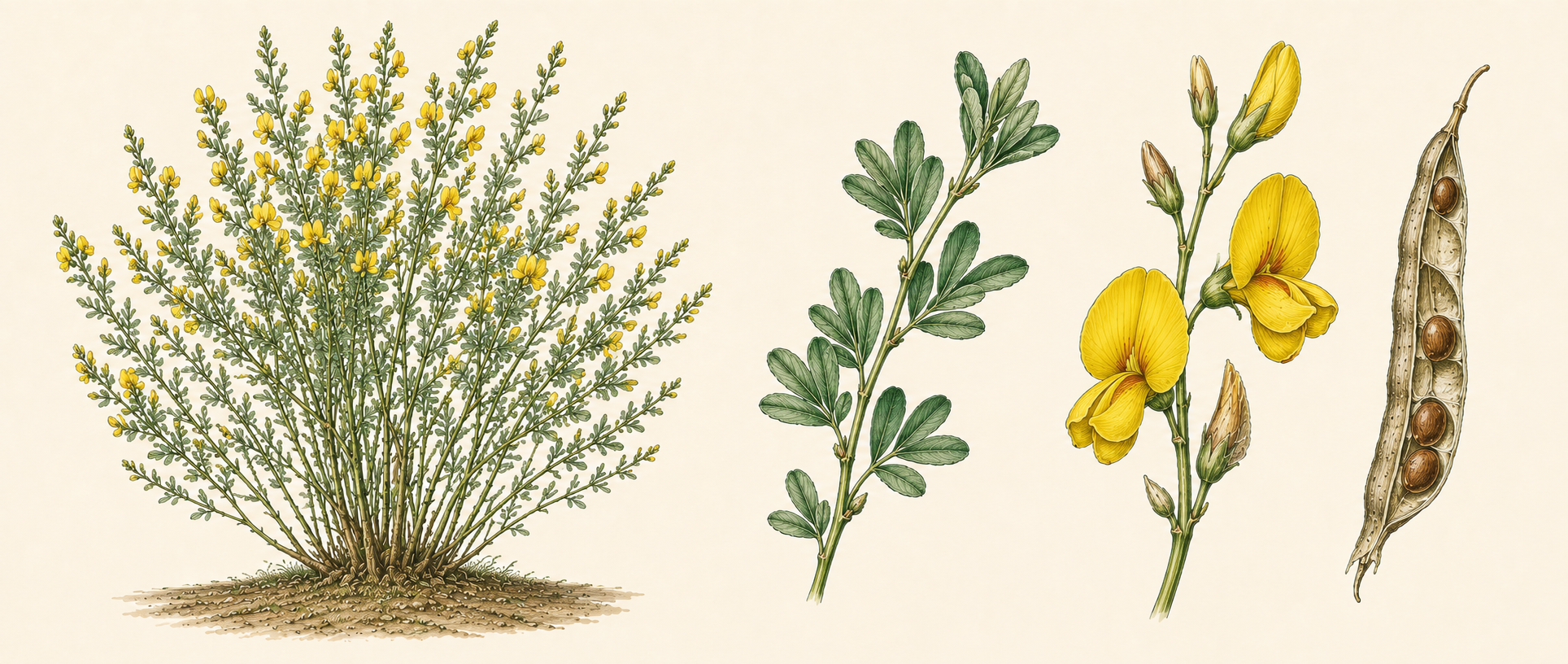
Growing
- Forest layer: Small tree / large shrub.
- Growth habit & lifespan: Fast-growing, evergreen, relatively short-lived at 10-20 years.
- Size: 3-6m if unpruned, commonly kept smaller with regular cutting.
- Site preference: Full sun, wide soil tolerance including poor soil, drought tolerant and notably cold and frost tolerant — suits a cooler mountain climate well.
- Water needs / drought tolerance: Drought tolerant once established.
- Fruiting / flowering season: White pea-like flowers, a valuable late-winter nectar source when little else is flowering.
- Propagation: Seed.
- Harvesting technique: Cut for fodder or mulch, coppices well.
Permaculture Function
- Permaculture functions: An excellent fast nitrogen fixer and windbreak or nurse-tree species. Its winter flowering makes it a valuable bee forage in the cooler months.
- Wildlife value: Good winter nectar source for bees and birds.
- Edibility / medicinal use: Not a human food crop — grown as fodder and a support species.
- Companion notes: A strong nurse and windbreak species for a shelterbelt, particularly valuable on a cooler mountain site given how much better it tolerates cold than many other nitrogen-fixing options.
Safety & Control
- Toxicity: Foliage is a recognised stock fodder and not toxic, though as with any single fodder source it shouldn't be the sole diet.
- Control method: Monitor for self-seeding given any bushland-adjacent setting — not a removal priority, just worth watching.