
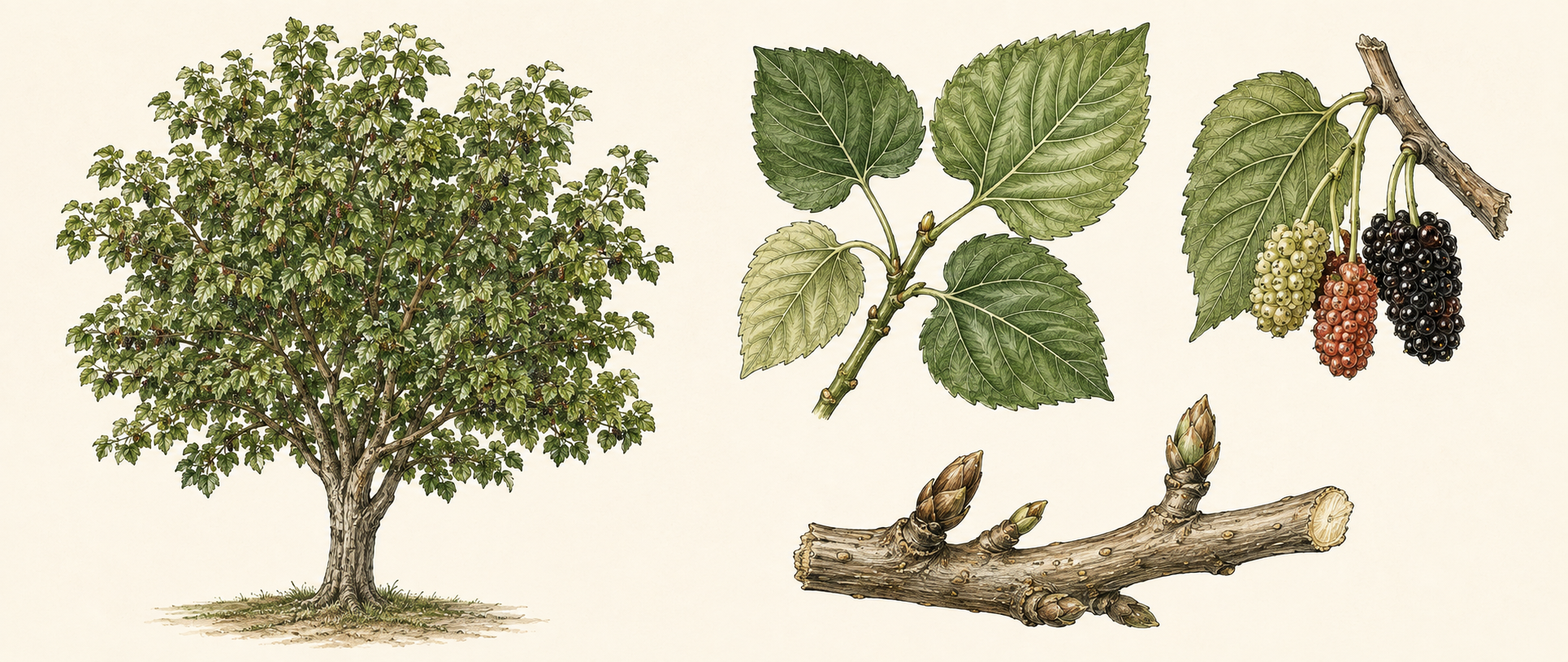
Growing
- Forest layer: Sub-canopy / small to medium tree.
- Growth habit & lifespan: Deciduous, fast growing especially while young, long-lived and productive for decades, tolerates hard pruning well.
- Size: 4-10m if unpruned, easily kept smaller (often deliberately pruned low for easy fruit picking).
- Site preference: Full sun, wide soil tolerance, genuinely resilient and low-fuss once established.
- Water needs / drought tolerance: Moderate, reasonably drought-tolerant once established.
- Fruiting / flowering season: Inconspicuous flowers, heavy fruit set in spring/early summer — fruiting can be prolific and messy if fruit drops onto paving.
- Propagation: Hardwood cuttings root very easily.
- Harvesting technique: Fruit stains readily and drops when ripe — some households lay a sheet or tarp under the tree and shake gently to harvest a bulk crop rather than hand-picking individually.
Permaculture Function
- Permaculture functions: A fast, resilient, high-yield fruit tree that also tolerates hard pruning — a good choice where a smaller, easily-netted or hand-pickable tree is wanted rather than a tall canopy specimen.
- Wildlife value: Fruit is extremely attractive to birds, which is both a genuine wildlife benefit and the main reason volunteer seedlings turn up elsewhere on a property.
- Edibility / medicinal use: Fruit is eaten fresh, dried, or made into jam; leaves are the traditional silkworm feed and also have some use in herbal tea.
- Companion notes: Worth siting away from paving, decking, or the pool given how readily ripe fruit stains and drops — a lawn or mulched bed underneath makes cleanup far easier.
Safety & Control
- Toxicity: Ripe fruit is safely edible; unripe (white/green) fruit and the milky sap can cause mild stomach upset — a minor caution rather than a serious hazard.
- Control method: Not applicable — retain and manage as a productive tree. If volunteer seedlings appear from dropped fruit, hand-pull while young.