
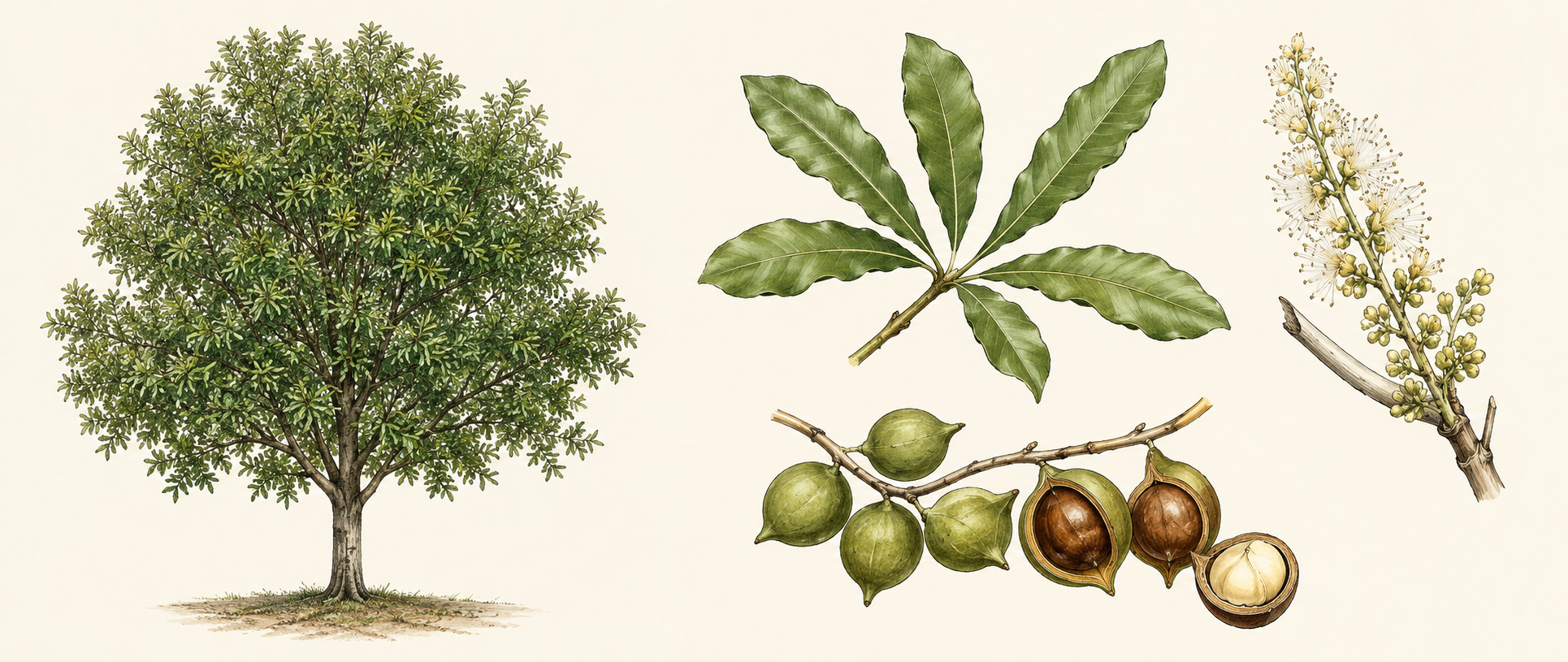
Growing
- Forest layer: Canopy tree.
- Growth habit & lifespan: Evergreen, slow to moderate growth, very long-lived and productive for many decades once mature.
- Size: 8-15m in cultivation, can reach larger in ideal conditions.
- Site preference: Full sun to part shade, wants good drainage and reliable moisture, appreciates wind shelter — genuinely more suited to reliable rainfall than this property's drier inland climate provides by default, worth a real watering plan.
- Water needs / drought tolerance: Moderate, not particularly drought-hardy, especially during nut development.
- Fruiting / flowering season: Long pendulous flower racemes in spring, nuts maturing and dropping over several months in autumn/winter.
- Propagation: Grafted commercially for reliable named varieties; seed is slow to bear and variable.
- Harvesting technique: Nuts drop naturally when ripe — collect regularly from the ground (a net or tarp underneath helps on a home scale) and dry thoroughly before cracking, since the notoriously hard shell requires proper drying to crack cleanly.
Permaculture Function
- Permaculture functions: A genuinely high-value native nut crop — one of very few native Australian food plants to become a global commercial commodity, worth real investment in establishment care given how long-lived and eventually productive it becomes.
- Wildlife value: Spring flowers are a strong nectar source for bees; dropped nuts (before collection) are eaten by rodents and some birds capable of cracking the shell.
- Edibility / medicinal use: The nut is a major food crop, eaten raw, roasted, or processed into oil — genuinely one of the most nutritionally dense tree crops available.
- Companion notes: Given the moisture preference noted above, worth checking this tree's mulch and watering situation specifically rather than assuming the same drought-tolerant treatment suits it as well as it suits Olive or Queensland Bottle Tree elsewhere on this property.
Safety & Control
- Toxicity: Nut is safely edible for people; raw macadamia nuts and husks are toxic to dogs (a well-documented, genuine veterinary hazard) — worth a real caution given this is an active family property, keep dropped nuts cleared if pets have access to the area.
- Control method: Not applicable — retain and manage as a productive tree.