
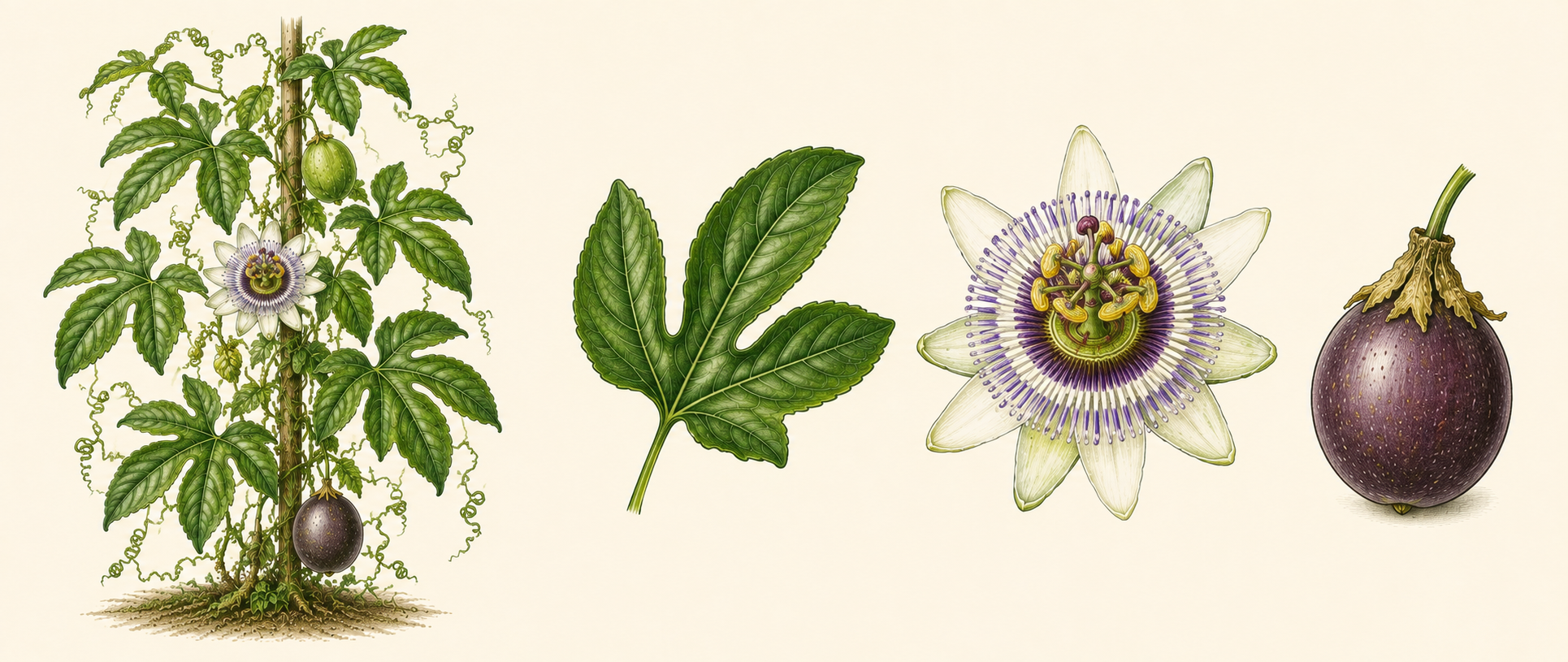
Growing
- Forest layer: Climbing vine, needs a trellis, fence, or other support.
- Growth habit & lifespan: Perennial (though often relatively short-lived and productive for only a handful of years before decline, common for this species), vigorous, fast growing.
- Size: Climbs 3-5m+ along its support.
- Site preference: Full sun, wants good drainage and shelter from harsh wind, appreciates reliable moisture especially while fruiting.
- Water needs / drought tolerance: Moderate, not particularly drought-hardy, benefits from consistent water during fruit development.
- Fruiting / flowering season: Distinctive elaborate purple/white flowers through warmer months, fruit ripening and dropping when mature.
- Propagation: Seed (from the pulp) or cuttings; grafted plants (onto more vigorous/disease-resistant rootstock) are common commercially.
- Harvesting technique: Fruit drops naturally when ripe — the standard harvest method is simply collecting dropped fruit from the ground regularly, since it doesn't continue ripening well once picked green.
Permaculture Function
- Permaculture functions: A fast, productive climbing food crop for an existing fence or trellis — genuinely good use of vertical space that would otherwise be unproductive.
- Wildlife value: Flowers attract bees and other pollinators, including native carpenter bees which are particularly effective at pollinating this species.
- Edibility / medicinal use: Fruit pulp is eaten fresh or used in juice, desserts, and cooking — a genuine kitchen staple crop.
- Companion notes: Best trained onto a dedicated support rather than left to scramble into other plantings, given how vigorous it can be — and worth distinguishing clearly from the weedy Corky-stem Passionflower already flagged elsewhere on this property so the two aren't confused underfoot.
Safety & Control
- Toxicity: Ripe fruit is safely edible; unripe fruit and other plant parts contain trace cyanogenic compounds typical of the genus and shouldn't be eaten.
- Control method: Not applicable — retain and manage as a productive crop. If volunteer seedlings appear from dropped fruit where unwanted, hand-pull while young.