
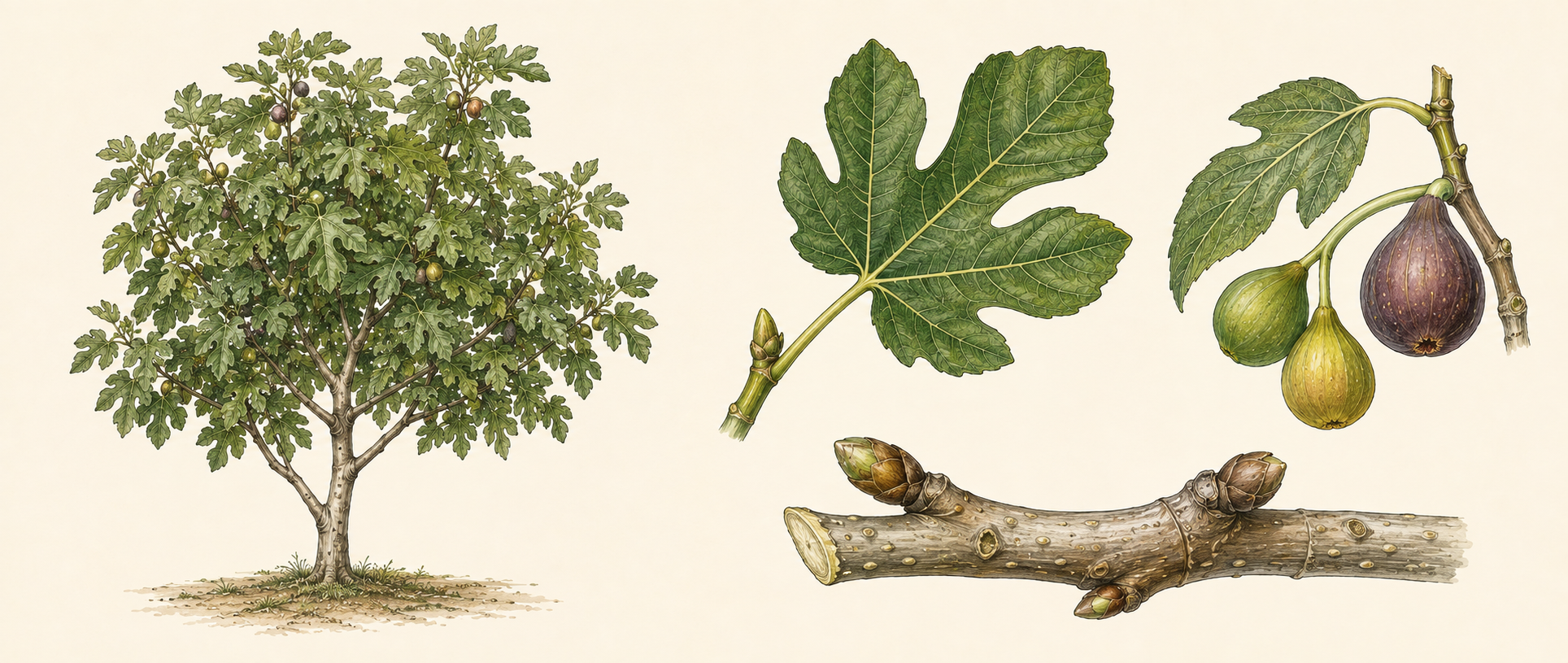
Growing
- Forest layer: Sub-canopy / small to medium tree.
- Growth habit & lifespan: Deciduous, fast growing, long-lived and productive for many decades, can regrow vigorously from the base if cut back hard.
- Size: 4-8m, often kept smaller with pruning.
- Site preference: Full sun, wide soil tolerance including poor and rocky ground, genuinely resilient once established.
- Water needs / drought tolerance: Moderate once established, though consistent water improves fruit size and prevents fruit drop.
- Fruiting / flowering season: Fruit (technically an inverted flower cluster, the "fig" itself) develops without visible flowers, often two crops a year in warm climates (an early "breba" crop on old wood, a main crop on new growth).
- Propagation: Hardwood cuttings root very easily, the standard home-propagation method.
- Harvesting technique: Pick when fully coloured and slightly drooping on the stem — figs don't ripen further once picked and bruise easily, best picked by hand individually.
Permaculture Function
- Permaculture functions: A genuinely low-input, high-reward fruit tree — extremely resilient once established, tolerant of poor soil, and capable of two harvests a year in a suitable climate.
- Wildlife value: Ripe fruit is highly attractive to birds and possums, worth netting if the household wants a reliable harvest for themselves.
- Edibility / medicinal use: Fruit is eaten fresh, dried, or preserved; leaves have some traditional medicinal use, though the sap can be irritating (see Safety & Control).
- Companion notes: A strong anchor tree for a Fruit Tree Guild given its resilience, though its vigorous root system is worth siting away from underground pipes and structures.
Safety & Control
- Toxicity: The milky sap can cause skin irritation or a photosensitive reaction in some people on contact, especially in bright sun — worth a light glove-wearing habit when pruning, not a serious hazard otherwise. Fruit itself is safely edible.
- Control method: Not applicable — retain and manage as a productive tree. If self-sown seedlings appear where unwanted, hand-pull while young.