
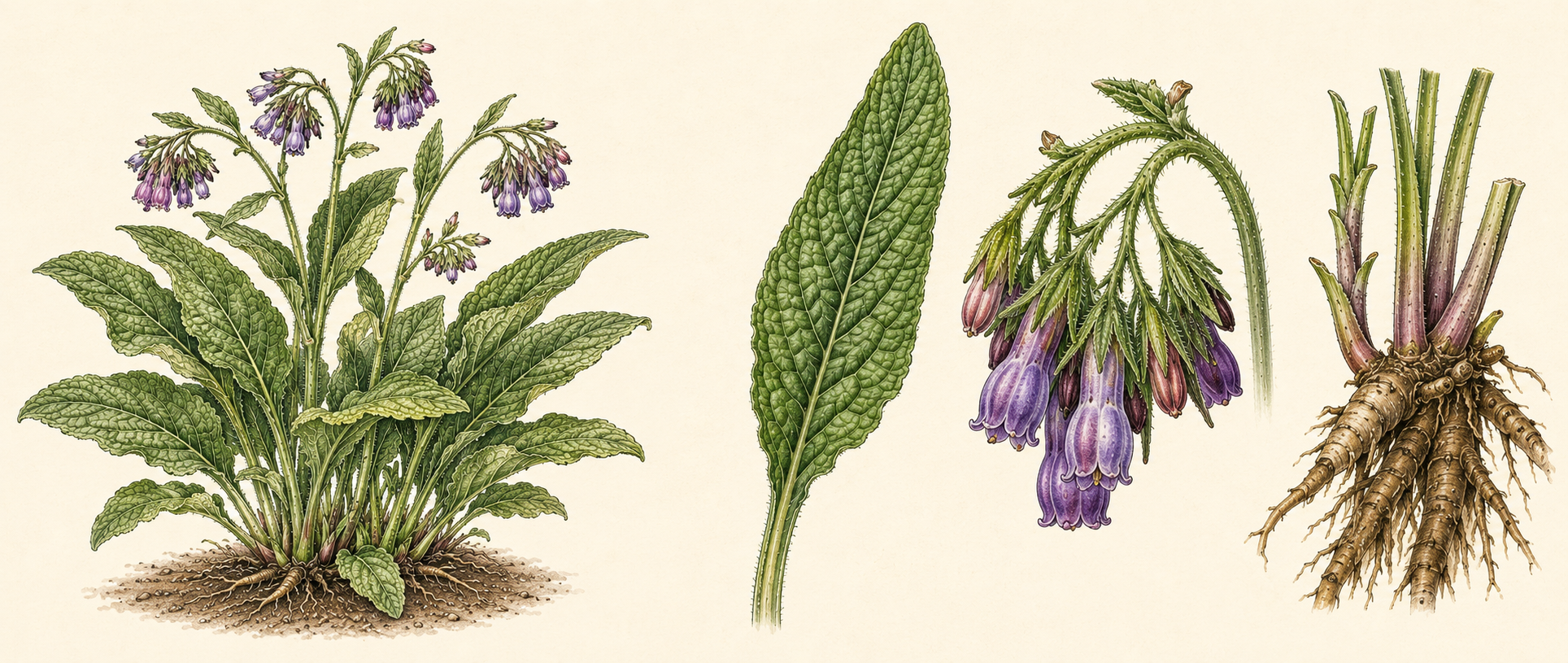
Growing
- Forest layer: Herbaceous.
- Growth habit & lifespan: Perennial, deep-rooted, dies back in cold winters and regrows from the rootstock, can spread if root fragments are disturbed and left in soil.
- Size: 0.6-1.2m.
- Site preference: Full sun to part shade, wide soil tolerance, prefers reliable moisture but is genuinely resilient once its deep taproot is established.
- Water needs / drought tolerance: Moderate; the deep taproot gives it real access to subsoil moisture and nutrients other shallow-rooted plants can't reach.
- Fruiting / flowering season: Purple-blue bell-shaped flowers, mainly spring through summer.
- Propagation: Root cuttings (a small root fragment will readily regrow a new plant, worth knowing before disturbing an established clump) or division.
- Harvesting technique: Leaves are cut for mulch/compost activator use multiple times through the growing season — comfrey tolerates and benefits from repeated hard cutting back.
Permaculture Function
- Permaculture functions: One of the classic permaculture dynamic accumulators — its deep taproot draws up potassium, phosphorus, and other minerals from the subsoil, concentrated in leaves that make excellent mulch, compost activator, or liquid feed ("comfrey tea"). A genuinely high-value support species for a food forest or fruit tree guild.
- Wildlife value: Flowers are a strong bee attractant, especially valued by bumblebees where present and native bees locally.
- Edibility / medicinal use: Historically used topically for bruises and sprains (allantoin content aids skin healing); internal use is now generally discouraged due to liver-toxic pyrrolizidine alkaloids — treat as a mulch/compost/topical plant, not a food green.
- Companion notes: A strong candidate to plant directly under or near fruit trees in the Fruit Tree Guild pattern, specifically for its chop-and-drop mulch role.
Safety & Control
- Toxicity: Contains pyrrolizidine alkaloids — avoid internal/food use; topical use and mulch/compost application are the standard safe uses.
- Control method: Not applicable — retain as a deliberate support planting. Be aware that any root fragment left in soil during transplanting can regrow, so dig thoroughly if relocating a clump.