
Growing
- Forest layer: Canopy / tall screen (a very large grass).
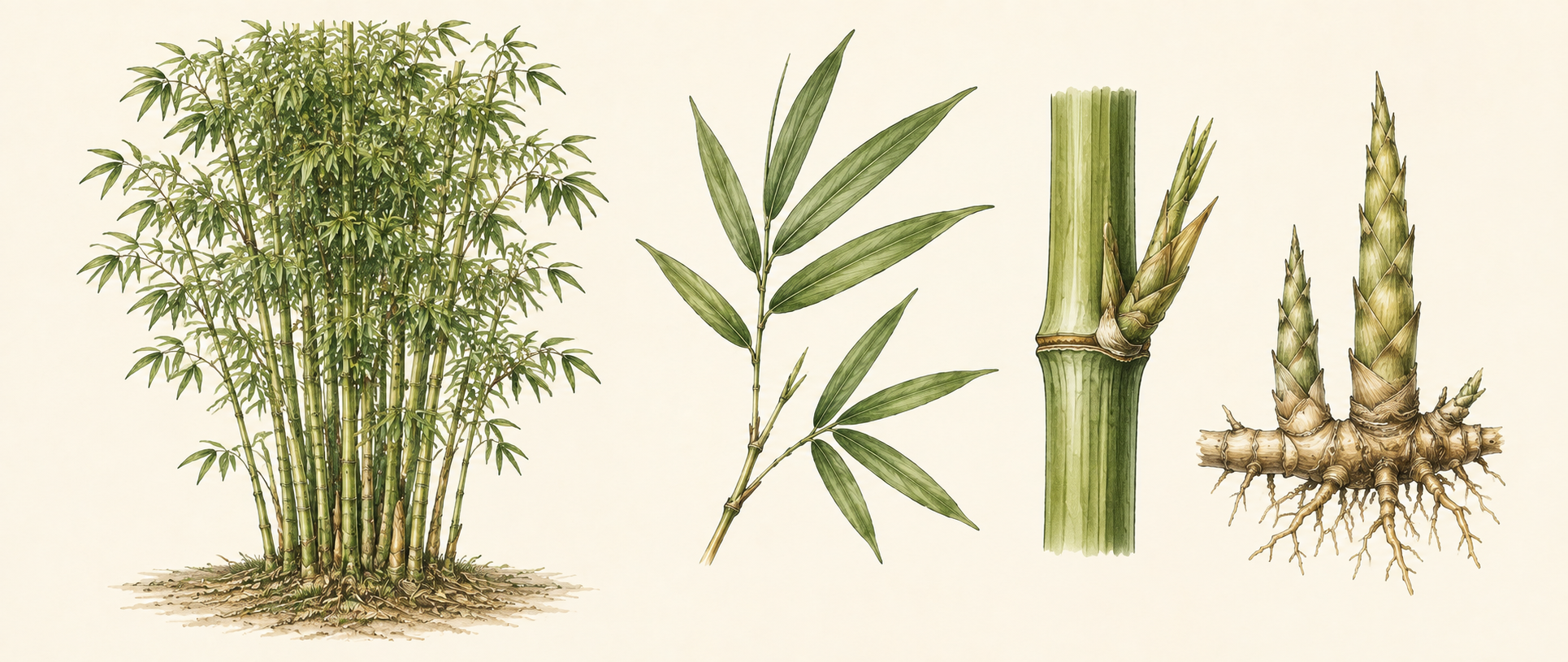
- Growth habit & lifespan: Fast-growing perennial, forms a tight clump rather than spreading by rhizome.
- Size: Varies hugely by species — commonly 3-15m.
- Site preference: Full sun to part shade, moist fertile soil, benefits from shelter while young.
- Water needs / drought tolerance: Moderate to high.
- Fruiting / flowering season: Rare — most bamboo species flower only once every several decades, then die back.
- Propagation: Division of clumps, culm cuttings.
- Harvesting technique: Edible shoots in some species; canes for building, staking, or craft use.
Permaculture Function
- Permaculture functions: An excellent fast screen or windbreak, and the canes are a genuinely useful renewable building material — poles, stakes, trellis material, all grown on-site rather than bought in.
- Wildlife value: Some habitat and shelter value.
- Edibility / medicinal use: Shoots edible in some species, but require proper preparation — raw shoots in several species contain cyanogenic compounds that cooking removes.
- Companion notes: Even a genuinely clumping species reaches a large mature size — site it well clear of any structure or boundary fence.
Safety & Control
- Toxicity: Raw shoots of some species require cooking before eating; otherwise not toxic.
- Control method: Not applicable if the clumping habit is confirmed. If a planting turns out to be a running species instead, treat it as a control priority — worth confirming which type is on site before planting any more of it.